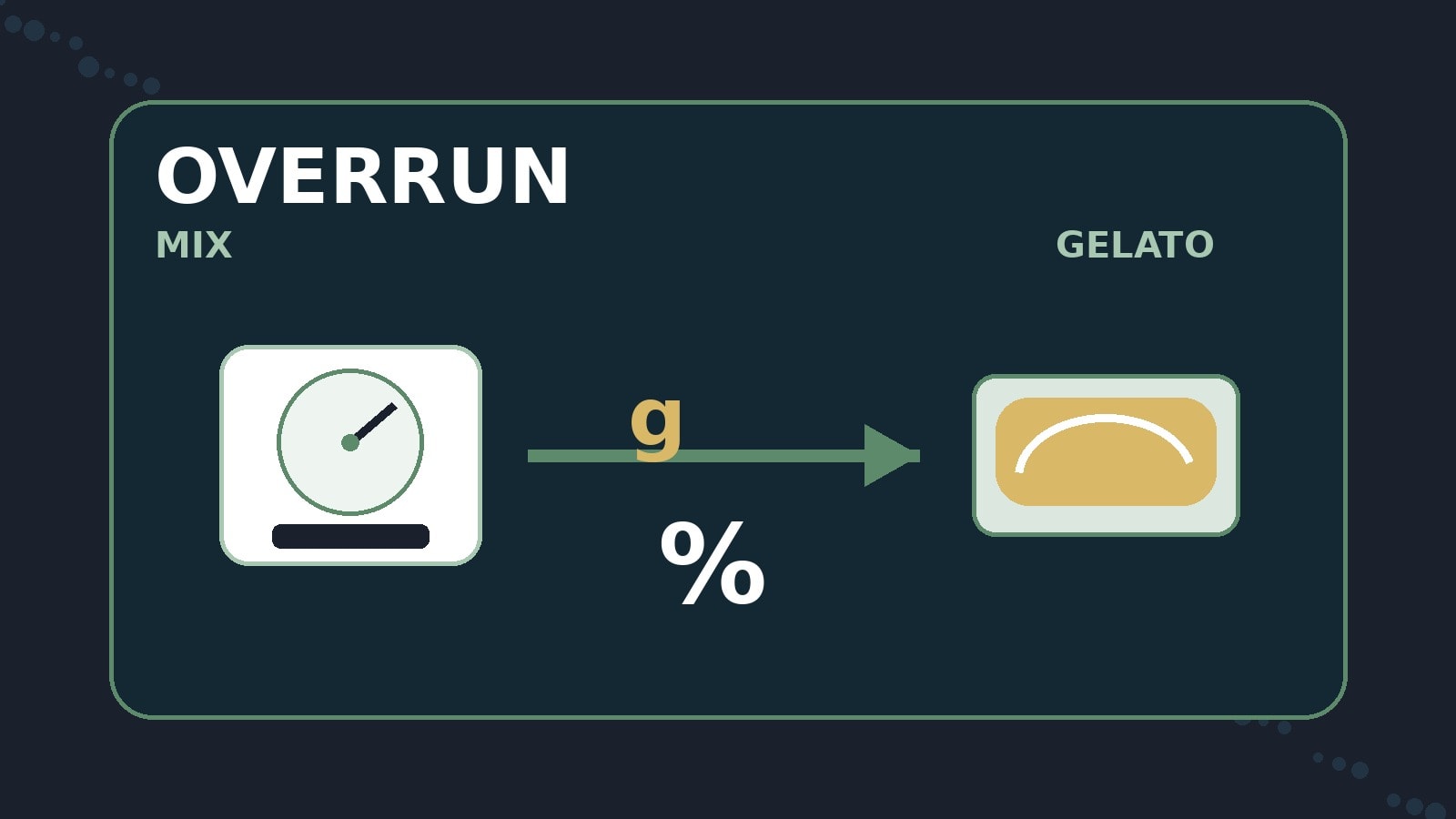
Gelato overrun is the percentage increase in volume created when air enters the mix during freezing and churning. You do not need to judge it by appearance alone. A repeatable check uses the same container, the same fill volume and a scale with suitable precision.
This simple measurement helps an operator compare one batch with the next. When the result changes, the record points you towards the process, recipe, temperature or filling method that should be checked before blaming a single ingredient.
- Weigh the mix and finished gelato in the same container at the same volume.
- Record the result with temperature, processing time, recipe and machine condition.
- Do not chase a universal target. Build an internal reference after your own process is stable.
What does gelato overrun actually measure?
Air enters the product while the mix freezes and moves inside the machine. Air adds volume without adding a comparable mass of ingredients, so a fixed volume of finished product will usually weigh less than the same volume of mix. A weight-based calculation uses that difference.
Overrun is not a quality grade on its own. A higher or lower result must be read with the recipe, ice-crystal structure, service temperature and the eating experience you want to create. Different frozen products can intentionally use different levels of aeration because their texture and service goals are different.
The University of Guelph’s ice cream technology guide describes overrun calculations based on the change in volume, or on the weight difference between equivalent samples. It provides the technical basis for the equation. Your operating reference still needs to come from your own equipment and repeatable procedure.
What you need before measuring
A comparison container
Choose one rigid container with a volume you can repeat. Use that same container for the mix and finished product.
A scale
Use a scale with a capacity and precision that suit the sample. Place it on a stable, level surface.
A batch record
Keep the weights, temperatures, times, recipe version, machine and operator together so the number has context.
How to calculate gelato overrun with a container and scale
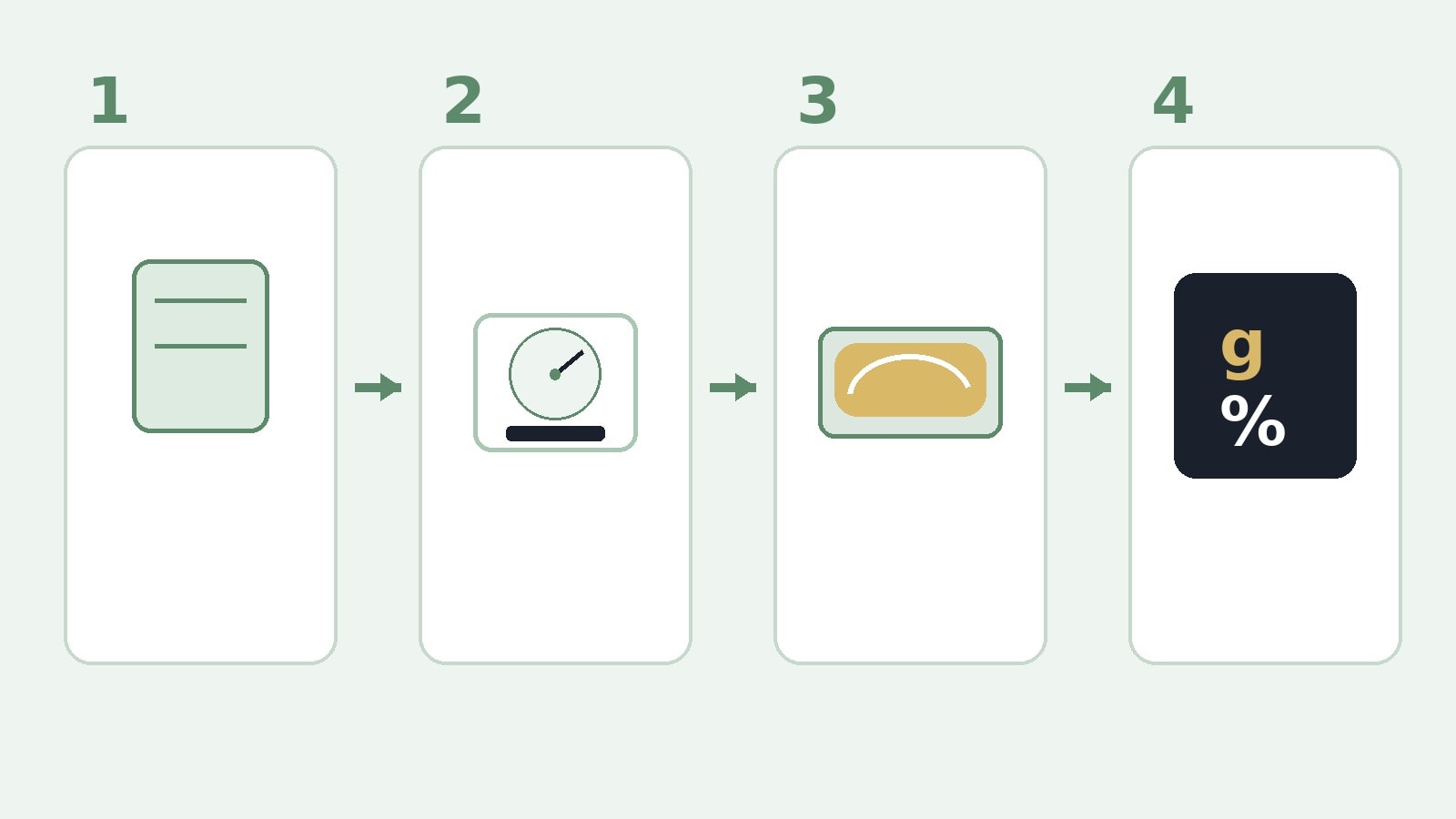
- Weigh the empty container. Record its weight or use the tare function. Do not change containers during the check.
- Fill it with mix. Use the same volume every time. Level the surface without adding extra bubbles and record the net mix weight.
- Fill it with gelato. Take the sample at the process point you have chosen. Fill and level it in the same way, then record the net product weight.
- Apply the equation. Keep both weights in the same unit and exclude the container weight.
- Save the process data. A number without the batch identity, temperature and timing is difficult to compare responsibly.
The equation estimates the percentage increase in volume from the weight difference between equal-volume samples. Treat the result as an internal comparison. Do not combine readings taken with different containers, filling methods or process stages.
Small errors that make the result unreliable
| Error | Effect on the data | Correction |
|---|---|---|
| Different sample volumes | The weights no longer represent equivalent conditions. | Use a fixed container or clear fill mark. |
| Container not tared | The container weight enters the equation. | Tare before each reading. |
| Samples taken at different stages | Batch comparisons lose their context. | Set one repeatable sampling point. |
| Filling method changes | Gaps or compression alter the weight. | Use the same filling and levelling motion. |
| No process data | The source of variation cannot be traced. | Keep temperature, time, recipe and machine data. |
Read the result without chasing one universal number
When gelato overrun changes sharply from one batch to another, the process needs attention. The number does not reveal the cause on its own. Start with the nearest data: mix temperature, mix quantity, processing time, adjustable churning settings, work sequence, machine condition and the way the operator filled the sample.
The recipe also affects how the system holds air. Read the measurement with your gelato recipe balancing notes and your understanding of gelato ingredients and their functions. If several variables change at once, the cause becomes harder to identify.
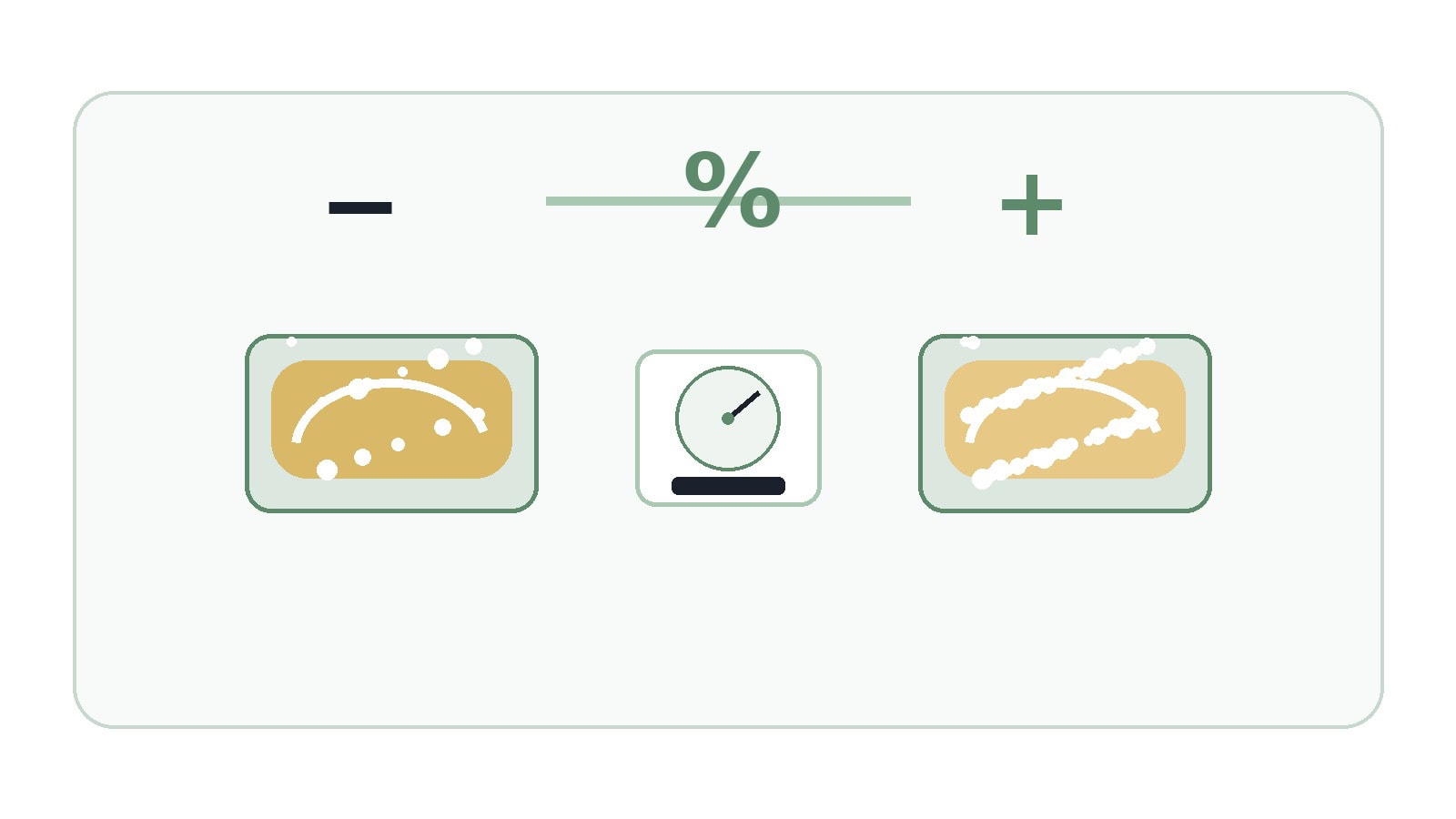
The wider context also matters. The guide to gelato and other frozen desserts explains why density, temperature and service style should be considered together. The comparison explains product context; it does not rank one frozen dessert above another.
Build an overrun control sheet for daily production
A control sheet can stay simple. Include the date, batch code, flavour, recipe version, mix weight, product weight, calculated result, mix temperature, processing time, machine and a short operator note. Use the same terms each day so another person can read the record.
Choose when the check is useful. It can support recipe validation, a machine service follow-up, a procedure change or the investigation of a batch difference. Once the process is stable, adjust the frequency to your internal control needs. Consistent measurement is more useful than collecting many disconnected numbers.
One sentence to remember: an overrun result is useful when the sample, process and recording method can be repeated.
Frequently asked questions about gelato overrun
Is lower overrun always better?
No. The result should suit the product, recipe, process and service experience you want. Consistency is more useful than pursuing a number without context.
Why must the same container be used?
A weight-based calculation compares mix and gelato at the same volume. A different container or fill volume makes the comparison unequal.
When should the gelato sample be weighed?
Choose one stage that can be repeated and use that same stage for every batch you want to compare.
What should be checked when the result changes sharply?
Check mix temperature, mix quantity, processing time, machine condition, recipe, container filling and operator procedure before drawing a conclusion.
Is one reading enough to set a standard?
One reading describes one batch. Build a working reference from a stable process and several measurements made with the same method.
Learn the process as one system
La Gelato Academy connects batch measurement with ingredients, recipes, freezing, storage and service.
Explore the Gelato Course