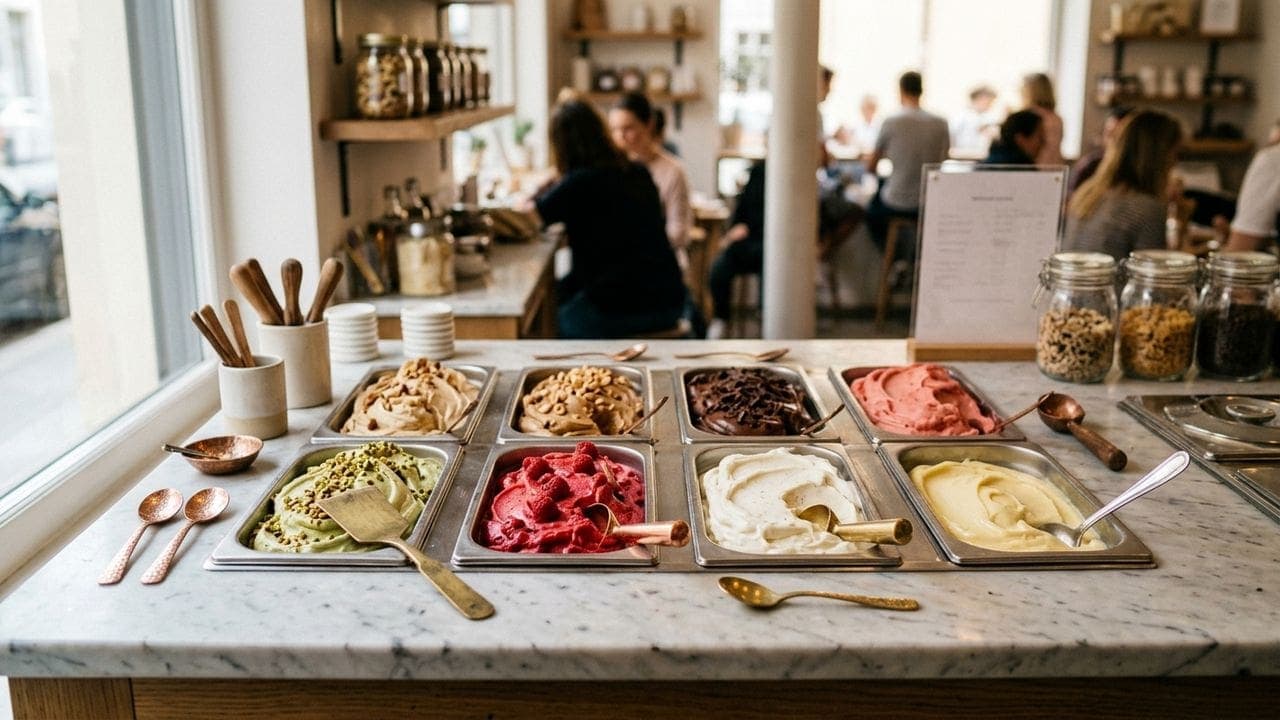
Choosing an ice cream franchise as your entry point into the food and beverage business is a decision that often sounds simple, yet the reality of the Indonesian market in 2026 is far more nuanced. Initial capital can range from Rp 5 million for a basic cart to over Rp 300 million for a popular mall-scale brand.
Before you send a deposit to any franchisor, it is important to understand three things: what initial capital is truly realistic, the daily profit margin you can expect, and the operational risks that are rarely discussed openly by package sellers — including hidden electricity costs, price competition in already-saturated locations, and product limitations that make diversification difficult.
This article presents a complete map of the ice cream franchise market in Indonesia, with capital ranges verifiable from public sources, an honest margin analysis, and one alternative that many entrepreneurs have not yet considered: a gelato business using the cold process method developed by Mr. Jeff at La Gelato Academy.
Key Points You Need to Know
- Ice cream franchise capital in Indonesia ranges from Rp 5 million to Rp 300 million depending on scale and brand
- A simple cone cart is the cheapest entry point, but street price competition is extremely intense
- Average profit margin of 40–60% per cup, minus rent, electricity, and raw material costs
- Many franchises use hot process methods requiring three-phase electricity and 60–80 m² of space
- La Gelato cold process business starts from ≈ $1,400 (Rp 24.9 million) with higher margins and lighter investment
What Is an Ice Cream Franchise and Why Is It Popular in Indonesia
An ice cream franchise is a partnership model in which the franchisor provides a ready-to-use business package — typically an ice cream machine, premix raw materials, branding, and sometimes operational support — to a partner (franchisee) under a commercial contract. This model is popular in Indonesia for three practical reasons: year-round tropical weather that guarantees stable demand, relatively flexible initial capital, and a shorter learning curve compared to other food businesses.
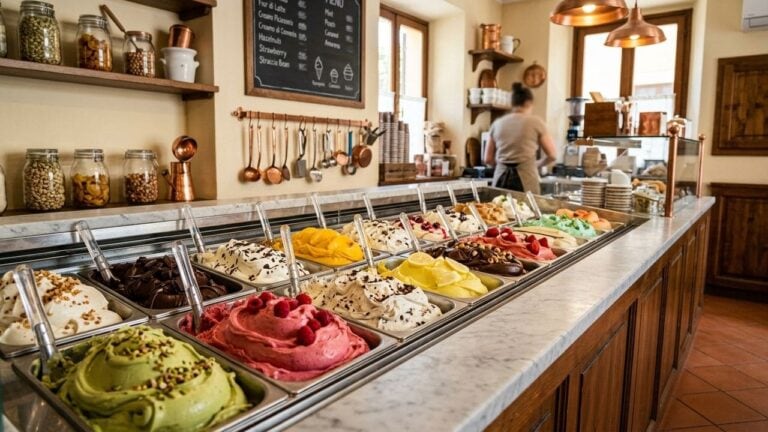
Ice cream demand in Indonesia is also driven by middle-class consumer behavior, with people dining out more frequently — especially in major cities such as Jakarta, Surabaya, Bandung, Yogyakarta, and Medan. Malls, shophouses, food courts, and tourist areas are favorite locations for ice cream cone franchise outlets, gelato ice cream franchises, and trending formats.
However, this popularity also presents a challenge: many premium locations are already saturated by large brands that entered earlier, so new partners must be clever about choosing their segment and location. This is why understanding the capital structure before purchasing a package is crucial.
Initial Capital for an Ice Cream Franchise — 2026 Price Range
Based on public surveys from Indonesian marketplaces and business media, ice cream franchise capital in 2026 can be grouped into four fundamentally different tiers — not merely a price difference, but also differences in operating model, location scale, and risk profile.
| Tier | Initial Capital | Typical Format | Ideal Location |
|---|---|---|---|
| Micro | Rp 5–15 million | Cone ice cream cart, cheap cone, small deposit | Schools, markets, mobile events |
| Small | Rp 15–50 million | Rolled ice cream (Thai roll), fried, durian, rujak ice cream, small bowl | Food courts, simple shophouses, tourist areas |
| Medium | Rp 50–150 million | Small mall kiosk, trendy premium format, complete package with branding | Second-tier malls, busy shophouses, city plazas |
| Large | Rp 200–300 million+ | Major national brand, premium mall kiosk, monthly royalty fee | Premium malls, city center areas |
It is important to note: these figures represent the contractual initial capital. Monthly operating capital (location rent, electricity, staff wages, raw material restocking) is not included in the franchise package. Many franchisees get trapped because they focus only on the initial deposit figure, then run out of operating cash by month three or four.
Types of Ice Cream Franchise Popular in the Indonesian Market
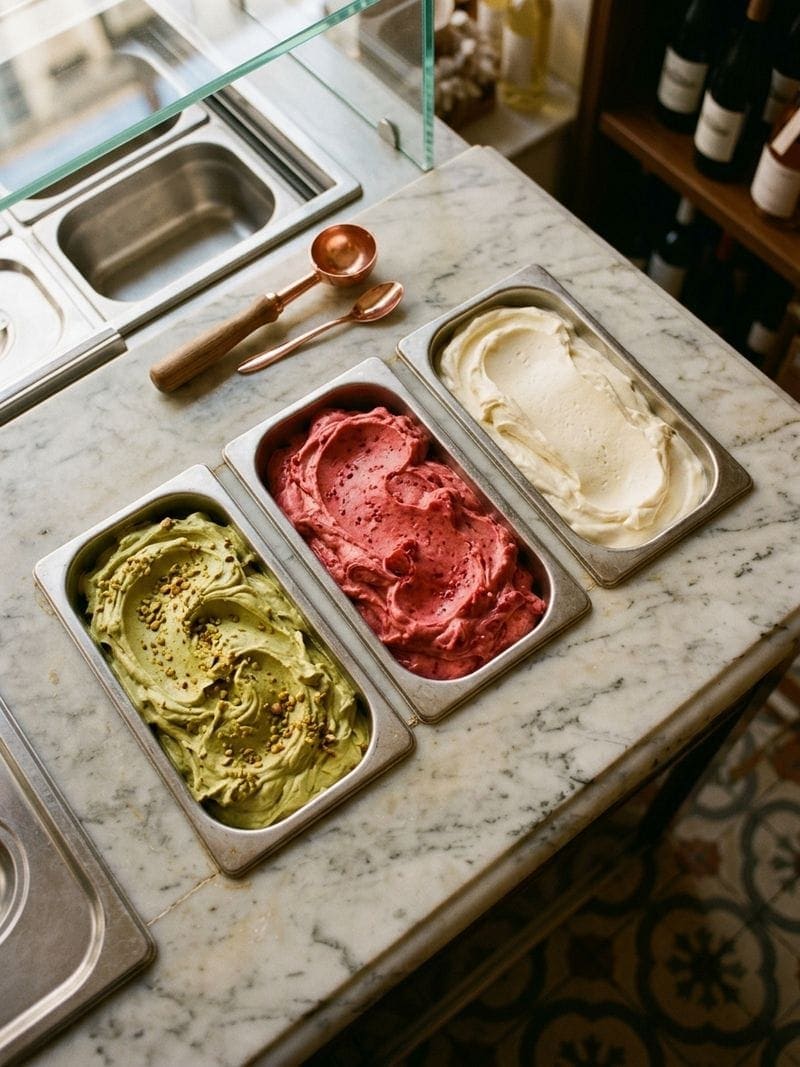
The Indonesian ice cream franchise market is highly segmented. Understanding the differences between product types helps you choose the right segment based on your capital and target market:
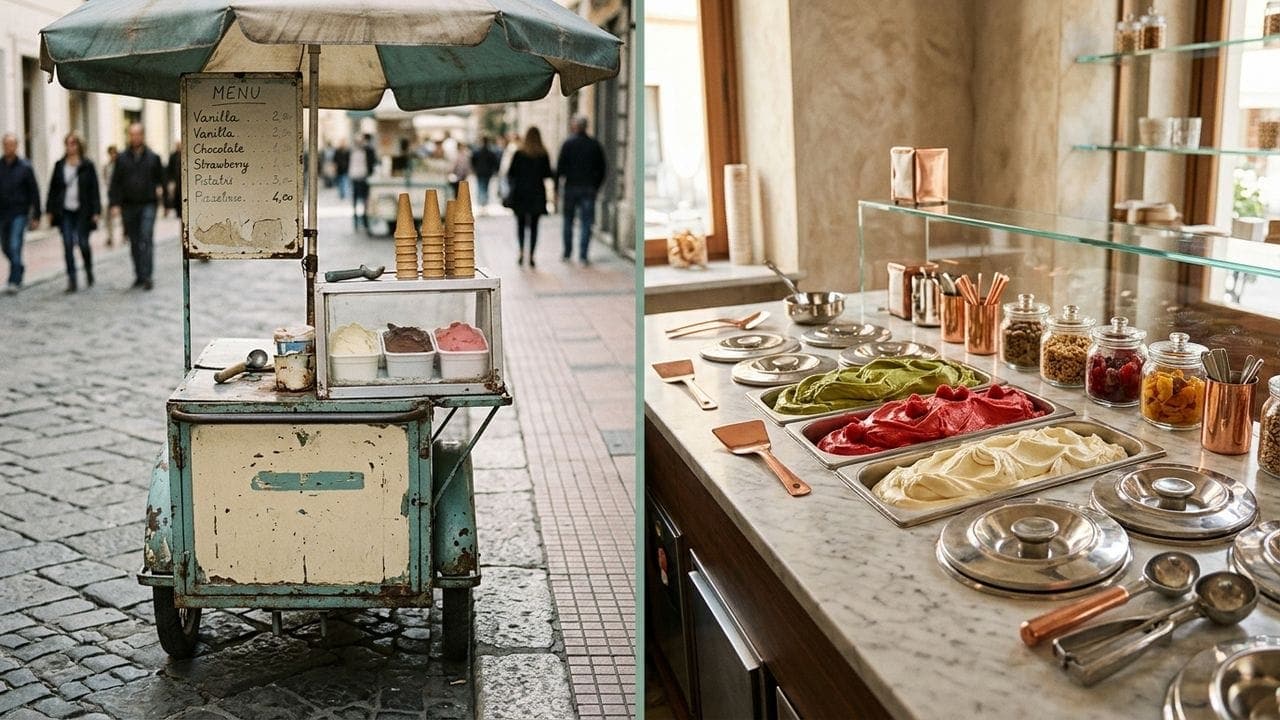
- Classic cone ice cream — cart or small kiosk, with initial capital below Rp 15 million. Suitable for beginners seeking a low-investment entry point. Main risk: very high competition level with compressed street selling prices.
- Rolled ice cream (Thai roll) — cold process on a freezer plate, capital Rp 15–30 million. Was hyped 2018–2022 but starting to saturate; needs a tourist location or busy food court to be profitable.
- Fried ice cream franchise — an attractive fusion product, but requires two production areas (frying + freezing). Capital around Rp 10–20 million. Low replication rate due to complexity.
- Durian ice cream — a niche segment unique to Indonesia, capital Rp 10–25 million. High margin due to premium positioning, but the market is limited to durian enthusiasts.
- Rujak ice cream franchise — a combination of fruit rujak with ice cream, a stable local segment in cities such as Bandung and Surabaya. Capital Rp 5–15 million.
- Ice cream bowl franchise — a trendy dessert format with generous toppings, capital Rp 20–50 million. High margin per cup but requires a mall or plaza location.
- Gelato ice cream franchise — a premium segment bridging ice cream and gelato. Larger capital required (Rp 80–300 million) but stronger positioning and less price-level competition.
Each type has its own learning curve and risks. We recommend not choosing based solely on the lowest capital, but also looking at competitor density within a 1 km radius of your target location.
Looking for a Smarter Approach than a Standard Franchise?
Discover the La Gelato cold process method developed by Mr. Jeff — no royalty fee, no franchise contract, with a business package starting at ≈ $1,400 (Rp 24.9 million) including machine, showcase, base powder, and training.
Profit Margin and Key Risks That Are Often Overlooked
Gross margin per cup of ice cream generally ranges from 40–60% — a figure that sounds attractive. However, after deducting location rent (Rp 5–25 million/month for a mall or strategic shophouse location), staff wages (Rp 2–3 million/person/month, typically needing 1–2 people), electricity (Rp 1–3 million/month), raw material restocking, and monthly royalty fees for larger franchises, net margin often falls to around 10–20%.
There are several risks that franchisors rarely discuss openly:
- Three-phase electricity — many industrial ice cream franchises use continuous freezers requiring PLN industrial power of 10 kW or more. Three-phase installation costs can reach Rp 15–40 million as a one-time expense, not included in the package.
- 60–100 m² of space — a small kiosk may look efficient, but many franchises require a back room for a pasteurizer, shock freezer, and raw material stock. Renting a suitably sized location can be very expensive.
- Raw material supplier lock-in — franchisors often require partners to purchase premix from them at above-market prices. Your margin gets squeezed.
- Machine brand lock-in — you are locked into one machine brand, losing the flexibility to choose more economical equipment later.
- Monthly royalty fee — some large franchises charge 5–10% of turnover as royalty, plus a marketing fund fee. The annual cumulative total can equal a second initial capital outlay.
Before signing any contract, request a 12-month profit and loss simulation from the franchisor that includes all these hidden costs. If the franchisor refuses to provide a written simulation, treat that as a red flag.
Note from Mr. Jeff — Recipe & Method Creator
« Many ice cream franchises inherit an old model designed for European or American markets — not for Indonesia’s tropical climate. The cold process method I developed was born precisely from operational needs in Yogyakarta: lighter, more space-efficient, and more hygienic in hot and humid conditions. »
Alternative: From Ice Cream Franchise to a Cold Process Gelato Business
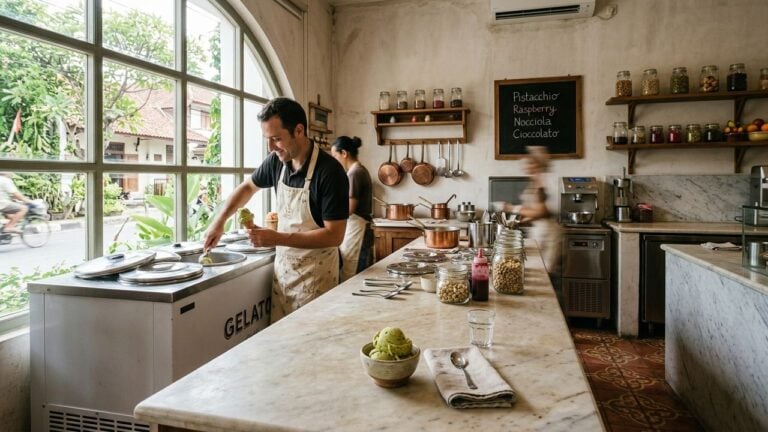
If you are considering an ice cream franchise because you want to enter the frozen dessert category, there is one category that often slips under the radar: artisan gelato business. Gelato is not ice cream — differences in technique, fat content, and serving temperature make it a product in a different class. To understand this difference in depth, read the complete guide to the difference between gelato and ice cream.
Unlike most ice cream franchises that still use the hot process method (requiring a pasteurizer, shock freezer, and 18 kW three-phase electricity), the La Gelato cold process method developed by Mr. Jeff is designed specifically for Indonesia’s tropical climate. Key characteristics:
- Initial capital from ≈ $1,400 (Rp 24.9 million) with the Basic Package — including a Wiratech 5L local machine, custom showcase, 10 packs of base powder, accessories, and free training
- Residential PLN 3.2 kW is sufficient — no need for three-phase installation that can cost up to Rp 40 million
- Only 20 m² of space required — compare this to a traditional hot process setup that needs 60–80 m²
- No pasteurizer and no shock freezer — these two machines alone save capital of Rp 290–615 million
- No franchise contract and no royalty fee — you are 100% owner of your own business
- Higher margin per cup due to gelato’s premium positioning above mass ice cream
- 7-day money-back guarantee if you have not yet attended the hands-on workshop in Yogyakarta and have not completed more than 30% of the online content
For those interested in an actual franchise model for gelato, La Gelato also has a B2B partnership program at la-gelato.com — however, the most popular path is to learn the method through the training academy, then open an independent business. Learn more about this structure in the gelato franchise Indonesia guide.
How to Choose the Right Ice Cream Franchise for Your Situation
If after reading the considerations above you still choose an ice cream franchise as your business path, use the following checklist before signing any contract:
- Verify the franchisor’s legality — make sure they are registered with the Ministry of Trade with an STPW number (Surat Tanda Pendaftaran Waralaba / Franchise Registration Certificate)
- Request financial reports from at least 3 existing partners in locations similar to your target — if the franchisor is reluctant, that is a red flag
- Calculate a realistic BEP — the break-even point must be clear within 12–18 months, not 36 months
- Check supplier and machine lock-in — are you required to purchase premix from the franchisor alone? What is the price difference vs. the open market?
- Survey competitors within a 1 km radius — if there are already 3+ similar outlets, price competition will erode your margin
- Check hidden costs — electrical installation, kiosk renovation, raw material logistics costs, monthly royalty, marketing fund
- Ask about the exit clause — what happens if the business does not work out? Can you resell the machine?
This approach is equally important for large franchise partners and for participants purchasing an independent business package such as the La Gelato Business Package. The difference is that an independent business package does not bind you to a long-term franchise contract.
Frequently Asked Questions about Ice Cream Franchises
What is the minimum capital to start an ice cream franchise in Indonesia?
The minimum capital for an ice cream franchise in Indonesia starts from Rp 5 million for a simple cone cart package with a small deposit. However, for a franchise with a national brand and adequate operational support, realistic capital ranges from Rp 50–150 million. Initial capital alone is not enough — you also need to prepare 3–6 months of working capital for rent, wages, and restocking before reaching BEP.
Which is more profitable: a budget ice cream franchise or a premium ice cream franchise?
Budget ice cream franchises (cone, rolled) have a faster BEP but thinner margin per cup and very intense competition. Premium franchises (gelato ice cream, mall format) offer higher margins and stronger positioning but require much larger initial capital. The choice depends on your risk profile and competitor analysis at your target location. Many entrepreneurs do better with an independent business such as cold process gelato because they are not tied to monthly royalty fees.
Is the cone ice cream franchise still profitable in 2026?
The cone ice cream franchise is still profitable if the location is not yet saturated and you can maintain a selling price above Rp 5,000 per cone. In large cities where many competitors sell cones at Rp 2,000–3,000, net margin can fall below 15%. Schools, regional tourist areas, and mobile events remain sweet spots. For mall or shophouse locations, the premium gelato segment often delivers better return per square meter.
Is the La Gelato cold process gelato business a franchise?
No. La Gelato Academy sells independent business packages (≈ $1,400 / $3,350 / $4,200 — Rp 24.9 / 59.8 / 74.7 million) that include a machine, showcase, base powder, accessories, and training — with no franchise contract and no monthly royalty fee. You are 100% owner of your own business, free to choose your location, selling price, and marketing strategy. For a more formal B2B partnership structure, La Gelato also has a program at la-gelato.com.
Still Unsure Whether to Choose an Ice Cream Franchise or an Independent Gelato Business?
Contact the La Gelato Academy team for a free 15–30 minute discussion about your business plan. We help you compare the franchise model with the La Gelato independent business package based on your capital, location, and target market — no pressure, no commitment.
Free consultation — No commitment — Fast WhatsApp response
Conclusion
Choosing an ice cream franchise in Indonesia in 2026 requires far deeper consideration than simply comparing deposit prices. Initial capital of Rp 5–300 million covers an extremely wide spectrum — from a simple cone cart to a premium mall kiosk — each with different risk profiles, margins, and operational requirements. Many new entrepreneurs get caught by an attractive deposit figure, then run out of operating cash because they did not prepare working capital, hidden electricity costs, or supplier lock-in arrangements that erode their margin.
For those who want to enter the frozen dessert category with lighter capital, greater flexibility, and no royalty fee, the La Gelato cold process method developed by Mr. Jeff offers a concrete alternative path. Innovation without pasteurization. No temperature gap — a more hygienic, more efficient product, through a lightning process. Starting from ≈ $1,400 (Rp 24.9 million), with residential PLN at 3.2 kW, 20 m² of space, and hands-on training from our instructor team in Yogyakarta — no franchise contract, no supplier lock-in, and with a 7-day money-back guarantee for Package 1 online.
About the Creator
Mr. Jeff
A graduate of an Italian artisan gelato school, Mr. Jeff is the creator of all La Gelato recipes, methods, and production procedures — including the proprietary cold process method adapted for Indonesia’s tropical climate. After years of developing and testing formulations in the La Gelato laboratory in Yogyakarta, the academy curriculum was built from real field experience, not academic theory.
The philosophy he instills in the curriculum is simple: knowledge shared honestly is the path to a blessed business. Every recipe taught at La Gelato Academy has passed dogfooding — tested for months in our own laboratory before reaching course participants.
Mr. Jeff applies the same approach across the entire La Gelato ecosystem: the training academy (lagelatoacademy.com), the B2B raw material factory, and the partnership program (la-gelato.com). Every component of the system offered has been genuinely proven before being shared.