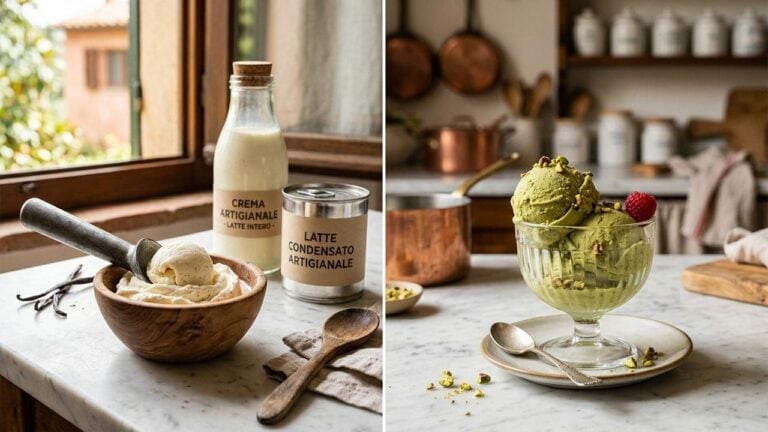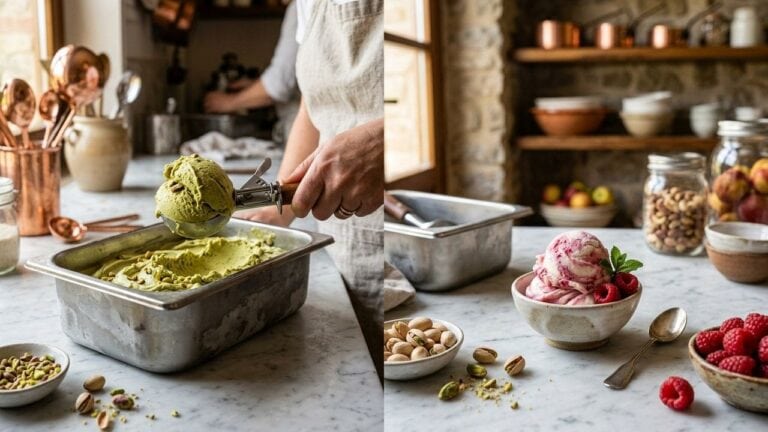
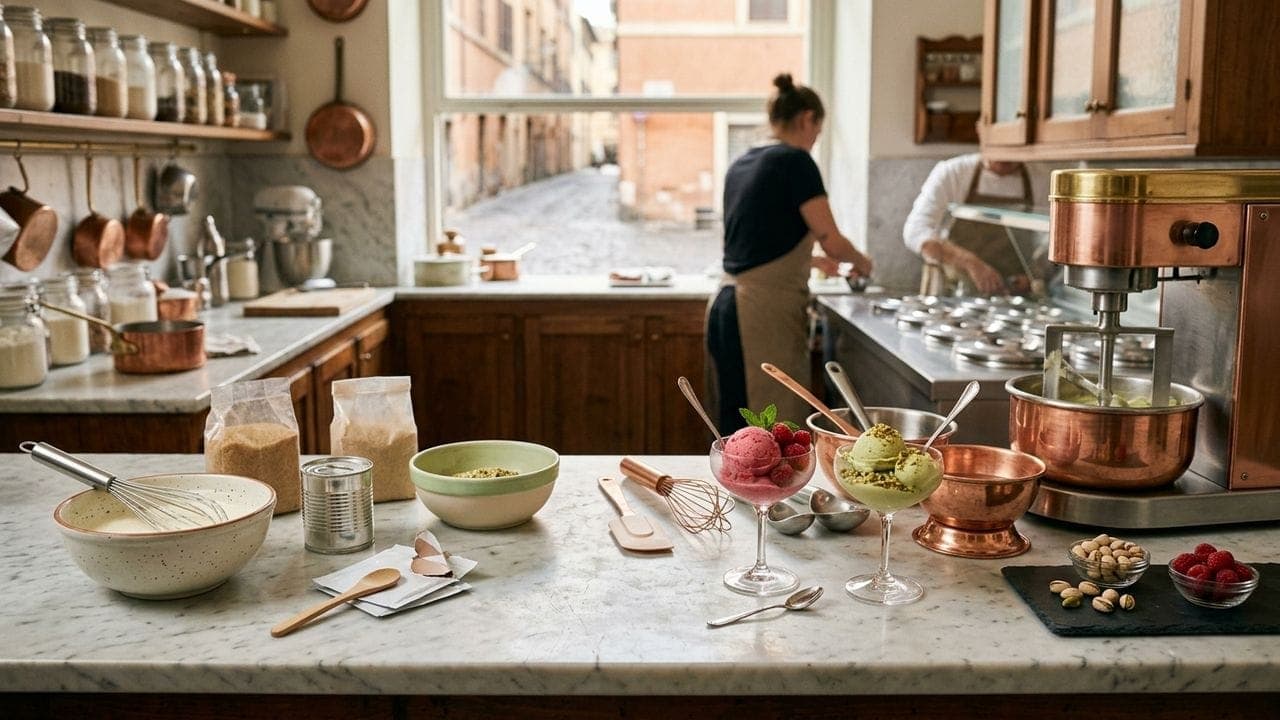
Making ice cream yourself at home is actually far simpler than you might imagine. With just three ingredients and no mixer, you can serve soft ice cream for the family this very afternoon. Thousands of Indonesian families do it every week with Pop Ice, sweetened condensed milk (susu kental manis), or cornstarch (tepung maizena).
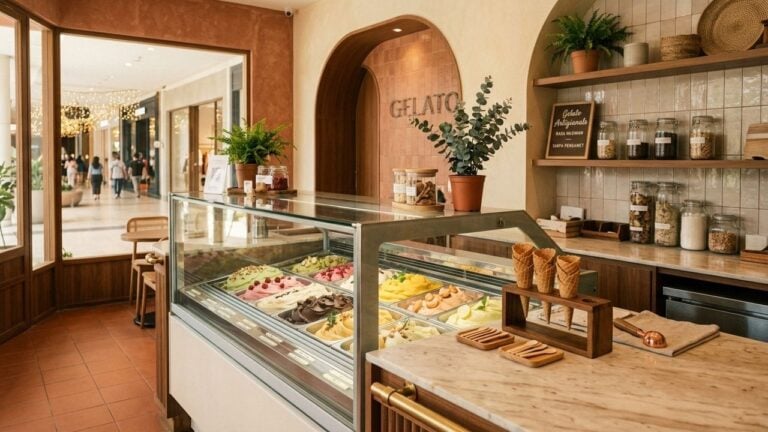
But if you start comparing your homemade ice cream with the Italian gelato sold by the scoop for Rp 35,000 at cafés in Yogyakarta or Bali, the difference is no accident. Smoother texture, cleaner flavor, longer stability — all of that is the result of a professional method that differs fundamentally from home recipes.
This guide takes you from the simplest 3-ingredient ice cream recipe all the way to the cold process method used by La Gelato Academy to train aspiring gelato entrepreneurs in Indonesia. The recipes and methods were developed by Mr. Jeff, creator of all La Gelato production procedures.
Key Points You Should Know
- The simplest homemade ice cream recipe requires only 3 ingredients and a regular freezer — no mixer or machine needed.
- Pop Ice, sweetened condensed milk, and cornstarch recipes are the most popular variations in Indonesia because they are affordable and foolproof.
- Homemade ice cream and authentic Italian gelato are very different — air content, fat content, and serving temperature are all distinct.
- La Gelato’s cold process method delivers innovation without pasteurization and no temperature gap — a more hygienic, more efficient product, through a lightning process — compared to the traditional method.
- Going from hobby to gelato business requires a method transition, not just a change in scale — professional training helps you avoid costly mistakes.
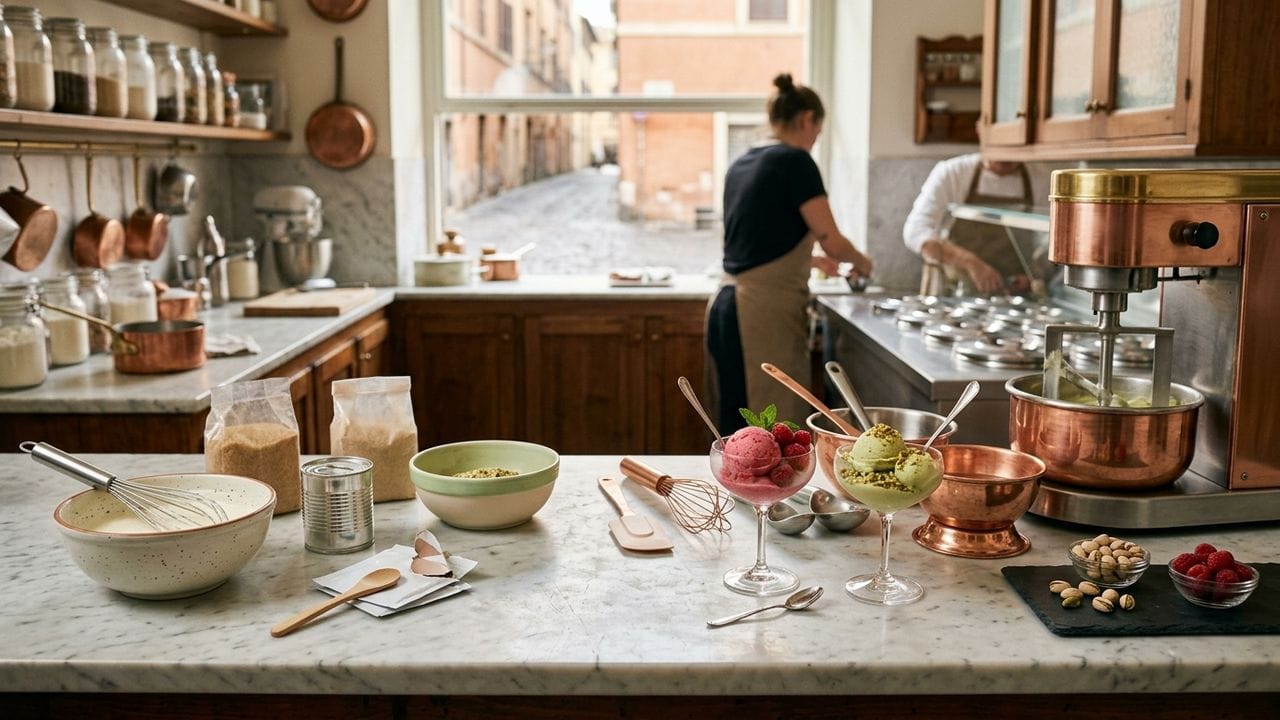
Why Do You Want to Make Ice Cream at Home?
Making homemade ice cream is a popular search in Indonesia for very understandable reasons. Store-bought ice cream is expensive — one serving of a popular brand at a mall can cost Rp 25,000 to Rp 50,000, while the raw ingredient cost is less than Rp 5,000. Making it yourself at home lets you serve one liter of ice cream for the whole family for the same price as a single store portion.
The second reason is ingredient control. When you make it yourself, you know exactly what goes in — no excessive synthetic colorings, no preservatives you don’t recognize, no artificial flavoring. For children with allergies or families who monitor what they consume, this is the main argument.
Third, creative flavors. Homemade ice cream recipes open up flavor possibilities you will never find in a store: authentic Medan durian, buttery avocado (alpukat), a perfectly ripe ambon banana (pisang ambon), young coconut from the garden. Local flavor creations are the strength of homemade ice cream recipes compared to factory products.
Finally, personal satisfaction. Learning how to make ice cream yourself is a kitchen skill to be proud of, easy to teach to children, and it is the starting point that many Indonesian gelato entrepreneurs mention when asked how they got their business going.
Base Ingredients for Making Homemade Ice Cream
Before we get into the recipes, let’s understand the base ingredients that make up every homemade ice cream, from the simplest to the most complex. Understanding the function of each ingredient will help you improvise later without your ice cream going wrong.
The main ingredient is liquid milk — it can be UHT liquid milk, sweetened condensed milk (susu kental manis / SKM), or thick coconut milk for a tropical version. This liquid provides volume and creamy flavor. The sweetener is usually granulated sugar or the sweetened condensed milk itself, which is already sweet. The thickener is whipping cream powder, thick cream, or dissolved cornstarch (tepung maizena) — its function is to make the texture softer and prevent ice crystals from forming during freezing.
Optional but very helpful ingredients: Pop Ice (already contains sweeteners and stabilizers), specialty ice cream expansion powder (rare in Indonesia, more commonly found in specialty baking shops), or a small amount of white vinegar (helps stabilize the emulsion). For fruit-flavored ice cream recipes, you add fresh blended or puréed fruit.
A tip from experience: the quality of the UHT liquid milk you choose will greatly determine the final flavor. Low-fat milk produces thinner ice cream; full-cream milk produces a creamier texture. For a budget-friendly version, sweetened condensed milk remains the most popular choice in Indonesian ice cream recipes because it is affordable and delivers a rich, sweet taste.
How to Make Simple Ice Cream Without a Mixer (3 Ingredients)
The 3-ingredient ice cream recipe is the most popular starting point for beginners. No mixer needed, no machine, no experience required. This simple ice cream method without a mixer uses a straightforward physics trick: the air you whisk in by hand will make the ice cream expand and become soft when frozen.
Ingredients you need:
- 1 can of sweetened condensed milk (approximately 370 grams)
- 500 ml liquid whipping cream (or thick UHT cream)
- 1 tablespoon vanilla extract (or vanilla powder)
How to make 3-ingredient ice cream, step by step:
1. Chill the liquid whipping cream in the refrigerator for at least 2 hours before using. Cold cream whips up more easily.
2. Whip the liquid whipping cream in a large bowl with a hand whisk or fork until it forms stiff peaks — about 5 to 7 minutes manually, faster with a mixer. This is the most tiring step if done by hand, but it is entirely doable without a mixer.
3. Pour the sweetened condensed milk slowly into the whipped cream. Fold with a spatula — do not stir vigorously so that the air does not escape.
4. Add the vanilla extract. Fold briefly.
5. Transfer the mixture to a sealed container (a plastic box or a loaf pan lined with plastic wrap). Freeze for at least 6 hours, ideally overnight.
6. Before serving, remove from the freezer 5 to 10 minutes early so it is not too hard to scoop.
The result: soft, sweet, creamy ice cream — very similar in texture to store-bought ice cream. This super-soft 3-ingredient homemade ice cream recipe can be varied endlessly by adding cocoa powder, crushed Oreos, instant coffee, or matcha.
Note from Mr. Jeff — Creator of Recipes & Methods
« This 3-ingredient recipe is an excellent entry point for anyone who wants to understand the basics of ice cream. But remember: what you are whisking in by hand is air, and it is that air that separates good ice cream from ordinary ice cream. If you master this principle at home, you are already halfway to understanding the professional gelato method. »
Recipe Variations: Pop Ice, Sweetened Condensed Milk, Cornstarch, and Fresh Fruit
Once you have mastered the basic 3-ingredient recipe, it is time to explore with ingredients more familiar in the Indonesian market. How to make Pop Ice ice cream, how to make ice cream with cornstarch and Pop Ice, or an avocado ice cream recipe — all of them use the same principle but with different base ingredients.
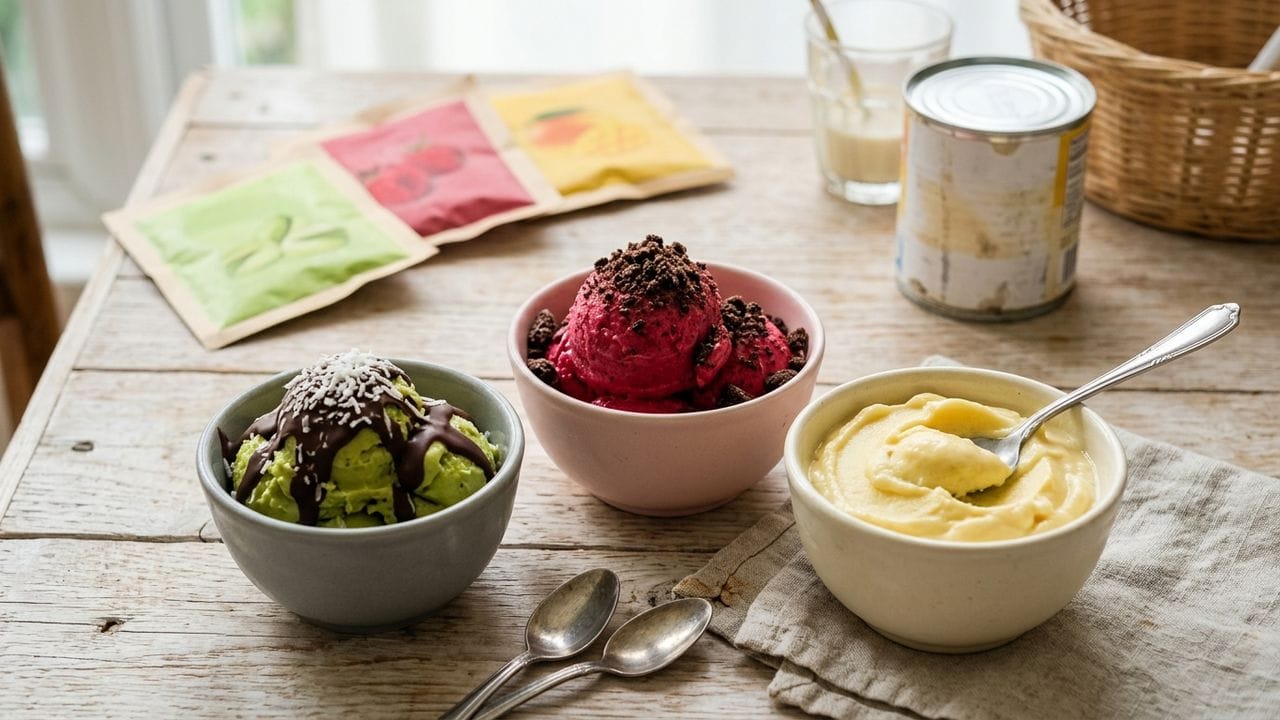
Pop Ice ice cream recipe is a favorite with Indonesian children. Dissolve 2 sachets of Pop Ice in the flavor of your choice in 200 ml of hot water, let it cool, then mix with 200 ml of sweetened condensed milk and 200 ml of thick coconut milk or whipping cream. Mix with a mixer or fork for 5 minutes, pour into a container, and freeze for 6 hours. Foolproof Pop Ice ice cream tip: make sure the Pop Ice is completely dissolved and cooled before mixing so it does not clump.
How to make ice cream with cornstarch and Pop Ice: mix 1 tablespoon of cornstarch (tepung maizena) with a little water, stir until dissolved, then heat with 250 ml of liquid milk until thickened while stirring continuously. Once thickened, let it cool, then mix with the dissolved Pop Ice and sweetened condensed milk. The cornstarch here acts as a thickener, making the texture smoother and preventing ice crystals from forming.
Fruit ice cream recipe with avocado (alpukat), durian, banana, or mango: blend 200 grams of the chosen fruit with 200 ml of sweetened condensed milk until smooth. Mix with 250 ml of whipped cream that has been whipped to soft peaks. Add a little lime juice for avocado and durian — it prevents discoloration. Freeze for 6 hours. Tip for smooth avocado ice cream: choose a fully ripe buttery avocado — the flesh will be creamier. Durian ice cream recipe: use frozen durian when out of season; the result is almost identical to fresh durian.
For ice cream recipes for small-scale selling or micro-business ideas, the combination of Pop Ice + sweetened condensed milk + cornstarch is an economical formula that keeps well in a warung freezer.
How to Make Soft Churned Ice Cream Without a Machine
Churned ice cream (es krim putar) is a traditional Indonesian technique that produces a unique texture — more granular than modern ice cream, but with a distinctive nostalgic flavor from street vendors of the past. The authentic method uses a large can of ice cream batter rotated inside a container filled with ice and coarse salt.
Basic churned ice cream method: mix 500 ml of thick coconut milk, 200 grams of granulated sugar, 1 tablespoon of cornstarch (dissolved), and a pinch of salt. Cook while stirring until thickened, then let it cool. Place in a small, tightly sealed can, then set that can inside a large bucket filled with crushed ice and coarse salt (ice to salt ratio = 3:1). Rotate the small can inside the bucket for 20 to 30 minutes — the batter will freeze slowly and become ice cream.
The key trick: salt lowers the temperature of the ice below 0°C, speeding up the freezing of the batter without making it crystallize too coarsely. This traditional manual ice cream method is great for family gatherings or children who want to see the science behind ice cream.
For a modern version without the rotating can, use the scraping technique: every 30 minutes during the first 3 to 4 hours in the freezer, take the batter out and stir it with a fork to break up the ice crystals that have formed. The result is a smoother texture, closer to store-bought ice cream. A soft and affordable ice cream recipe does require a little extra patience — but the result is worth it.
Why Homemade Ice Cream Differs from Authentic Italian Gelato
After successfully making various homemade ice cream recipes, there comes a moment when you begin to wonder: why does my ice cream, though delicious, still taste different from Italian gelato at a café? The answer is not about expensive ingredients — it is about science and method.
Authentic Italian gelato, or professional gelato-making, follows three principles that differ greatly from both industrial and homemade ice cream: lower air content (25–35% vs. 50–100% in industrial ice cream), lower fat content (4–8% vs. 10–16%), and a warmer serving temperature (−12°C vs. −18°C). The result: denser texture, more intense flavor, and a mouthfeel that is very different.
| Characteristic | Homemade Ice Cream | Authentic Italian Gelato |
|---|---|---|
| Air content (overrun) | 50–80% (depending on whipping) | 25–35% (high density) |
| Fat content | 10–15% (whipping cream + condensed milk) | 4–8% (lighter) |
| Serving temperature | −18°C (straight from the freezer) | −12°C (dedicated display case) |
| Stabilizer | Cornstarch or whipping cream | Precision-formulated raw materials |
| Initial investment | < Rp 100,000 | Rp 50 million+ (machine & ingredients) |
The most fundamental difference is precision formulation. Professional gelato recipes are calculated in Brix (sugar content), total solids, fat content, free water content, and the ratio of each component — not approximate spoonfuls. Without this precision formulation, it is impossible to achieve the texture and stability of authentic Italian gelato, no matter how expensive the ingredients you use.
The Cold Process Method: The Professional Way to Make Gelato in Indonesia
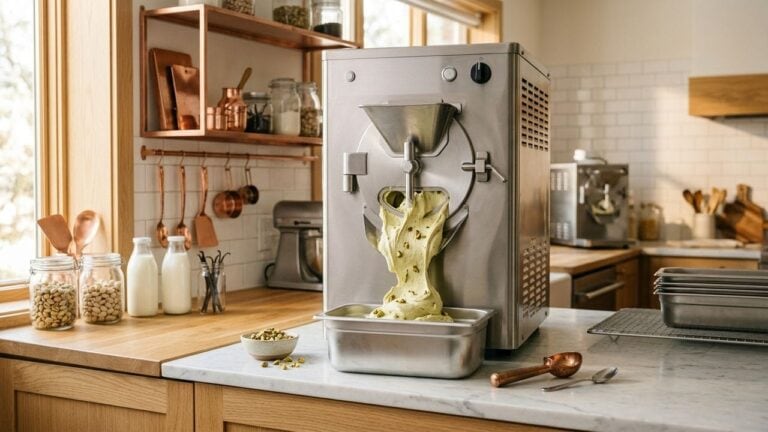
For decades, traditional Italian gelato was made using the hot process method — heating the batter to 85°C for pasteurization, then cooling it to 4°C for 4 to 12 hours (the aging process), before finally being processed in a batch freezer. This method produces high-quality gelato but requires complex machinery (pasteurizer + aging tank + batch freezer) and high electricity consumption that is difficult to obtain in many Indonesian households.
At La Gelato Academy, we teach the cold process method — a unique adaptation developed by Mr. Jeff for the Indonesian market. Our method motto: Innovation without pasteurization. No temperature gap — a more hygienic, more efficient product, through a lightning process. Cold process relies on commercially sterile UHT milk (processed at 135–150°C in factory) combined with La Gelato pre-formulated base powder (GP-BASE, GS-BASE, XP-BASE, SOFTIZ), so no in-lab heating is required.
The cold process method brings three structural advantages for Indonesian gelato entrepreneurs. First, food safety: without heating, the risk of cross-contamination between raw and cooked ingredients is nearly zero. Second, setup cost: without a pasteurizer and aging tank, the machinery investment drops drastically — a cold process lab can operate with a compact batch freezer that runs on standard PLN 3.2 kW household electricity. Third, production speed: with no 4-to-12-hour aging period, from mixing to market-ready product takes only 30 to 45 minutes.
Cold process is not a La Gelato trade secret — it is a paradigm already well known in Italy. What sets La Gelato Academy apart is the proprietary procedures and recipes within the cold process paradigm — formulations developed by Mr. Jeff specifically for Indonesia’s tropical climate, with adaptations for humidity, local fruit varieties, and raw material availability in the Indonesian market.
Ready to Level Up from Homemade Ice Cream to Authentic Italian Gelato?
La Gelato Academy’s Gelato Course teaches the complete cold process method — precision formulation, production techniques, and business SOPs. Package 1 starts at Rp1.250.000 (regular price RP3JT), including lifetime access and 3 free raw material sachets delivered anywhere in Indonesia.
From Hobby to Business: Turning Home Recipes into a Gelato Enterprise
Many Indonesians start with homemade ice cream recipes for small-scale selling — at a warung out front, via neighborhood WhatsApp, or through online orders. This is a solid starting point, but at some stage you will hit a wall: your product tastes good but is inconsistent, ingredient costs keep eating into your budget, the neighbor’s warung has already copied your recipe. How do you move to the next level?
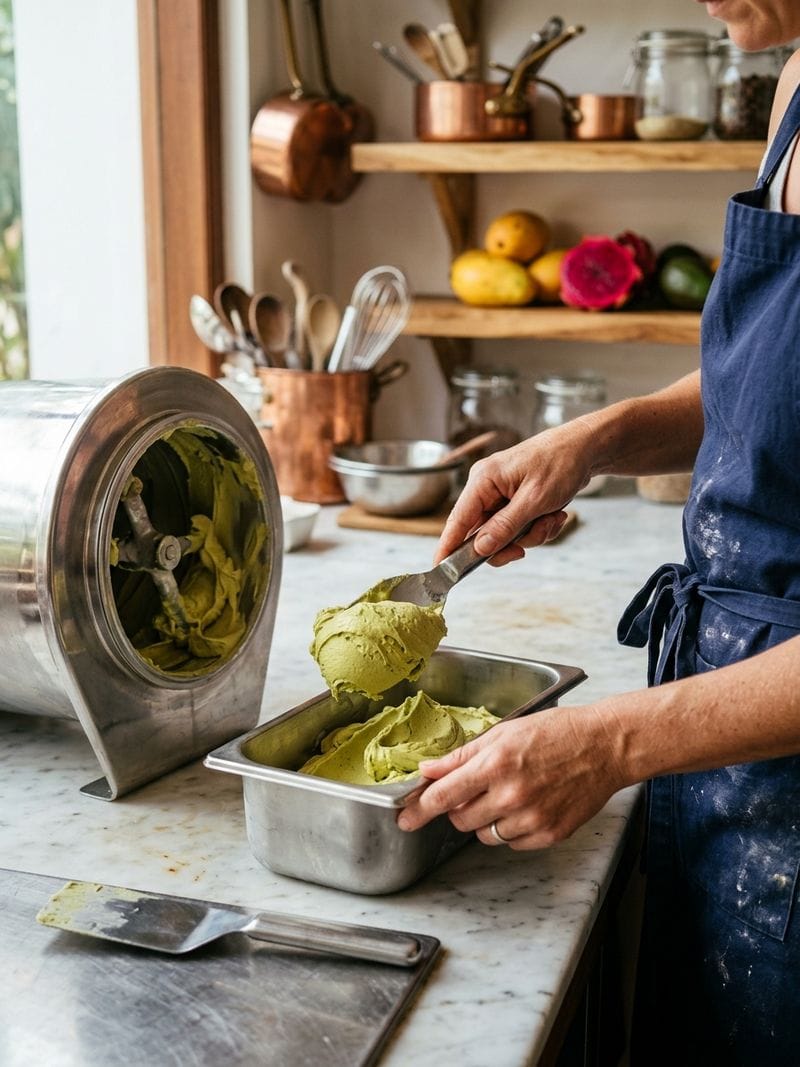
The transition from homemade ice cream to a professional gelato business is not simply about buying a bigger machine. It is about transforming three fundamental pillars: formulation (from approximate spoonfuls to precise Brix calculations), production (from a home freezer to a food-grade batch freezer), and branding (from « homemade ice cream » to a premium product with healthy margins). Each pillar requires knowledge you cannot learn from YouTube or a blog recipe alone.
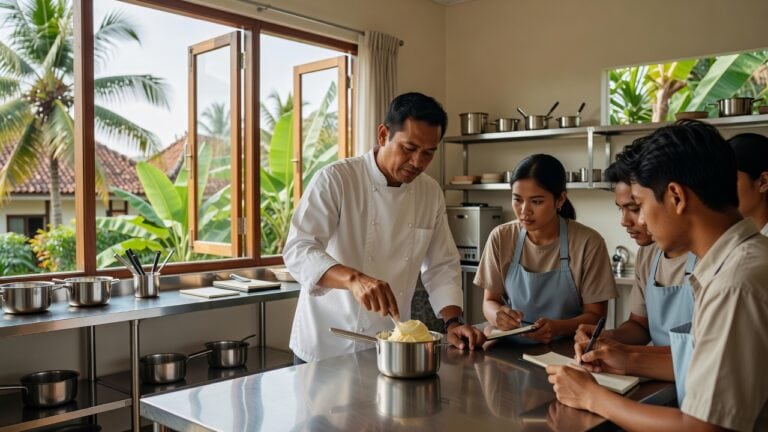
At La Gelato Academy, our instructor team trains aspiring gelato entrepreneurs to master all three pillars in 1 to 2 months, through a combination of lifetime e-learning access, free raw material sachets for home practice, and 1-on-1 practical workshops in our laboratory in Yogyakarta. Every recipe and method we teach has passed dogfooding — tested for months in our own laboratory before being introduced to course participants.
Note from Mr. Jeff — Creator of Recipes & Methods
« Every successful gelato entrepreneur I know in Indonesia started from a simple home recipe. But they all share one thing: at some point they stopped experimenting on their own and learned professional methods seriously. Knowledge shared honestly is the path to a business built to last. »
Frequently Asked Questions About How to Make Ice Cream
What is the difference between ice cream and gelato?
Ice cream is technically the same regardless of language — both have a fat content of 10–16% and air content of 50–100%. Authentic Italian gelato is fundamentally different: lower fat (4–8%), less air (25–35%), a warmer serving temperature (−12°C), and a denser texture. The result: gelato flavor tastes more intense and cleaner than industrial ice cream.
Is it possible to make ice cream without a mixer or machine?
Yes. A 3-ingredient recipe with liquid whipping cream whipped by hand, sweetened condensed milk, and vanilla produces soft ice cream without any equipment other than a bowl and whisk. The main trick is incorporating air while whipping the cream and using the scraping technique (stirring every 30 minutes during the first 3 hours in the freezer) to prevent coarse ice crystals.
How long can homemade ice cream be stored in the freezer?
Homemade ice cream typically keeps for 2 to 3 weeks in a home freezer at −18°C in a tightly sealed container. After that, the texture begins to crystallize coarsely even though it is still safe to eat. Recipes with whipping cream and sweetened condensed milk keep longer than those made with plain liquid milk. For businesses, professionally formulated ice cream keeps for 4 to 6 months without losing quality.
How much does it cost to start a gelato business from home?
To start a professional gelato business using the cold process method, the initial machinery investment is approximately Rp 25–50 million (compact batch freezer + small display freezer). Add initial raw materials of Rp 3–5 million and working capital of Rp 5–10 million. This is far less than a traditional hot process gelato setup, which requires a minimum of Rp 200 million. Cold process can operate on standard PLN 3.2 kW residential electricity.
Do I need formal training to make professional gelato?
For a home hobby, no — blog recipes and YouTube are sufficient. For a commercial business, it is highly necessary. Making gelato that is consistent batch to batch, stable in a display freezer for 4 to 6 months, and maintains healthy margins requires knowledge of formulation (Brix, total solids, fat content), production techniques, and hygiene SOPs. Professional training saves 1 to 2 years of very costly trial and error if done on your own.
What are the advantages of the cold process method over the traditional method?
Cold process uses commercially sterile UHT milk plus La Gelato pre-formulated base powder, so no heating or cooling is required in your lab. The advantages: safer (lower risk of cross-contamination), cheaper (no pasteurizer or aging tank needed), faster (30 to 45 minutes vs. 6 to 12 hours with the traditional method). Well-suited for first-time entrepreneurs and Indonesia’s tropical climate.
Still Hesitant to Start the Gelato Course?
Before registering, contact the La Gelato Academy team for a free 15-to-30-minute discussion about your gelato business plan. We will help you choose the package that best fits your situation and budget — no pressure, no commitment.
Free consultation — No commitment — Fast WhatsApp response
Conclusion: From Your Kitchen Today to a Gelato Display Case Tomorrow
Learning how to make ice cream at home is not just a kitchen skill — it is a doorway to a much wider world. You have learned the simplest 3-ingredient ice cream recipe, the Pop Ice and cornstarch variations familiar across Indonesia, and the traditional churned ice cream technique. You have also understood why homemade ice cream, however good it tastes, remains different from authentic Italian gelato.
Three key ideas to take away: first, homemade ice cream recipes are a solid foundation — all successful gelato entrepreneurs started there. Second, moving to a professional level requires the science of precision formulation, not just a bigger machine. Third, La Gelato’s cold process method — Innovation without pasteurization. No temperature gap — a more hygienic, more efficient product, through a lightning process — offers an affordable path from home hobby to a sustainable business, especially in Indonesia’s tropical climate.
Whatever your starting point today — whether you simply want to make ice cream for the family this weekend, or you are planning a gelato business in your city — the journey from recipe to business can begin with one concrete next step. La Gelato Academy’s Gelato Course is the option many Indonesian gelato entrepreneurs have used to accelerate that transition, with a 7-day money-back guarantee for participants who have not completed more than 30% of the online content.
About the Creator
Mr. Jeff
Italian glacier diplomat with years of experience in gelato laboratories. Creator of all recipes, methods, and production procedures at La Gelato — including the proprietary cold process method adapted for Indonesia’s tropical climate. Every formulation taught at La Gelato Academy was developed by Mr. Jeff over months of experimentation in the Yogyakarta laboratory before being integrated into the course curriculum.
The philosophy he instills in the curriculum is simple: knowledge shared honestly is the path to a business built to last. Every recipe taught at La Gelato Academy has passed dogfooding — tested for months in our own laboratory before reaching course participants.
Mr. Jeff applies the same approach to the entire La Gelato ecosystem: the training academy (lagelatoacademy.com), the B2B raw materials factory, and the franchise program (la-gelato.com). Every component of the system on offer has been tested in the real world before being shared with the Indonesian gelato entrepreneur community.