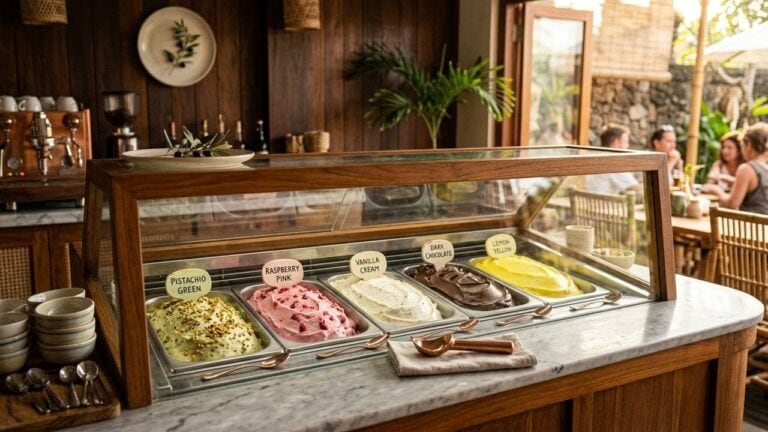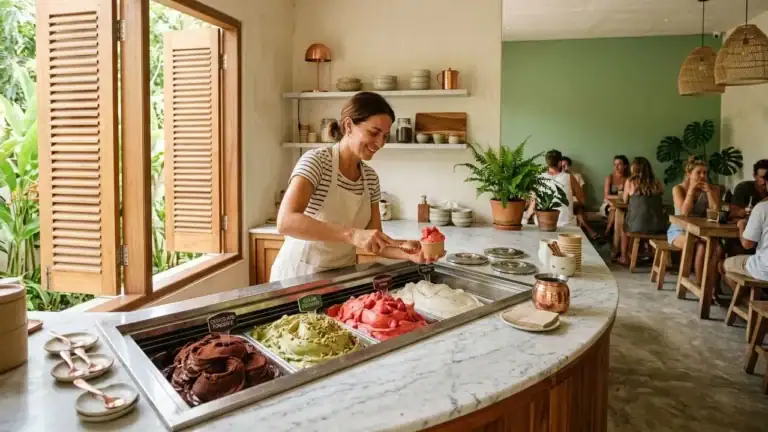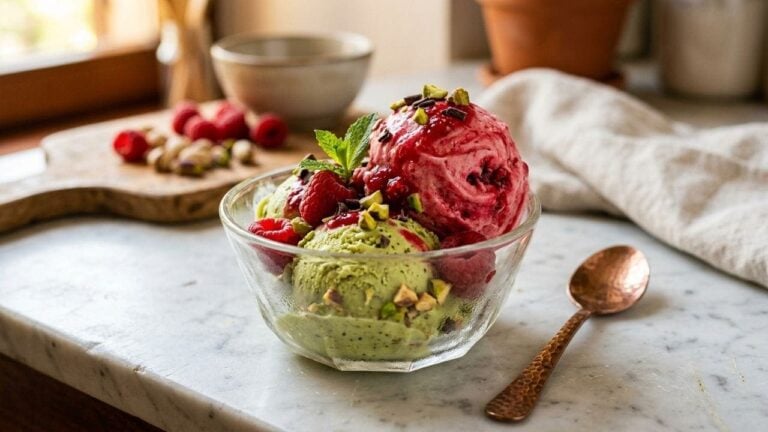
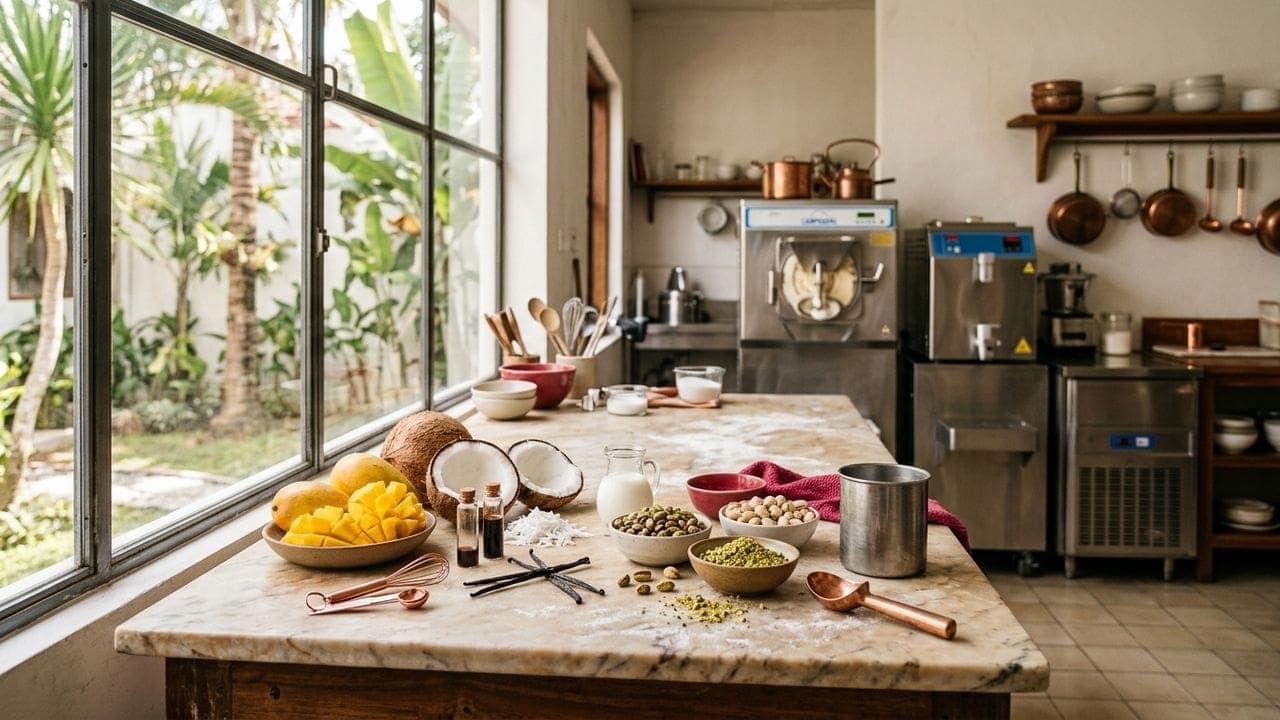
An ice cream course is the most sensible path for anyone who wants to enter Indonesia’s premium culinary industry in 2026 — even if you have never touched a production machine before. Demand for artisan ice cream is rising steadily in major cities such as Jakarta, Bandung, Surabaya, Yogyakarta, and Bali, while the number of genuinely trained professionals remains far below market needs.
Many people searching for an ice cream course are standing at a crossroads: they want to pivot careers, open their own business, or add a premium product to a café they already run. Their questions tend to converge — what is the difference between ice cream and gelato, how much initial capital is required, which course is truly professional, and whether a complete beginner can succeed. This guide answers all of it.
La Gelato Academy is the Italian artisan gelato academy in Yogyakarta that also opens a learning path for those still hesitating between ice cream and gelato. Our recipes, methods, and production procedures were developed by Mr. Jeff (Geoffroy Toussaint) with a simple philosophy: knowledge shared honestly is the path toward a blessed business.
Key Points You Need to Know
- Professional ice cream courses in Indonesia range from Rp 500,000 (short workshop) to Rp 15–25 million (long culinary programs)
- Ice cream, gelato, and sorbet are three technically distinct products — choose a course that matches the product you want to make
- Initial capital for an ice cream business starts at Rp 15–25 million (home production) up to Rp 250+ million (dine-in café)
- No culinary prerequisites — all you need is commitment to complete the modules and willingness to practice at home
- A participation certificate helps business credibility; HALAL and HACCP are far more important for participants who are serious about a business
What Is an Ice Cream Course and Why 2026 Is the Right Year
An ice cream course is a structured training program that teaches you how to make sweet frozen products — from raw material selection, recipe formulation, and production process to quality control, presentation, and sales strategy. Unlike YouTube tutorials or instant recipes circulating online, a professional ice cream course gives you a consistent technical foundation, so every batch you produce has predictable quality.
Why does 2026 matter? First, the purchasing power of Indonesia’s middle class continues to recover after a challenging economic period, and consumers are increasingly seeking premium culinary experiences that justify higher prices. Second, BPOM regulations and HALAL certification are becoming more standardized — so new business owners can build a compliant reputation from day one. Third, the ecosystem of premium raw material suppliers, once very limited, is now mature enough: you can source international-quality milk, sugar, stabilizers, and emulsifiers in many cities.
What distinguishes a professional ice cream course from a hobby workshop is depth. A short weekend workshop typically teaches only ready-made recipes — you follow instructions without understanding why each parameter matters. A professional course teaches you to calculate Total Solids, Sugar Content, and Fat Content, so you can design new recipes yourself when market demand shifts. This is the difference between following a recipe and possessing real expertise.
Ice Cream, Gelato, or Sorbet — What Is the Real Difference
One of the most common points of confusion among prospective participants is the technical difference between three categories of frozen product: ice cream, gelato, and sorbet. Many courses do not explain this clearly, leaving participants with a blurred understanding. Let us clarify.
Ice cream (in the American and British tradition) has a high milk-fat content (typically 14–18%), a high air content introduced during freezing (overrun 80–100%), and is served at a very cold temperature of around -18°C. The result is a light, airy texture that feels intensely cold on the tongue. Gelato is the Italian version: lower milk fat (4–9%), much lower overrun (20–40%), and a warmer serving temperature (-12°C to -14°C). The result is a denser texture, more intense flavor, and a longer creamy sensation in the mouth. Sorbet contains no dairy at all — only fruit, sugar, and water. Ideal for vegan or halal-consistent markets.
| Parameter | Ice Cream | Gelato | Sorbet |
|---|---|---|---|
| Fat content | 14–18% | 4–9% | 0% |
| Overrun (air) | 80–100% | 20–40% | 15–30% |
| Serving temperature | -18°C | -12 to -14°C | -14 to -16°C |
| Texture | Light, airy | Dense, intensely creamy | Refreshing, light |
| Best market fit | Casual consumers, families | Premium, adult | Vegan, halal-consistent, fruity |
The implication for course selection: if you want to open a premium-tier business that justifies higher prices per scoop, gelato is the smarter strategic choice. If your target market is families with children in shopping malls, classic ice cream may be more relevant. Many La Gelato Academy alumni choose to learn gelato first — because the more precise formulation control makes it easier to transition to ice cream or sorbet when market needs shift, while the reverse is not always straightforward.
Who Is a Good Fit for a Professional Ice Cream Course
An ice cream course is not only for experienced F&B professionals. In fact, the majority of successful participants come from very diverse backgrounds. Let us look at the five most common profiles.
Professionals looking for a career pivot. Office workers tired of corporate routine who want to build their own business in the F&B sector. Many choose ice cream because the unit economics are relatively straightforward (high margin per scoop, moderate capital, good scalability) compared to a full-service restaurant.
Homemakers and home-based MSMEs. This profile often starts with home production — making ice cream at home and selling via online marketplaces, WhatsApp pre-orders, or catering for small events. Initial capital is lower and schedule flexibility is higher. Once the business stabilizes, many level up by opening a small kiosk.
Café or restaurant owners who want to add a premium menu item. Established cafés typically seek menu differentiation to improve margins. Artisan ice cream or gelato made in-house (not from a franchise brand) becomes a strong USP that is hard for direct competitors to replicate.
Hospitality or culinary students and recent graduates. Generation Z graduates from hotel management or culinary schools are often unsatisfied with the basic techniques taught on campus. They look for deeper specialization and skills that open doors to fine dining restaurants or premium brands.
Agricultural or dairy farming entrepreneurs. A more specific but increasingly common profile: dairy farmers or fruit growers who want to add value to their own raw materials. Ice cream and gelato are ideal end products — they lift margins from commodity to premium branded product.
What unites all five profiles is a serious commitment to learning and a willingness to practice at home after each module. There are no technical prerequisites before the course.
5 Questions to Choose a Good Ice Cream Course
The ice cream course market in Indonesia is fairly crowded. Some are high quality; others simply sell expensive short workshops. Here are five critical questions you must ask before enrolling — so your money is well invested.
1. Does the course teach recipe formulation, not just recipe following? A quality course teaches you to calculate Total Solids, Sugar Content, and Fat Content so you can design recipes yourself. A course that only provides a collection of ready-made recipes keeps you trapped in dependency — when raw materials or market conditions change, you cannot adapt.
2. Who created the curriculum and what are their credentials? Ideally, the curriculum was created by someone with an official diploma (ideally from Italy or a country with a strong gelato and ice cream tradition) or years of industry experience. Avoid courses that rely on a single instructor with no documented credibility.
3. Does the laboratory and do the recipes comply with HALAL and HACCP standards? For the Indonesian market, HALAL certification is a baseline — without it, the Muslim consumer segment (the majority of consumers) will hesitate. HACCP ensures food safety and facilitates BPOM audits. A serious course will explain compliance with both standards openly.
4. Is there post-course mentoring? The most practical questions arise after you start producing on your own at home. Quality courses offer an active alumni group (WhatsApp or a similar platform), access to curriculum updates, and the possibility of follow-up consultations. Without mentoring, many participants get lost in their first month.
5. Can the techniques taught be transferred across machine brands? Some courses subtly push you toward buying a specific machine brand that is their partner. Avoid this. Choose a course that teaches principles applicable to all gelato and ice cream machine brands — you should remain free to choose the equipment that fits your budget and project.
Note from Mr. Jeff — Recipe & Method Creator
« Every recipe I wrote for La Gelato Academy went through the same testing stage: produced in our own laboratory, sold to real consumers, and refined based on feedback. The philosophy is simple — we do not teach anything we have not used ourselves first. »
What You Will Learn in a Quality Ice Cream Course
The curriculum of a professional ice cream course covers a series of complementary modules — not just a collection of recipes. Here are the eight core knowledge areas that every quality course must include, whether focused on ice cream, gelato, or a combination of both.
Module 1 — Historical and philosophical foundations. Understanding the roots of the American ice cream tradition versus Italian gelato, why every formulation parameter matters, and how culinary culture influences the way consumers receive your product.
Module 2 — Raw materials and local suppliers. Dairy categories (fresh, UHT, cream), sugars (granulated, dextrose, glucose, trimoline), stabilizers (carrageenan, guar gum, locust bean gum), emulsifiers (mono-diglycerides), and flavoring agents. Includes a list of trusted suppliers in Indonesia with proven quality.
Module 3 — Recipe formulation and technical balance. Calculating Total Solids (TS), Sugar Content (SC), Fat Content (FC), and Milk Solids Non-Fat (MSNF) to produce a texture that is stable in your freezer.
Module 4 — Step-by-step production process. From mixing to filling. The traditional approach uses hot pasteurization and cold aging; the cold process approach uses pre-pasteurized raw materials and a formulation designed to be stable without aging.
Module 5 — Quality control and HACCP compliance. Sanitation plan, critical control points, temperature recording, equipment hygiene, documentation required for BPOM audits, and strict HALAL practices.
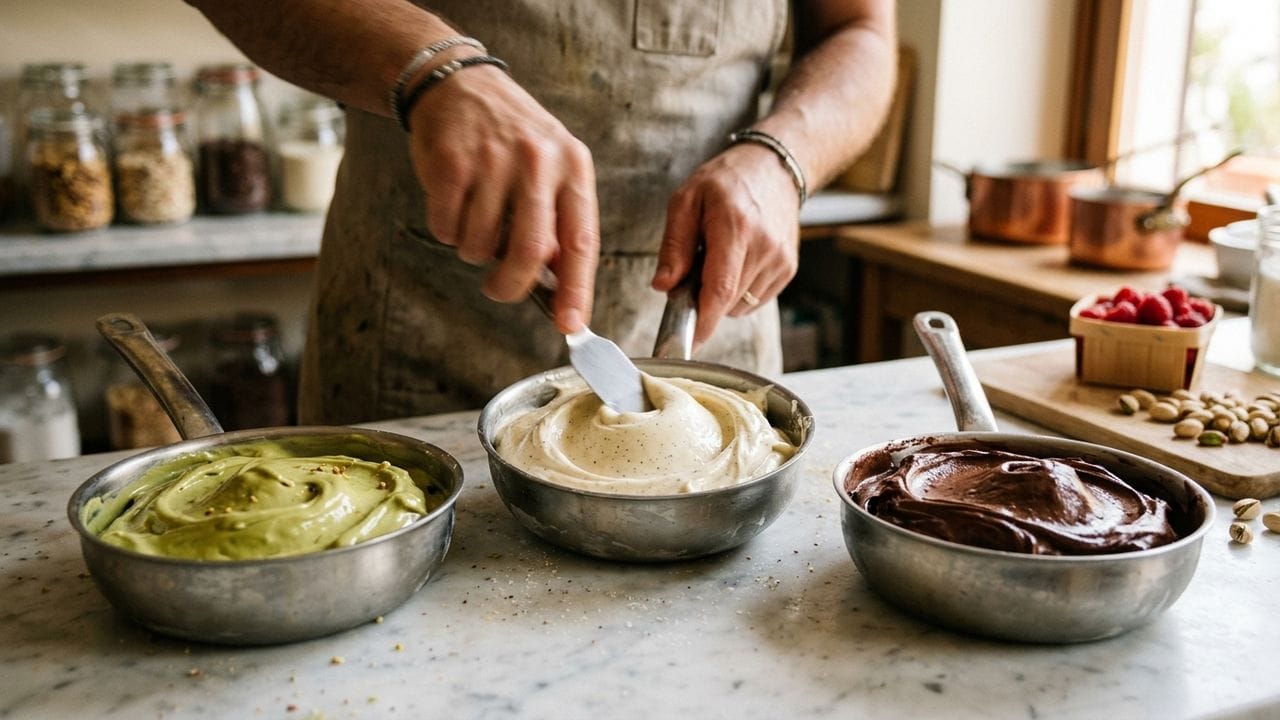
Module 6 — Flavor variations: classic, tropical, and experimental. 15–20 base recipes you can develop further: vanilla bean, dark chocolate, pistachio, hazelnut, stracciatella, mango, durian, young coconut, avocado, Gayo coffee, green tea, and more.
Module 7 — Machines and equipment: types, maintenance, and choices. Batch freezer, continuous freezer, pasteurizer (for hot process), pozzetti display, storage freezer. Includes daily and long-term maintenance.
Module 8 — Business strategy and first steps. Choosing a business model (home production, kiosk, café), basic licensing (NIB via OSS, the appropriate KBLI (Indonesian Business Code) for F&B), pricing strategy, and local marketing.
> Ready to learn all of this in a structured way? See the details of our gelato course program: Gelato Course at La Gelato Academy.
Online vs Hands-On Workshop: Which Is Better for You
Once you understand what needs to be learned, the next question is which format suits you best. There is no universal answer — the choice depends on your learning style, budget, location, and schedule. Here is an honest comparison between the two main formats.
| Aspect | Online Course (E-learning) | Hands-On Workshop (In-Person) |
|---|---|---|
| Cost | More affordable (Rp 500,000–3 million) | Higher (Rp 3–15 million) |
| Time flexibility | High — learn anytime | Low — fixed schedule |
| Location requirement | None — anywhere | Must travel to the laboratory |
| Hands-on machine experience | Theory and video only | Direct experience with machines |
| Opportunity to ask questions live | Asynchronous (chat, group) | Real-time in person |
| Best for | Beginners, remote locations, busy schedules | Serious about business, need machine detail |
The smartest approach is a combination of both. Start with the online package to build your theoretical foundation at a comfortable pace, then complete the learning with a short hands-on workshop to cover areas that are difficult to learn purely through theory (machine calibration, sensory skills, troubleshooting failed batches). This is the approach La Gelato Academy offers: Package 1 is a complete online course, Package 2 adds a one-day workshop at our Yogyakarta laboratory for a 1-on-1 experience with our instructor team.
Ready to Start Your Ice Cream or Gelato Course?
See the full program details at La Gelato Academy — Package 1 from Rp1.250.000 (regular price RP3JT), including lifetime access, 3 free raw material sachets delivered anywhere in Indonesia, and a participation certificate.
How Much Initial Capital to Start an Ice Cream Business After the Course
The capital question always comes up sooner than you might expect. The answer depends heavily on the business model you choose. We will give honest estimates based on real-world experience — without promising specific revenue figures, because success depends on location, execution, and your own commitment.
Scenario 1 — Home production with a minimal setup. Estimated capital: Rp 15–25 million. Covers an entry-level batch freezer (4–6 liters per cycle capacity), a small display freezer for stock storage, basic supporting equipment (precision scale, thermometer, containers, scoop), raw materials for 1–2 months of operations, and basic legal costs (NIB online via OSS, the appropriate KBLI (Indonesian Business Code) for F&B). This model suits those selling via online marketplaces, WhatsApp pre-orders, or community event catering. Break-even point is typically 4–12 months depending on demand volume.
Scenario 2 — Small kiosk in a mall or shophouse. Estimated capital: Rp 60–150 million. Covers a mid-range batch freezer, pozzetti for a professional display, 6–12 months of location rental in advance, simple décor attractive for Instagram photos, full kitchen equipment, raw materials for 2–3 months, and working capital for 1–2 part-time staff wages. A strategic location (mall food court, busy street near a university) can reach break-even in 6–18 months with consistent traffic.
Scenario 3 — Ice cream or gelato café with dine-in. Estimated capital: Rp 250–600 million. A more complete setup with seating for 15–30 guests, a complementary menu (coffee, other desserts, snacks), a more comfortable interior with strong branding, a POS system, and a larger staff team (3–6 people). Margin per transaction is higher because the dine-in experience justifies higher prices, but operational complexity also increases significantly.
Scenario 4 — Premium menu addition to an existing café. Estimated additional capital: Rp 25–50 million. Suitable for a café that already has a kitchen and staff, only needing to add a batch freezer, a small display freezer, and an initial raw material stock. The additional margin from an ice cream or gelato menu can become positive within 3–6 months because café traffic is already established.
What is remarkable about the cold process approach: laboratory setup is 25–30 times less expensive than the traditional approach, which requires an industrial pasteurizer costing around Rp 240–480 million. This is why many La Gelato Academy alumni choose cold process to start with limited capital.
Note from Mr. Jeff — Recipe & Method Creator
« The capital most often lost is not equipment capital — it is capital burned on unstructured experimentation. That is why a good course pays for itself within a few months: every batch you produce will succeed from the start, rather than being wasted due to a formulation error. »
La Gelato Academy Ice Cream Course: The Cold Process Approach
The motto we hold firmly: Innovation without pasteurization. No temperature gap — a more hygienic, more efficient product, through a lightning process.
Cold process is an approach to making frozen products that eliminates two expensive stages from the traditional process. First, hot pasteurization — which normally requires you to heat the mixture to 85°C for several minutes to kill bacteria. Second, the cold aging stage — which requires you to cool the mixture to 4°C for 4–12 hours to allow the protein and fat structure to stabilize. Both stages require an industrial pasteurizer and a separate cold room, with a total industrial setup typically reaching Rp 400 million to Rp 1.5 billion depending on the equipment level.
Cold process uses premium pre-pasteurized raw materials and a formulation designed to be stable without aging. The result: laboratory setup 25–30 times less expensive, production time 4–6 hours shorter per batch, and a far lower risk of temperature control errors. For beginner business owners in Indonesia, this means you can start with a reasonable capital outlay and consistent results from your very first batch.
What makes La Gelato Academy unique is not a claim of « having invented cold process » — this method is already known in Italy among certain professionals. What is unique are the proprietary procedures and recipes created by Mr. Jeff within the cold process paradigm: specific raw material ratios, operational sequences optimized for Indonesia’s tropical climate (high humidity, ambient temperatures that frequently exceed 28°C), and a method developed to produce consistently creamy texture every time. This is what you learn in our course — something you will not find anywhere else.
Techniques taught in our laboratory (using the Maestro machine) are transferable to all gelato and ice cream machine brands on the market. You remain free to choose the machine brand that fits your budget and project — there is no technological lock-in.
Certification and Mentoring After the Course
After completing a quality ice cream or gelato course, you should leave with three things: a participation certificate, access to an alumni community, and a path for further mentoring. Let us discuss each in the context of La Gelato Academy.
Official participation certificate. Every participant who completes the curriculum receives a participation certificate stating that you have completed the Italian artisan gelato program using the cold process method. This certificate is useful for building credibility when opening a business, presenting your profile to potential investors or partners, or applying for a position at a premium café or restaurant.
HALAL standards and HACCP compliance. La Gelato Academy’s laboratory operates under strict HALAL standards, and all raw materials we use and teach are halal-certified. HACCP compliance is integrated into every production module — you will leave the course with a complete understanding of the sanitation plan, critical control point management, and the documentation required for BPOM audits.
Active alumni WhatsApp group every day. Every participant who completes the program gains lifetime access to the La Gelato Academy alumni WhatsApp group. In this group you can ask about production issues that arise at home, share experiences with other alumni, receive recommendations for new suppliers, and find collaboration or partnership opportunities. Our instructor team is also active in answering specific technical questions.
Curriculum update access at no extra cost. The ice cream and gelato industry continues to evolve. We periodically add new recipes, new videos, and additional modules when industry trends shift or when we discover new techniques worth sharing. Once you pay for your package, access to updated content lasts a lifetime.
Three post-course paths. La Gelato offers three complementary paths: open your own business (the most flexible path), purchase premium raw materials from la-gelato.com (for those who already have a café or restaurant), or join as a franchise partner via la-gelato.com/franchise-gelato (for those seeking a proven brand).
Start Today: Your First Steps
Reading this guide is the first step. Here are four concrete steps you can take this week to truly begin your journey in the ice cream or gelato industry.
Step 1 — Clarify your business goal. Do you want flexible home production, a mall kiosk, or a dine-in café? Is your target market families with children, young professionals, or the premium segment? Your answers determine the most suitable course format and a realistic initial capital.
Step 2 — Choose between ice cream, gelato, or a combination. Based on the analysis in the previous section, decide on the core product you want to master. Many alumni choose gelato as the foundation because of its more precise formulation control, then add ice cream or sorbet as menu variations at a later stage.
Step 3 — Contact the La Gelato Academy team for an initial consultation. A free 15–30 minute consultation via WhatsApp at contact our team will help you choose the package that fits your situation and budget. No pressure, no commitment — just a conversation to help you make the right decision.
Step 4 — Start with the right package. Package 1 (Online + 3 Sachets) at Rp1.250.000 (regular price RP3JT) is ideal if you are outside Yogyakarta or want flexible learning. Package 2 (Online + Yogyakarta Workshop) at Rp4.890.000 (regular price RP7JT) adds a 1-on-1 hands-on day at our laboratory. Every package is protected by a 7-day money-back warranty.
There is no need to wait for perfect conditions. Demand for premium ice cream and gelato in Indonesia will keep growing, and every month you delay is an opportunity not captured. What you need right now is the decision to start learning in a structured way.
Frequently Asked Questions About Ice Cream Courses
Can I take an ice cream course with no culinary experience at all?
Yes, a professional ice cream course is designed for anyone who is serious about learning — from complete beginners with no culinary background to experienced F&B professionals. There are no technical prerequisites. All you need is commitment to complete the modules, a willingness to practice at home, and a genuine interest in the product you are making. Many La Gelato Academy alumni come from non-culinary backgrounds — office workers, homemakers, or entrepreneurs in other fields who want to pivot to premium culinary.
How long does a professional ice cream course usually take?
It depends on the format. A short weekend workshop typically runs 1–2 days (8–16 hours total). A structured online course with 8–9 modules usually requires 4–8 weeks at a pace of 4–6 hours per week. A long campus culinary program can last 3–6 months. La Gelato Academy offers lifetime online access so you can learn at a comfortable pace, plus the option of a full-day hands-on workshop in Yogyakarta for a 1-on-1 experience.
What is the difference between an ice cream course and a gelato course?
An ice cream course typically teaches the American tradition (fat content 14–18%, overrun 80–100%, serving temperature -18°C). A gelato course focuses on the Italian tradition (fat 4–9%, overrun 20–40%, temperature -12 to -14°C) which requires more precise formulation control. Many core techniques overlap, but gelato demands a deeper understanding of ingredient balance. For a detailed guide, read Gelato Course in Indonesia 2026.
What is the average cost of an ice cream course in Indonesia?
The price range is wide: short weekend workshops Rp 500,000–1,500,000, structured online courses Rp 1–3 million, professional courses with laboratory practice Rp 3–15 million, and 3–6 month campus programs Rp 15–30 million. La Gelato Academy offers Package 1 (Online + 3 Sachets) at Rp1.250.000 (regular price RP3JT) and Package 2 (Online + Yogyakarta Workshop) at Rp4.890.000 (regular price RP7JT). Choose according to your seriousness and budget.
Is there a recognized certificate after the course?
Most professional courses issue an official participation certificate stating that you have completed the curriculum. This certificate is useful for building business credibility, presenting your profile to potential investors, or applying for professional positions. For official compliance in a food business, what matters more is HALAL certification and HACCP compliance — La Gelato Academy operates to both standards, so the recipes and procedures you learn are immediately ready for the Indonesian market.
Can I open a business right after the course?
Technically yes — our curriculum is designed so you leave with independent production capability. However, the launch timeline depends on the model you choose. Home production can start 1–2 months after completing the course (register NIB online, buy an entry-level machine, start pre-orders). A mall kiosk requires 3–6 additional months (find a location, negotiate a lease, décor, licensing). A dine-in café needs 6–12 months. The course gives the technical foundation; the speed of execution depends on your capital readiness and strategy.
Still Unsure Which Course Is Right for You?
Before you register, contact the La Gelato Academy team for a free 15–30 minute discussion about your ice cream or gelato business plan. We help you choose the package that best fits your situation, location, and budget — no pressure, no commitment.
Free consultation — No commitment — Fast WhatsApp response
Closing: The Next Step Is Yours
An ice cream course is not merely technical training — it is the entry point to a premium culinary industry that is growing rapidly in Indonesia. The year 2026 offers ideal conditions: a rising market, clear regulations, and a stable supplier ecosystem. What determines your success is not the availability of opportunity — opportunity is everywhere — but the quality of the technical foundation you build before you start.
La Gelato Academy delivers three key advantages that are hard to find elsewhere. First, a curriculum designed by Mr. Jeff with proprietary recipes and procedures already proven in the Indonesian market — with a cold process philosophy that matches our motto: innovation without pasteurization, no temperature gap — a more hygienic, more efficient product, through a lightning process. Second, a flexible hybrid online + hands-on workshop format that fits your schedule and budget. Third, a complete ecosystem with a clear post-course path — open your own business, purchase premium raw materials, or join as a franchise partner.
Are you ready to begin? Contact our team via WhatsApp at contact our team, or explore the Gelato Course page for full details. Level Up — From recipe to your business.
About the Creator
Mr. Jeff
Italian glacier diploma. Creator of all recipes, methods, and production procedures at La Gelato — including the proprietary cold process method adapted for Indonesia’s tropical climate. Years of recipe development and testing in the Yogyakarta laboratory before integration into the course curriculum.
The philosophy he instilled in the curriculum is simple: knowledge shared honestly is the path toward a blessed business. Every recipe taught at La Gelato Academy has passed dogfooding — tested for months in our own laboratory before reaching course participants.
The same approach applies across the entire La Gelato ecosystem: the training academy (lagelatoacademy.com), B2B raw material factory, and the franchise program (la-gelato.com). Every component of the system on offer has been proven in practice before being shared with participants and partners.