Gelato recipe balancing means reading a mix as one connected system. Sugar does more than sweeten, fat does more than create creaminess, and water does more than keep the mix liquid. Each group affects texture, working temperature, flavour and the way gelato holds up in the display cabinet. Replacing one ingredient without understanding its role can therefore change the final result more than expected. For a beginner, the first objective is not to master a complex formula. It is to understand how the components relate, record each change and work with discipline. This matters because, in daily production, a result that can be repeated is more valuable than one good batch that cannot be reproduced.
Key points
- Balancing means managing the whole system, not chasing one number or ingredient.
- Sugars, fats, water and solids work together with air and cold.
- Change one variable at a time and record the result before making the next decision.
What Is Gelato Recipe Balancing?
In artisanal production, a mix contains liquids, solids, fats, sugars, air and cold. A recognised industry source, Carpigiani, explains that these components need to remain in balance for gelato structure to form properly. Its overview of balancing artisanal gelato mixes describes this general principle. That does not mean there is one universal formula for every machine, ingredient or set of conditions. Milk, fruit, chocolate, bases, room temperature, machinery and serving conditions still affect the outcome. Gelato recipe balancing helps connect a visible symptom with possible causes. Gelato that is too hard, too soft, heavy on the palate or quick to lose its shape is not a reason to add ingredients at random. It is a signal to review both composition and process.
Four Groups That Must Be Read Together
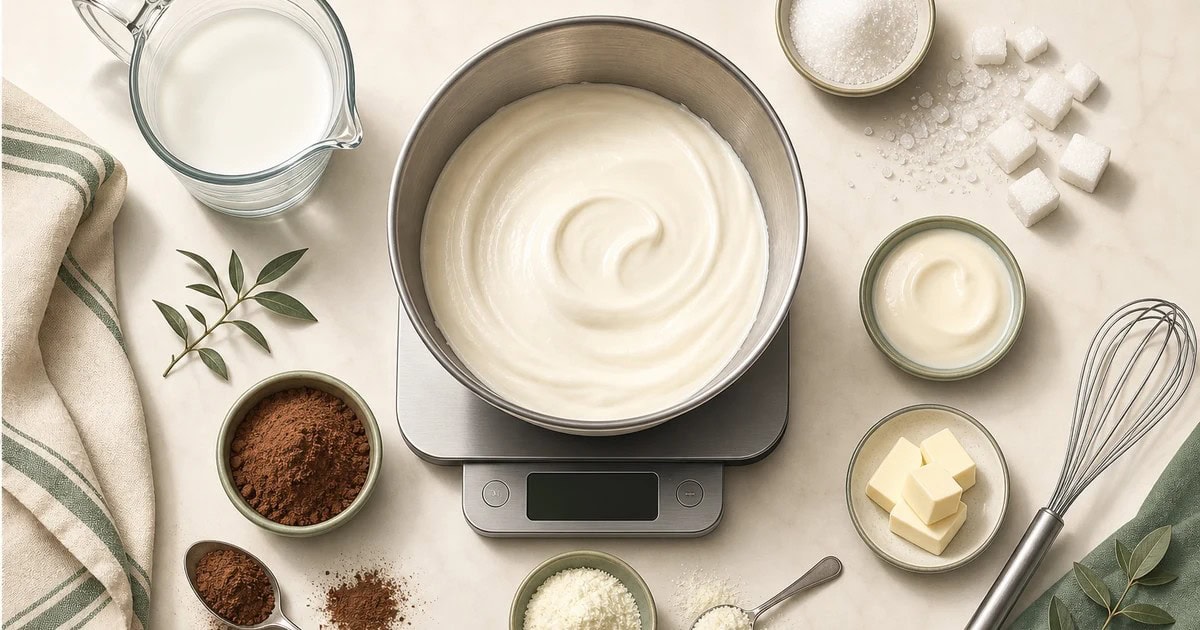
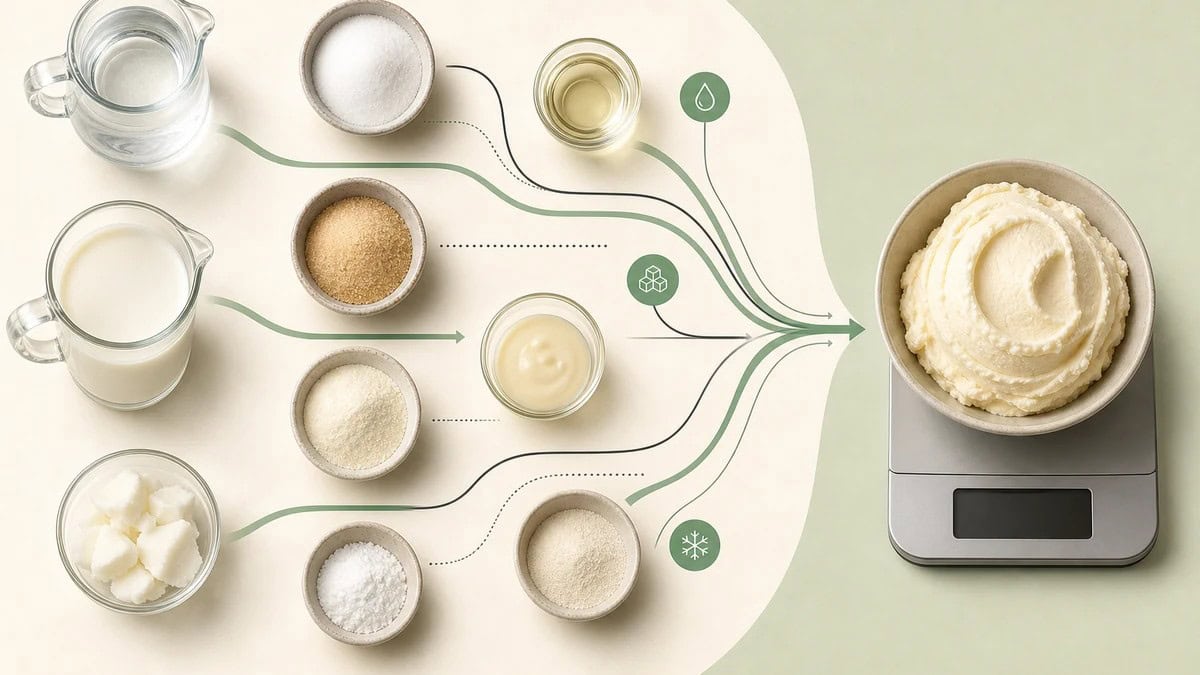
Water makes up a large part of many mixes. During freezing, some of it forms ice crystals, and their size, together with the way they are managed, contributes to a smooth or coarse texture. Sugars provide sweetness, but they also affect how the mix behaves at frozen temperatures. Different sugars can act differently, so replacing one with another is not automatically a one-to-one exchange. Fats carry flavour and contribute to a soft, rounded mouthfeel. Too little or too much may change body and flavour release. Solids include milk proteins, cocoa, fibre, fruit material and other elements that add structure and bind part of the water. The relationship between them is what matters. Gelato recipe balancing should not be read as four independent groups. When fruit adds water and natural sugar, for example, the whole mix must be read again. If you are still building your foundation, the gelato course for beginners guide places ingredients and process in a clear learning sequence.
Reading Texture Symptoms Without Guessing
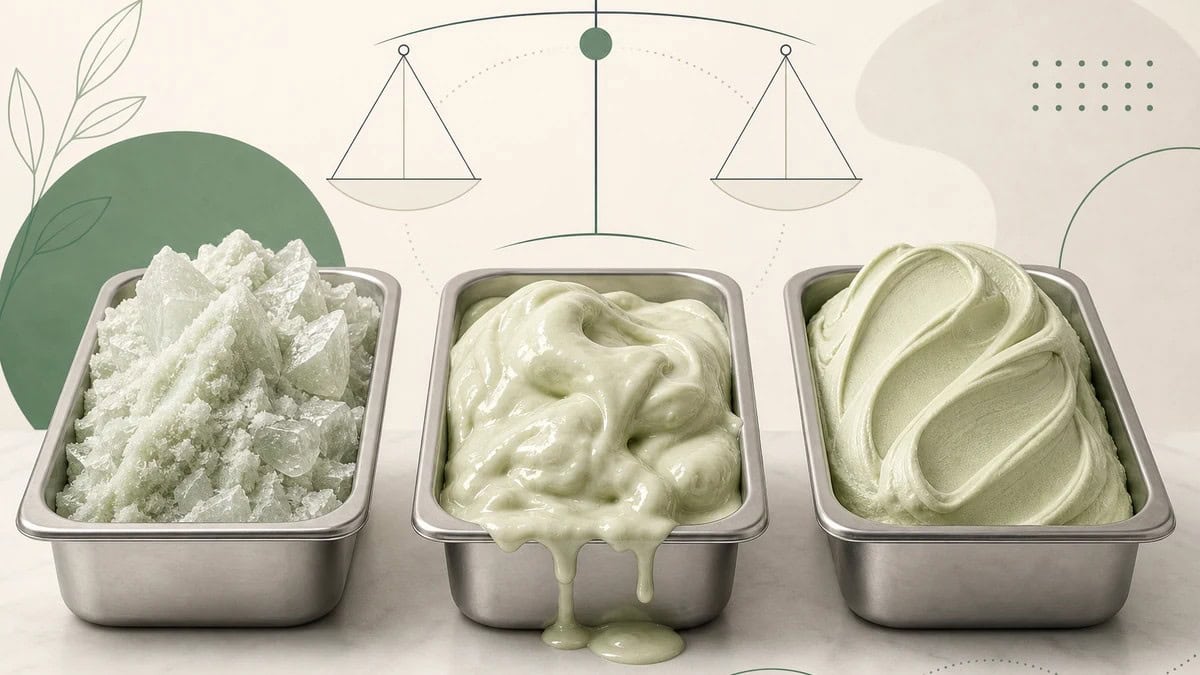
In the field, operators usually see the outcome first: gelato is hard to scoop, too soft, grainy or unable to hold its shape. These symptoms matter, but one symptom can have several causes. Hard gelato may relate to sugar balance, the amount of free water, the freezing process or serving temperature. A soft texture can come from composition, temperature or the amount of air introduced during processing. Do not change everything at once. Start with a batch record: ingredients, weights, starting temperature, mixing time, behaviour in the machine, extraction texture and storage observations. Then select one reasonable variable to test. This approach separates a controlled experiment from improvisation. The guide to homemade ice cream recipes and texture foundations can also help you see why a simple recipe and controlled professional production are different stages.
Balancing Within the La Gelato System
In the La Gelato method, part of the formulation complexity is moved upstream through prepared bases and established recipes. This does not remove the operator’s responsibility. You still need accurate weighing, correct dosage, a consistent mixing sequence, control of air and cold, and reliable records. One sentence is worth keeping: a sachet replaces calculations, not precision. Gelato recipe balancing remains important as a way of thinking. It helps you understand why a recipe must be followed, when an ingredient change should be stopped, and why a process correction may be more appropriate than a formula change. If you often learn from separate recipes or videos, compare the paths in learning gelato independently or through a structured curriculum. It explains the difference between experimenting and building a system, in an operational context.
A Measured Learning Process
Use one validated reference recipe. Weigh every ingredient, assign a code to each batch and record the process conditions. After tasting and observing the texture, define one question: is the main issue flavour, body, hardness or stability during service? Change only one variable allowed by the method, then compare it with the reference batch. Avoid copying percentages from the internet without understanding the machine and ingredient context. External numbers can be useful for learning, but they should not be applied blindly. For business production, use recipes and parameters that have been tested inside your own system. At La Gelato Academy, the theory is connected to weighing, mixing, freezing and reading the result. You can review the learning path on the La Gelato Academy gelato course page. A simple method still requires disciplined work.
Frequently Asked Questions About Gelato Recipe Balancing
Should a beginner calculate a formula from scratch?
No. A beginner should first understand the ingredient groups and follow a validated reference recipe. Advanced calculations become useful after accurate weighing, processing and record-keeping are consistent.
Why can changing one sugar alter the texture?
Sugar does more than add sweetness. Different sugars also affect the behaviour of a mix at frozen temperatures, so a substitution must be read in the context of the complete recipe.
Does using a base remove the need for balancing?
A base moves part of the complexity upstream, but the operator still controls dosage, weighing, mixing, air, cold and day-to-day consistency.
What should I check first when gelato is too hard or too soft?
Review the batch record and process conditions before changing the formula. Select one possible cause, test one variable and compare the result with the reference batch.
Would you like to understand gelato recipes as a complete system?
Discuss the right learning path, from online theory to hands-on practice in Yogyakarta.
Contact La Gelato