Looking for homemade ice cream recipes that are delicious, smooth, and hassle-free? You are not alone — homemade ice cream is a family favourite across Indonesia because it is affordable, fully customisable, and a joy to make together with children.
Yet many people are disappointed when the result is rock-hard or feels grainy and icy on the tongue. The good news: with simple ingredients and the right technique, you really can make homemade ice cream that is smooth and creamy.
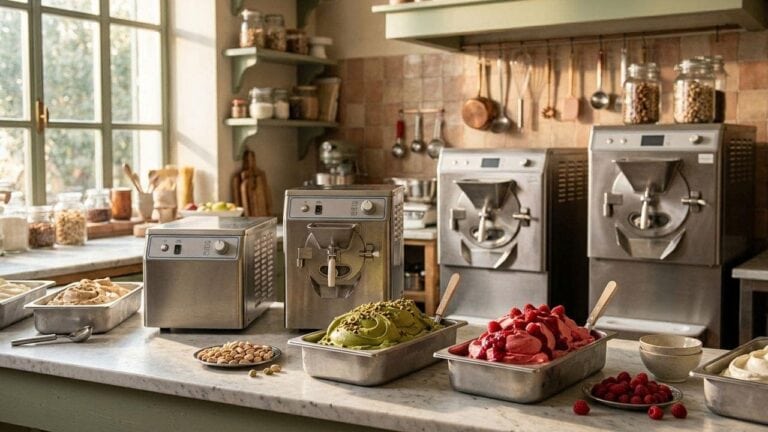
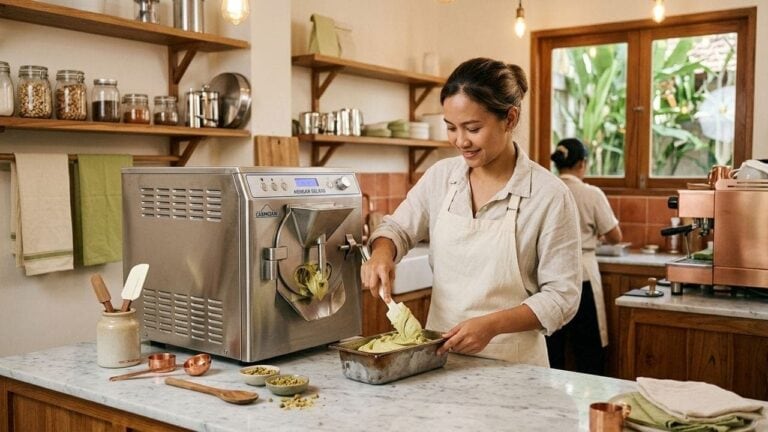
This article shares five favourite homemade recipes along with the secrets behind their texture, then shows how you can take those same principles and level them up to artisanal Italian gelato — through the cold process method developed by Mr. Jeff.
Key Points You Need to Know
- The tastiest homemade ice cream usually needs just 3–5 ingredients: milk/cream, sugar, and one main flavour.
- The secret to a smooth texture is not expensive equipment, but the right fat content, sugar level, and freezing method.
- Homemade ice cream often turns grainy because of large ice crystals — the very problem that professional gelato technique solves.
- Those same principles can be levelled up to Italian gelato with the cold process method: smoother, more intense, and worthy of a premium price tag.
Why Homemade Ice Cream Recipes Are So Loved
Making your own ice cream at home has an irresistible appeal. First, it saves money: with ingredients costing just a few tens of thousands of rupiah you can produce several servings at once. Second, you have complete control over the flavour, sweetness level, and ingredient quality — no preservatives or colourants you did not choose.
Third, the process is fun. Stirring the batter, waiting for it to freeze, then tasting what you made yourself is a heart-warming family activity. No wonder homemade ice cream is always in demand, especially in Indonesia’s characteristically hot tropical weather.
What beginners often overlook: behind its simplicity lies a little science that decides whether the result is creamy or turns into a block of ice. Understanding that science is your first bridge to higher quality.
Basic Ingredients and Equipment for Homemade Ice Cream
Almost all homemade recipes are built from three core components. Understanding the role of each helps you improvise without fear of failure:
- Fat (cream/milk). This is the source of smoothness. The higher the fat content (heavy cream, full-cream UHT milk, or sweetened condensed milk), the fewer ice crystals form and the creamier the result.
- Sugar. Beyond sweetness, sugar lowers the freezing point of the batter so the ice cream does not freeze as hard as a block of ice and is easier to scoop.
- Main flavour. Chocolate, vanilla, fruit, or coffee — the part that gives your ice cream its character.
As for equipment, you do not need a machine. A sealed container, a mixer or a fork, and a freezer are enough. An ice cream maker certainly helps, but many homemade recipes are designed specifically for no-mixer use. If you want to understand the full foundation, read our complete guide on how to make ice cream from home all the way to Italian gelato.
5 Delicious Homemade Ice Cream Recipes You Can Try Today
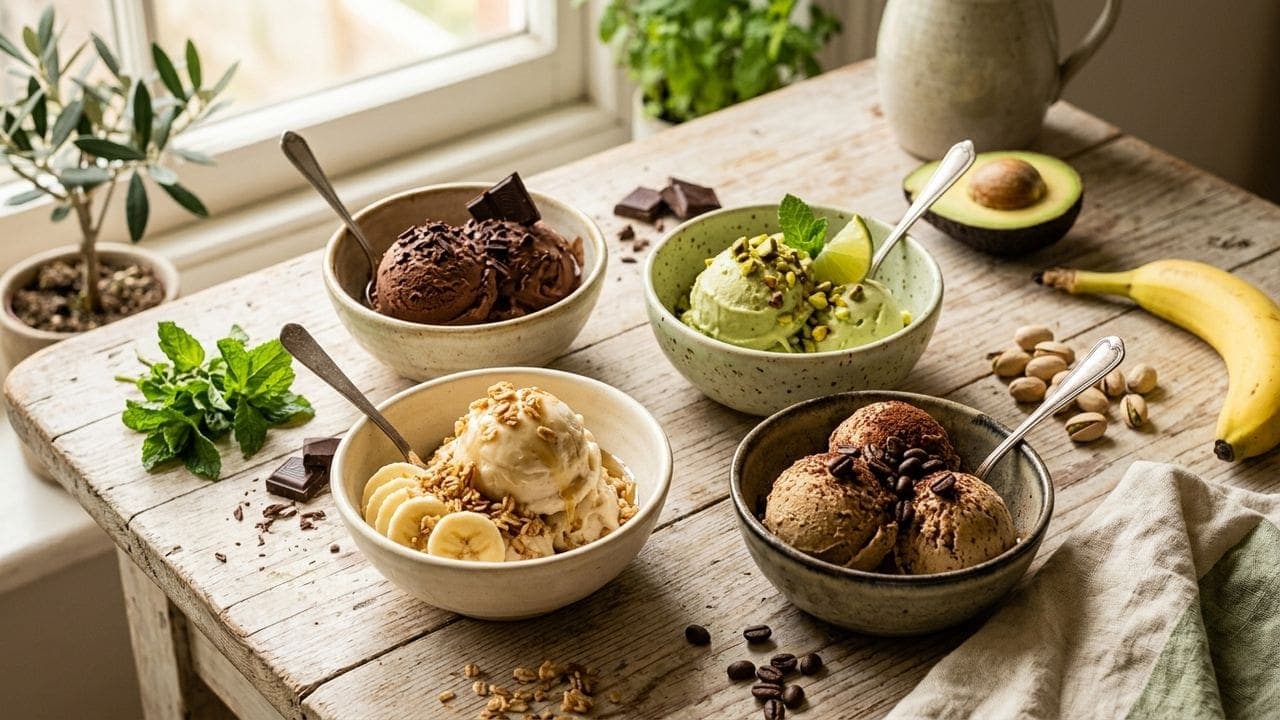
Here are five simple yet satisfying homemade ice cream recipes. All of them use a cold-batter principle without cooking the mix, so they are quick and safe for beginners. For every recipe, freeze for at least 4–6 hours and stir once halfway through freezing for a smoother result.
| Recipe | Main Ingredients | Difficulty |
|---|---|---|
| Milk Vanilla Ice Cream | UHT milk, cream, sugar, vanilla | Very easy |
| Chocolate Ice Cream | Premium cocoa powder, cream, sugar | Easy |
| Avocado Ice Cream | Ripe avocado, sweetened condensed milk, cream | Easy |
| Banana Ice Cream | Frozen banana, cream, a little sugar | Very easy |
| Coffee Ice Cream | Instant coffee, cream, milk, sugar | Easy |
1. Milk Vanilla Ice Cream
Whip 200 ml of cream until it holds volume, then mix with 150 ml full-cream UHT milk, 4 tablespoons of sugar, and half a teaspoon of vanilla. Stir well, pour into a container, and freeze. This is the base recipe you can develop into any flavour you like.
2. Chocolate Ice Cream
Add 3 tablespoons of premium cocoa powder to the vanilla base recipe (omit the vanilla). Dissolve the cocoa powder in a small amount of lukewarm milk so it does not clump, let it cool, then mix into the cold batter. The result is rich and deeply satisfying for chocolate lovers.
3. Avocado Ice Cream
Blend 2 ripe avocados with 100 ml sweetened condensed milk and 150 ml cream. Avocado provides a naturally smooth texture and healthy fats. A classic Indonesian favourite that never fails to please.
4. Banana Ice Cream
Freeze 3 ripe bananas that have been sliced, then blend with 100 ml cream. Sweet bananas often mean you barely need to add any extra sugar. The healthiest and most child-friendly recipe of the five.
5. Coffee Ice Cream
Dissolve 2 tablespoons of instant coffee in a small amount of hot water, let it cool, then mix into the vanilla base recipe. Perfect for those who enjoy a slightly bitter, aromatic, grown-up flavour.
A Note from Mr. Jeff — Recipe & Method Creator
« Homemade recipes are a beautiful starting point. But the difference between homemade ice cream and true gelato is not about expensive ingredients — it is about mastering fat, sugar, and air inside the batter. That is exactly what I organised into the La Gelato cold process method. »
The Texture Secret: Why Homemade Ice Cream Often Turns Grainy
If your homemade ice cream feels icy and grainy or hard as a rock, the problem is almost always the same: ice crystals that are too large. Large crystals form when the batter freezes slowly without being stirred. The slower the freeze, the larger the crystals, and the rougher the texture on your tongue.
That is why the tip of “stir every 30–60 minutes” appears in so many homemade recipes — stirring breaks up the crystals as they form. Other factors include fat content (too low = grainy) and sugar level (too little = freezes rock-hard).
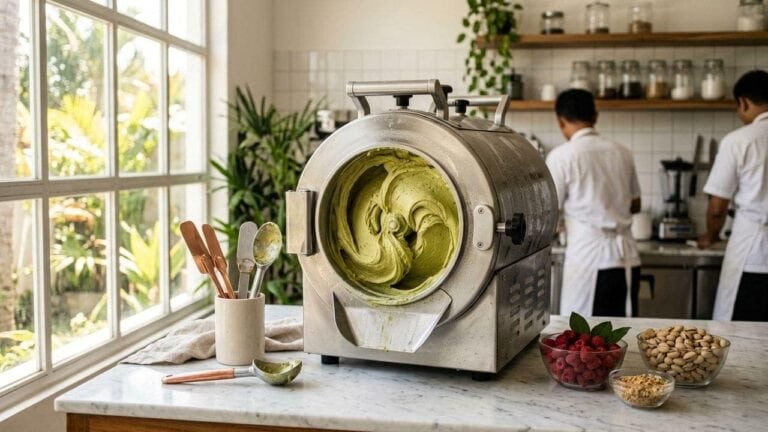
In the professional world, these three factors are controlled far more precisely. A gelato machine freezes the batter extremely quickly while simultaneously churning it, keeping ice crystals microscopic and producing a dense yet silky texture. To understand in depth where homemade ice cream sits compared to gelato, read the full comparison in our article on the difference between gelato and ice cream.
Ready to Level Up from Homemade Recipes to Italian Gelato?
Discover our gelato course programme — online packages starting from Rp1.250.000 (regular price RP3JT), including lifetime access and 3 free base powder sachets shipped anywhere in Indonesia.
From Homemade Recipes to Italian Gelato: Time to Level Up
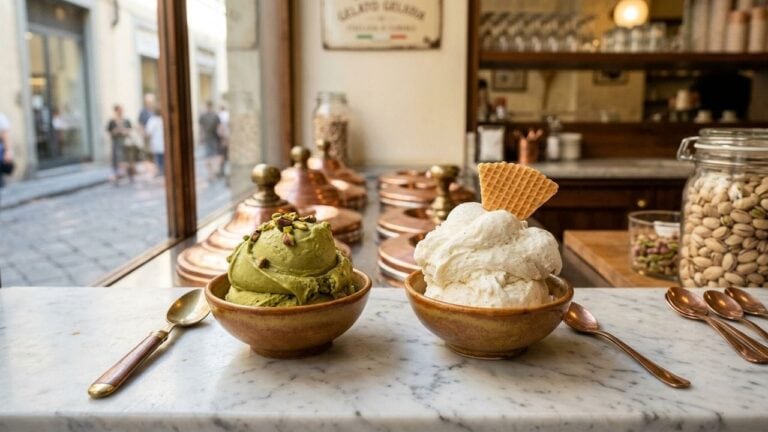
Once you are comfortable with homemade ice cream recipes, the logical next step is to raise the quality — whether for personal satisfaction or to sell. This is where Italian gelato becomes an attractive destination. Gelato has lower fat than regular ice cream yet tastes creamier, with a more intense flavour because it contains less air.
| Aspect | Homemade Ice Cream | Artisanal Italian Gelato |
|---|---|---|
| Texture | Can be grainy if crystals are large | Dense and silky, microscopic crystals |
| Flavor intensity | Moderate | High, very little air |
| Result consistency | Varies each time you make it | Stable with a pre-formulated base |
| Business potential | Personal consumption | A profitable premium segment |
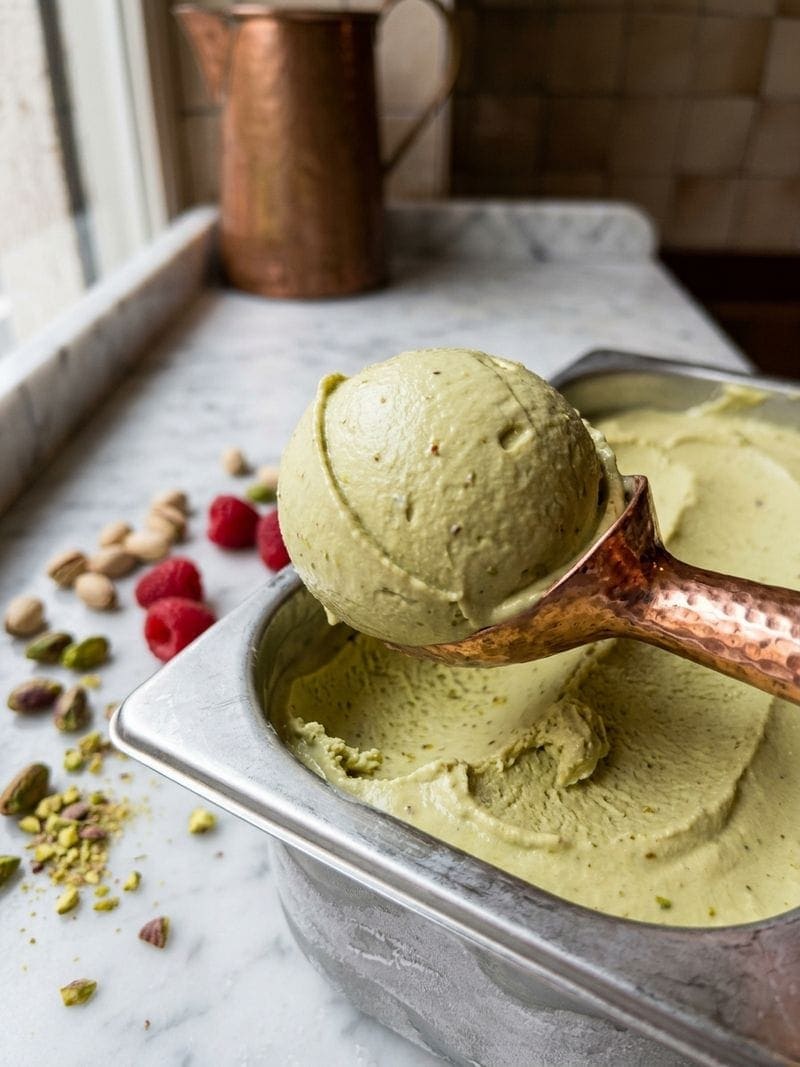
What is exciting is that you do not need massive capital to make quality gelato. The La Gelato cold process method uses cold UHT milk and a pre-formulated base powder (ready to use), mixed quickly without cooking the batter, then fed straight into the machine. The mixing takes under 5 minutes — a giant leap from hours of manual stirring at home.
How to Learn to Make Gelato with the Cold Process Method
If you are serious about mastering gelato — whether as an advanced hobby or as a business venture — structured learning will get you there far faster than trial and error. La Gelato Academy offers an online programme you can access from anywhere, starting from Rp1.250.000 (regular price RP3JT), complete with lifetime access, videos, PDF materials, and 3 free base powder sachets shipped anywhere in Indonesia.
For those who want hands-on practice straight away, a package with a 1-on-1 workshop with our instructor team in Yogyakarta is also available. The techniques you learn are transferable — applicable to various gelato machine brands that suit your budget, without being locked into a single manufacturer.
For peace of mind, we offer a 7-day money-back warranty as long as you have not yet attended the hands-on workshop in Yogyakarta and have not completed more than 30% of the online materials. You can start with your favourite recipe today, and level up to gelato whenever you are ready.
Frequently Asked Questions about Homemade Ice Cream Recipes
How do you make homemade ice cream smooth instead of grainy?
The key is preventing large ice crystals. Use sufficient fat content (cream or full-cream milk), add enough sugar so the mix does not freeze too hard, and stir the batter every 30–60 minutes during freezing. Stirring breaks up the crystals as they form, resulting in a far smoother and creamier texture.
Can you make ice cream without a machine and without a mixer?
Yes. Many homemade ice cream recipes are designed without a mixer — for example, frozen banana ice cream that simply needs blending, or a sweetened condensed milk batter that is stirred by hand and then frozen while being stirred occasionally with a fork. The result is still delicious; it just requires a little more patience during stirring.
What is the difference between homemade ice cream and Italian gelato?
Gelato generally has lower fat yet tastes creamier and more intense because it contains less air and has finer ice crystals. Homemade ice cream is simpler and its results vary each time. You can read an in-depth explanation in our gelato and ice cream comparison article.
Can a homemade ice cream recipe become a business?
Yes, but for consistent, premium-grade results, it is best to level up to gelato with a standardised method and base. The La Gelato cold process method produces stable quality with every batch at a far lower investment than an industrial setup — ideal for starting a business from home.
Not Sure Where to Start?
Before making a decision, contact the La Gelato Academy team for a free 15–30 minute chat about your plans — from a simple hobby to starting a gelato business. We will help you choose the package that best fits your situation and budget, with no pressure and no commitment.
Free consultation — No commitment — Fast WhatsApp response
Conclusion
Homemade ice cream recipes are a delightful gateway into the world of frozen desserts. With three core components — fat, sugar, and flavour — plus the right freezing technique, you can already produce smooth, delicious ice cream at home.
But if you want truly dense-silky texture, more intense flavour, and consistent quality worthy of selling, Italian gelato is the natural next level. Through the cold process method, that leap becomes possible without massive capital. Just as our motto says: Innovation without pasteurization. No temperature gap — a more hygienic, more efficient product, through a lightning process.
Start with your favourite recipe today, and let curiosity carry you to the next level.
About the Creator
Mr. Jeff
Italy-trained certified gelato maker. Creator of all La Gelato recipes, methods, and production procedures — including the proprietary cold process method adapted for Indonesia’s tropical climate. Every formula was developed and tested over months in the La Gelato laboratory in Yogyakarta before being incorporated into the curriculum.
The philosophy embedded in the curriculum is simple: knowledge shared honestly is the path to a business built on integrity. Every recipe taught at La Gelato Academy has passed dogfooding — tested for months in our own laboratory before reaching course participants.
The same approach is applied across the entire La Gelato ecosystem: the training academy (lagelatoacademy.com), the B2B raw materials factory, and the franchise programme (la-gelato.com). Every component of the system offered has been proven in the real world before being shared.