The ice cream business is one of the most resilient food ventures in Indonesia — demand stays stable year-round in a tropical country like ours. Yet beneath its seemingly simple exterior, there is a wide gap between an ice cream business that merely survives and one that is truly profitable.
The key lies in three things: the business model you choose, the size of your initial capital, and the margin you can sustain. Many beginners get trapped in a model with thin margins or capital that quietly balloons without them noticing.
This article addresses all three honestly, then shows how the Italian gelato approach using the cold process method — recipes and procedures developed by Mr. Jeff — can make those numbers far healthier, without requiring billions of rupiah in capital.
Key Points to Know
- Ice cream business models vary widely: from mobile carts to premium artisanal gelaterias — each with a different capital and margin profile.
- Industrial hot process setup capital can reach Rp 400 million–1.5 billion; the La Gelato cold process approach starts from ≈ $1,400 (Rp 24.9 million).
- Healthy margins come from low capital + light operating costs (PLN residential 3.2 kW, 20 m² space), not just a high selling price.
- Positioning your product as artisanal Italian gelato opens a premium segment that is far more profitable than mass-market ice cream caught in a price war.
Why the Ice Cream Business Is Still Promising in Indonesia
A tropical climate is this venture’s greatest asset. There is no real « slow season » — temperatures that are almost always hot turn ice cream into an impulse product bought at any time, by virtually every age group. That is what keeps this business relevant even with hundreds of players already in the market.
But that is precisely where the problem lies. Because it seems easy, the mass-market ice cream segment has become extremely crowded and vulnerable to a price war. Once competition revolves solely around price, your margin is immediately eroded. Long-term winners are usually not the cheapest, but those with clear product differentiation.
That is where the Italian gelato angle becomes compelling. Instead of competing in the same pool, you move up to the premium segment with a product that has a denser texture, more intense flavor, and a stronger story. Before choosing a business model, first understand your position in the market.
Common Ice Cream Business Models
Before talking about capital, first determine your business model. Each model has direct consequences for initial capital, sales volume, and margin per serving. Here are the four most common models in Indonesia.
| Business model | Capital profile | Margin character |
|---|---|---|
| Mobile cart | Low | Thin per serving, relies on volume and busy routes |
| Cone booth / soft serve | Low–medium | Medium, highly dependent on mall or high-traffic location |
| Scoop shop / kiosk | Medium | Better when you have a distinctive flavor identity |
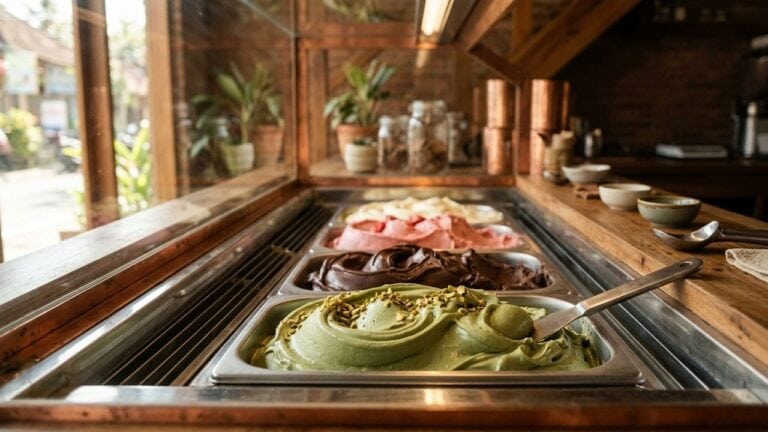
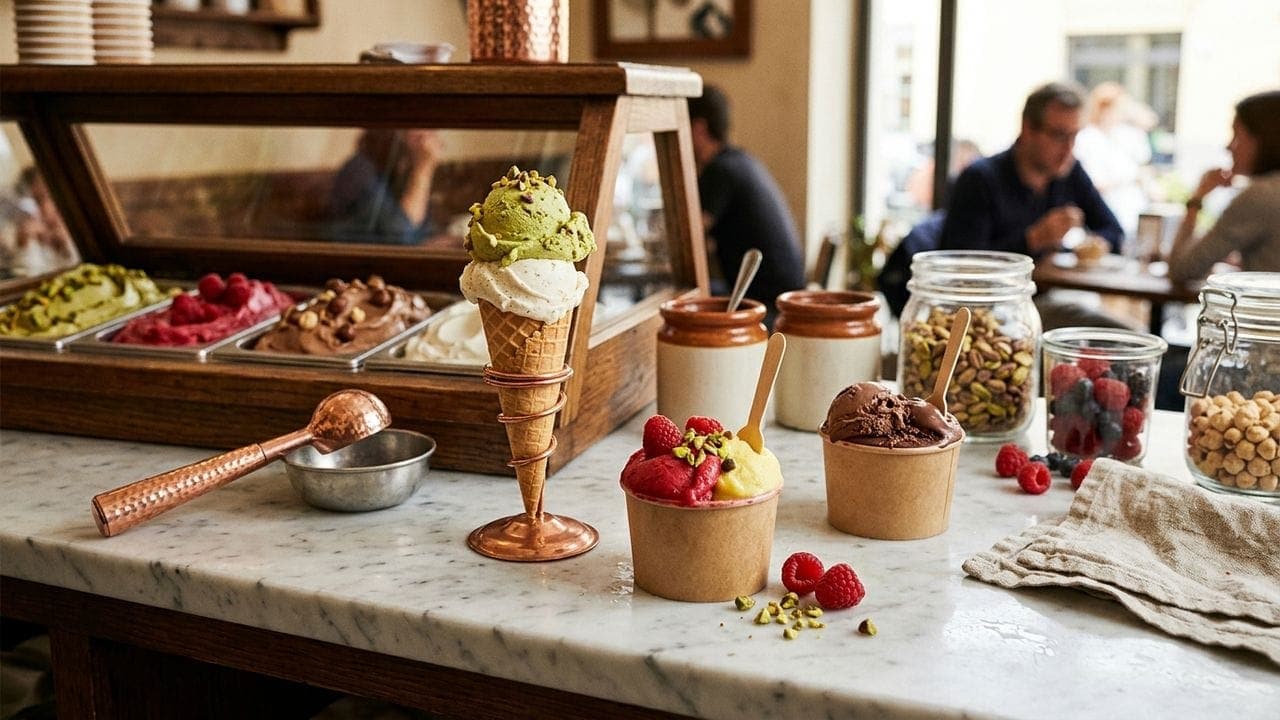
| Premium artisanal gelateria | Medium–high | Healthiest margin per serving, segment resistant to price wars |
Notice the pattern: the further you move toward premium artisanal products, the more resilient your margin becomes against price wars. That is why many serious players choose to produce their own gelato rather than becoming a reseller of mass-market ice cream.
Ice Cream vs Gelato: Which Is More Profitable?
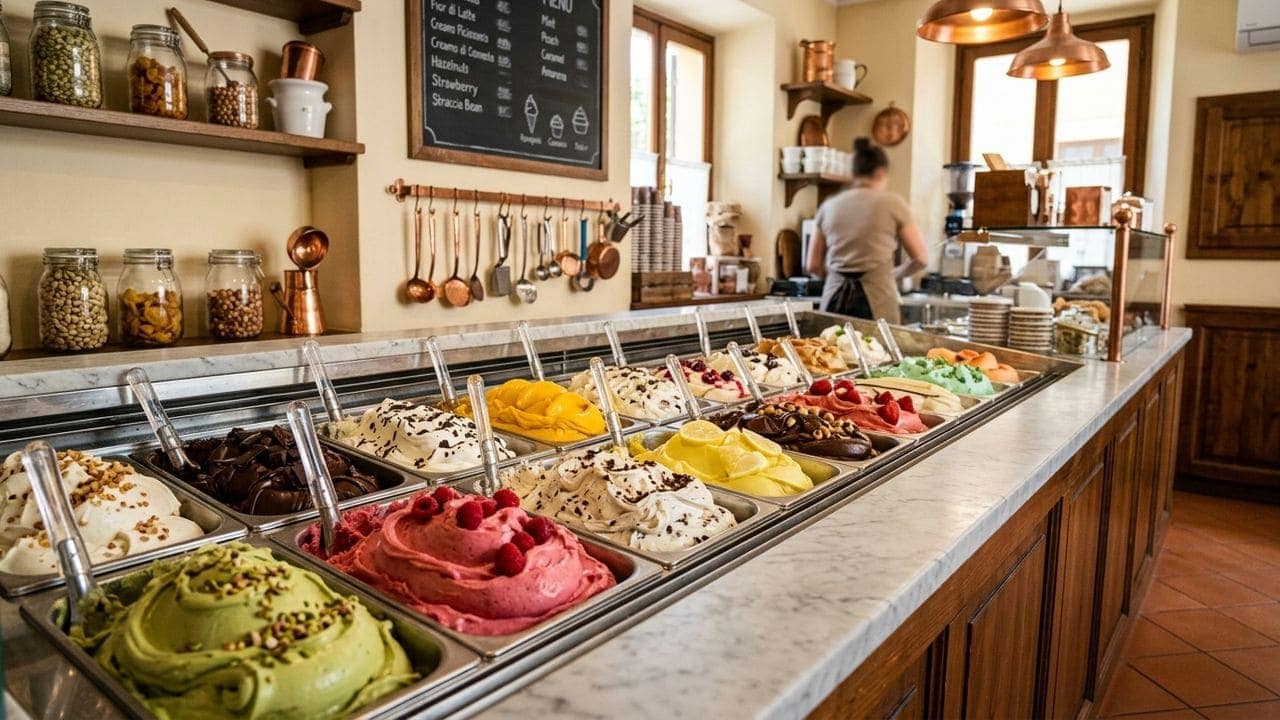
This question comes up often, and the answer is not about which tastes better — it is about market positioning. Industrial ice cream contains more air and fat, is mass-produced, and its price is driven down aggressively by competition. Italian gelato is the opposite: denser, lower air content, more intense flavor, and naturally occupies a premium price point.
For a business, this means gelato gives you more breathing room per serving, with far fewer direct competitors. You are no longer just « selling ice cream » — you are offering an experience. We cover the technical differences and market positioning in depth in our article on ice cream vs gelato differences — essential reading before you decide on your product direction.
The good news is you do not have to choose one and sacrifice capital. With the right method, you can produce Italian-quality gelato without the massive infrastructure usually associated with the word « premium ».
Capital Estimate for an Ice Cream Business: From Industrial to Cold Process
This is the part that most often misleads aspiring entrepreneurs. Ice cream business capital can differ by tens of times depending on the production method. Here is an honest comparison of the three main approaches.
| Component | Industrial ice cream | Traditional hot process gelato | La Gelato cold process |
|---|---|---|---|
| Main machine | Rp 80–200 million | Rp 60 million–1 billion | Local machine Rp 20–35 million |
| Pasteurizer | Required (Rp 240–480 million) | Required (Rp 240–480 million) | Not required |
| Shock freezer | Required (Rp 50–135 million) | Required (Rp 50–135 million) | Not required |
| Electricity | Industrial three-phase | Installed capacity ~18 kW | PLN residential 3.2 kW |
| Minimum space | 60–100 m² | 60–80 m² | 20 m² |
| Total capital | Rp 400–900 million+ | Rp 400 million–1.5 billion | Business Package from ≈ $1,400 (Rp 24.9 million) |
There is one more trap: the artisanal hot process version (pot and stove, without a pasteurizer) seems cheap on equipment (Rp 5–20 million), but hides hidden costs. Heating then cooling large batches of mix takes many hours, requires extra labor for temperature monitoring and cleaning, and carries hygiene risks if cooling in the 4–60°C zone is not properly mastered — a risk that is actually greater in a tropical climate.
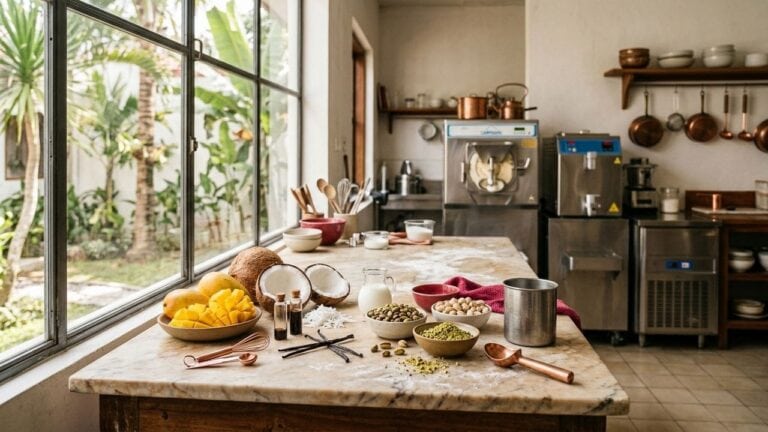
By contrast, the La Gelato cold process approach eliminates the pasteurizer, shock freezer, heavy electrical installation, and the need for large space all at once. The difference can reach hundreds of millions to more than one billion rupiah, depending on the setup being compared.
Want to Start an Ice Cream Business with Smart Capital?
See the details of our gelato course program — Online Package from Rp1.250.000 (regular price RP3JT), including lifetime access and 3 free raw material sachets delivered anywhere in Indonesia.
Margin and Realistic Pricing Strategy
Margin is not simply the selling price minus the cost of materials. A healthy margin comes from your entire cost structure. That is why capital and production method are so decisive: every rupiah you save on setup and operations directly strengthens your margin on every serving sold.
Three margin levers that beginners most often overlook:
- Faster break-even point. Initial capital of ≈ $1,400 (Rp 24.9 million) recovers far faster than a setup costing hundreds of millions. The lower the capital, the shorter the journey to net profit.
- Light operating costs. PLN residential electricity at 3.2 kW (not a three-phase installation), 20 m² of space (not 60–80 m²), and no dedicated staff for cooling or cleaning the cooking vat — all of this keeps monthly fixed costs down.
- Consistent raw materials. Pre-formulated base powder (ready to use) keeps quantities and quality stable, reducing failed product that quietly eats into your margin.
On the selling price side, positioning your product as artisanal Italian gelato gives you the psychological permission to occupy a premium shelf — not because you are expensive, but because the product is genuinely different. This combination of low capital and a premium selling price is the margin formula that mass-market ice cream models find hard to beat.
Note from Mr. Jeff — Creator of the Recipe & Method
« I designed the La Gelato cold process method precisely so that people with limited capital can also produce Italian-quality gelato. The recipes and procedures we teach were born from hundreds of trials in our own laboratory before reaching participants. »
How to Start a Gelato Ice Cream Business with Smart Capital
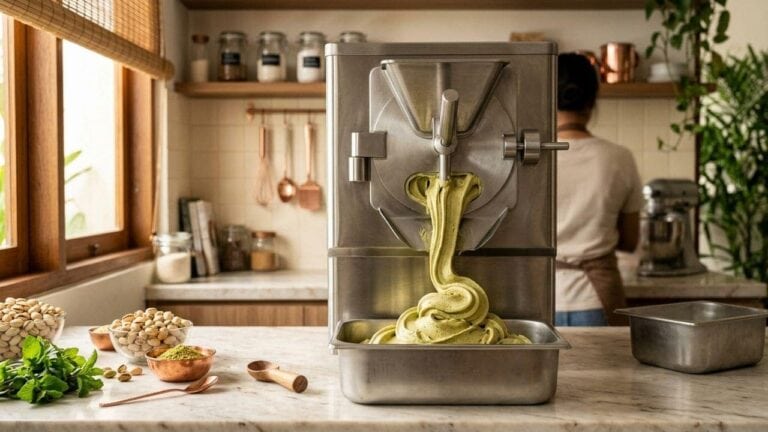
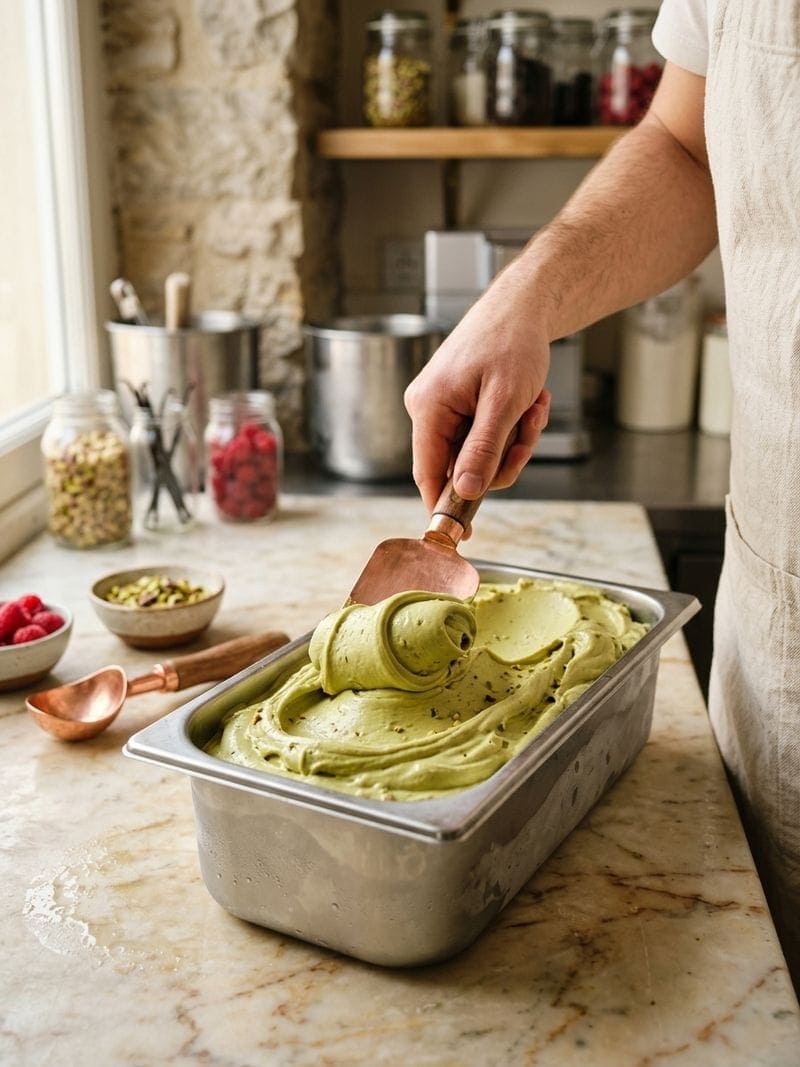
After understanding the model, capital, and margin, the next step is execution. The La Gelato cold process approach is designed so you can start producing gelato yourself without expensive infrastructure. The process is also fast: less than 5 minutes of mixing, then around 20 minutes per batch in the machine — no heating of the mix, no slow cooling, no lengthy maturation.
To shorten the learning curve, La Gelato offers ready-to-run Business Packages that already include a machine, display case, base powder, and training: Basic Package ≈ $1,400 (Rp 24.9 million), Deluxe ≈ $3,350 (Rp 59.8 million), and Istimewa ≈ $4,200 (Rp 74.7 million). If you want to master the techniques and recipes first, our online program starts from Rp1.250.000 (regular price RP3JT), complete with lifetime access and 3 free raw material sachets delivered anywhere in Indonesia.
The techniques you learn are transferable — applicable to various gelato machine brands to suit your budget, without being locked to a single manufacturer. If you are interested in a more structured partnership scheme, also explore our gelato franchise razor-blade system model. And to choose the right machine, see our guide on ice cream machines for a gelato business.
As a peace-of-mind guarantee: we offer a 7-day money-back guarantee as long as you have not yet attended the hands-on workshop in Yogyakarta and have not completed more than 30% of the online content.
Frequently Asked Questions About the Ice Cream Business
What is the minimum capital to start an ice cream business?
It depends on the method. An industrial hot process setup can reach Rp 400 million to Rp 1.5 billion because it requires a pasteurizer and shock freezer. By contrast, the La Gelato cold process approach can start from ≈ $1,400 (Rp 24.9 million) through a Business Package that already includes a machine, display case, base powder, and training. So the minimum capital is heavily influenced by your choice of production method, not just the scale of the business.
Is it more profitable to sell regular ice cream or Italian gelato?
Mass-market ice cream faces very dense competition and is prone to price wars, which compresses margin per serving. Italian gelato sits in the premium segment with far fewer direct competitors and more room for margin. With the cold process method, you can produce premium gelato without massive capital — a combination that regular ice cream models find hard to match.
Is the ice cream business suitable for beginners with no experience?
Very much so, as long as you choose a simple method. The La Gelato cold process eliminates the most technically demanding steps (pasteurization and slow cooling), bringing the process down to less than 5 minutes of mixing. With pre-formulated base powder and structured training, beginners can produce consistently high-quality product from the very start.
How do you keep margins healthy in an ice cream business?
Keep three things in check: low initial capital so the break-even point is reached quickly, light operating costs (3.2 kW electricity, 20 m² space, no dedicated cooling staff), and position your product in the premium segment so your selling price is not dictated by a price war. The cold process method addresses all three simultaneously, making margins easier to sustain.
Still Unsure About Choosing Your Ice Cream Business Model?
Before deciding, contact the La Gelato Academy team for a free 15–30 minute discussion about your business plan. We help you choose the model, capital, and package that best fits your situation and budget — no pressure, no commitment.
Free consultation — No commitment — Fast WhatsApp response
Conclusion
The success of an ice cream business is determined long before the first sale — at the moment you choose your business model, calculate your capital, and design your margin. A model that is too « cheap » often traps you in a price war, while an industrial hot process setup demands capital running into hundreds of millions to billions of rupiah.
The smart middle path is to produce premium Italian gelato using the cold process method: capital from ≈ $1,400 (Rp 24.9 million), light operating costs, and a market position that is far more resilient. Exactly as our motto puts it: Innovation without pasteurization. No temperature gap — a more hygienic, more efficient product, through a lightning process.
Start from the right foundation, and let the numbers work for you — not against you.
About the Creator
Mr. Jeff
Certified glacier, Italy-trained. Creator of all La Gelato recipes, methods, and production procedures — including the proprietary cold process method adapted for Indonesia’s tropical climate. Every formula was developed and tested for months in the La Gelato laboratory in Yogyakarta before being included in the curriculum.
The philosophy he has instilled in the curriculum is simple: knowledge shared honestly is the path to a thriving business. Every recipe taught at La Gelato Academy has passed through dogfooding — tested for months in our own laboratory before reaching course participants.
The same approach applies to the entire La Gelato ecosystem: the training academy (lagelatoacademy.com), the B2B raw materials factory, and the franchise program (la-gelato.com). Every component of the system offered has been proven in practice before being shared.