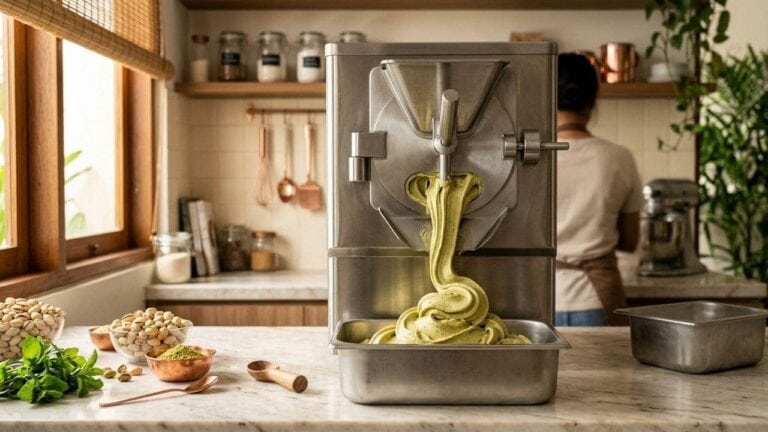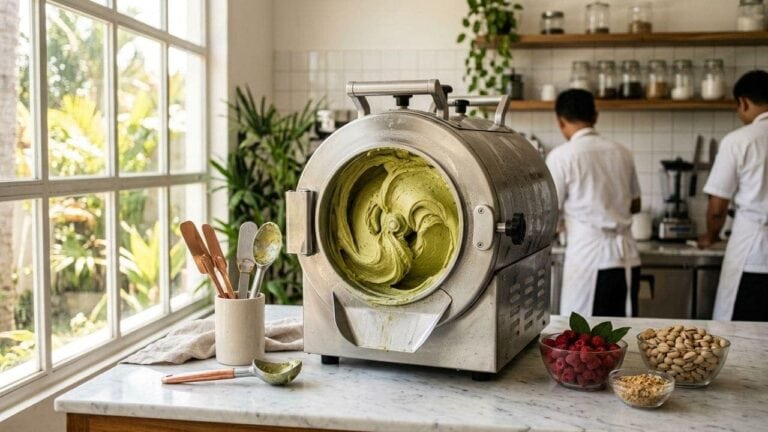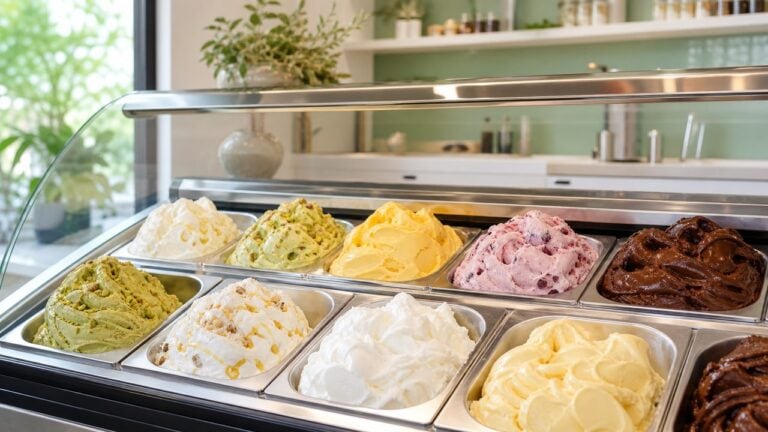
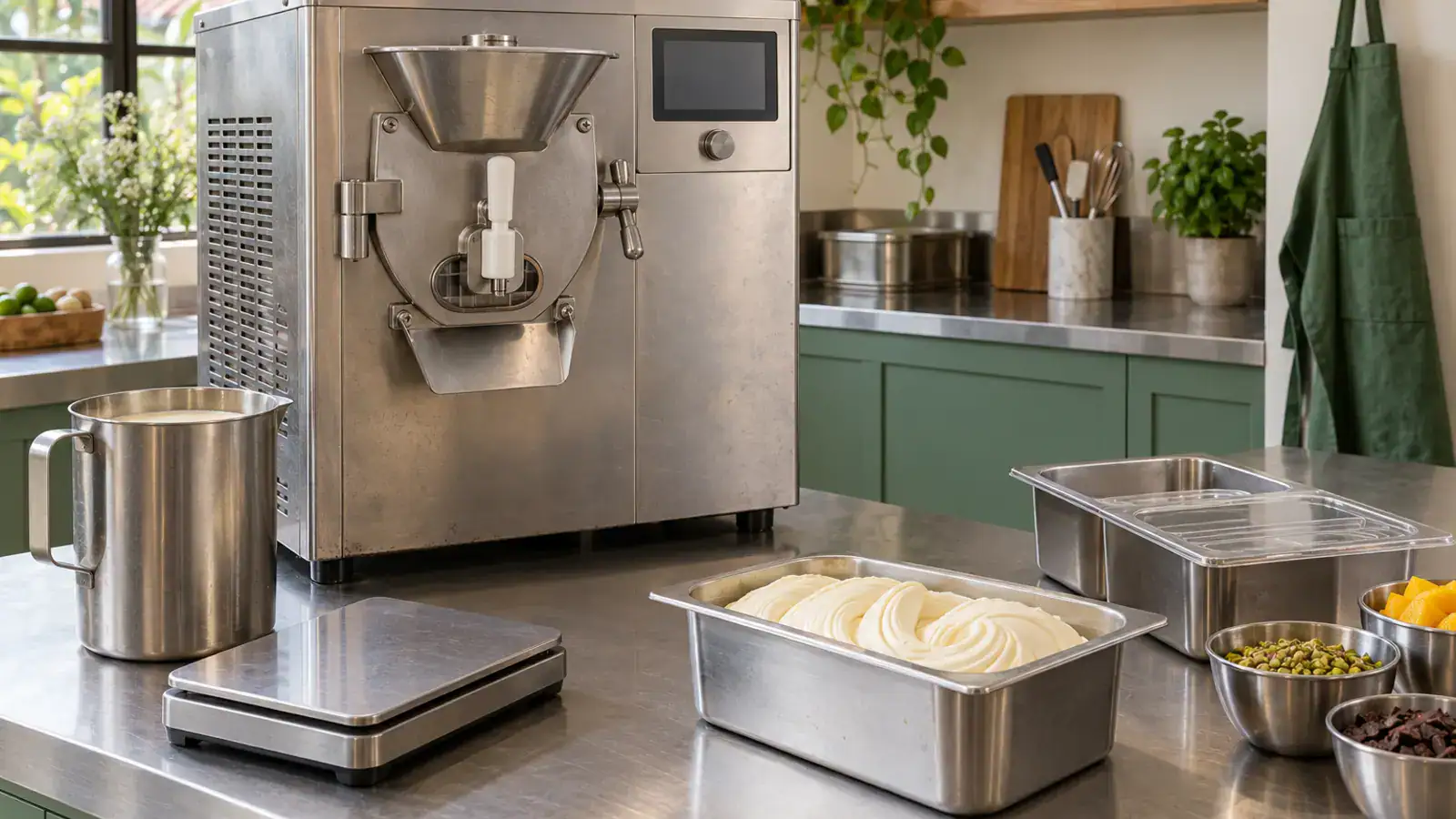
A used gelato machine is worth considering if it is the right type for your needs, its condition can be verified, and it produces consistent results when tested with base. Don’t buy one just because it looks clean, the price seems attractive, or the seller shows you that it turns on.
For a business, you’re buying production capability—not simply a machine that gets cold. Service history, parts support, installation requirements, and the cost of getting the unit ready to use all help determine whether it makes sense.
This guide helps you assess a specific unit before committing your money. The steps are straightforward: verify the machine’s identity, ask for evidence of its use and maintenance, run a controlled production test, then decide whether to proceed, wait for a technician’s assessment, or walk away.
- Judge a used machine by whether it fits your needs and performs in a production test, not just by its appearance or asking price.
- Use the same base and testing conditions so differences between batches are easier to investigate.
- Bring in a technician for safety, refrigeration, electrical, or component issues you cannot assess with confidence.
- Compare the total cost of getting each machine ready for production, including repairs and installation, before choosing used or new.
Used gelato machine: when is it worth buying, and when should you walk away?
A used gelato machine for your business is worth considering once your production needs are clear. You need to know what products you will make, what batch size you need, and whether your workspace is ready. Without that information, a large capacity or a low price may not be an advantage.
Start by setting your decision criteria. The unit must suit your product, be available for inspection, and have a service option you can confirm. The seller also needs to allow a reasonable opportunity to test the machine before you decide to buy.
- Continue evaluating: the unit’s identity is clear, inspection is allowed, and test results can be documented.
- Put the decision on hold: there are unexplained symptoms or no repair estimate is available yet.
- Walk away: the machine is the wrong type, testing is refused, or safety issues remain unresolved.
When comparing a used vs new gelato machine, consider the cost of getting it ready to use, service support, and uncertainty about its condition. A used machine requires evidence about the specific unit on offer. With a new machine, you still need to check its specifications, support coverage, and suitability for your production site.
If you haven’t settled on a type and capacity, start with the beginner’s guide to choosing a gelato machine. Once your requirements are clear, you can assess a specific used unit in detail.
Identify the machine type: batch freezer, soft serve machine, or ice maker?
Listing descriptions are often too vague. The term ice cream machine alone doesn’t establish what the equipment does. Ask for a photo of the identification plate, the model number, and the manual so you can identify the actual machine type.
- Batch freezer: freezes and churns base in a single cycle, after which the gelato is extracted for the next step.
- Soft serve machine: dispenses a soft product directly through a lever-operated spout for immediate serving.
- Ice machine: may refer to an ice cube maker, not a machine for freezing gelato base.
Don’t assume these machines are interchangeable. Check whether the unit supports your planned production workflow, including transferring the product, hardening, storage, and serving. A freezing machine does not automatically include a pasteurization function.
Check the model’s manual and compare its electrical requirements, cooling system, ventilation clearances, and water connections, if needed, with your site. Have a technician confirm that the installation is suitable; don’t judge by the plug shape or the size of the machine.
Also check the manufacturer’s recommended load limits. Ask what the capacity in the listing means: the amount of base per batch, product output, or a capacity claim under specific conditions? For the unit you’re evaluating, rely on model specifications and test results, not the category name in an online marketplace.
Check the unit's identity, usage history, service records, and parts support
Inspecting a used gelato machine starts with matching the documents to the physical unit. Record the brand, model, serial number, and specifications on the identification plate. Make sure any photos or documents you receive refer to the machine you are buying.
Ask about its previous use: what products it made, how it was used, why it is being sold, and whether it sat unused for a long time. The seller’s answers help guide further inspection, but they are no substitute for evidence of the machine’s condition.
- Ask for service records, documentation of replaced components, and details of any previous problems.
- Check that all components listed in the manual are present, including the agitator, scrapers, seals, and product outlet parts.
- Inspect food-contact surfaces for damage, corrosion, or residue that needs attention.
- Confirm parts availability with a service provider using the model and serial number.
Don’t settle for a general assurance that spare parts are easy to find. Ask which parts are needed, whether they are compatible, their estimated lead times, and a quote for any replacements required.
Incomplete service records do not automatically mean a machine is faulty. They do, however, leave uncertainty that needs to be addressed through a technician’s inspection and more thorough testing. If the seller refuses either inspection by a technician or testing, you don’t have enough evidence to proceed with the purchase.
Request a production test with base: check freezing, texture, and consistency
A used gelato machine production test needs to demonstrate that the machine can process base—not just that its freezing chamber feels cold. Agree on the test with the seller and an operator who knows the machine. Make sure the equipment has been prepared hygienically and is operated according to the manual.
Use base with a known formula and consistent preparation. Record its starting temperature, the batch load, machine settings, and room conditions. Different bases or loads outside the recommended range make comparisons harder to interpret. Review gelato ingredients and their functions so a formula problem isn’t immediately mistaken for a machine fault.
- Record the starting conditions: the unit’s identity, base, batch load, settings, and measuring tools used.
- Observe the cycle: processing time, changes in consistency, alarms, leaks, and unusual sounds or vibration.
- Inspect the result: ease of extraction, texture, and uniformity within the batch. Also note whether a thick frozen layer remains on the freezing chamber walls. Record this for a technician to assess, including possible scraper wear.
- Repeat the test: use comparable conditions to check whether the results are repeatable, following the machine’s operating requirements.
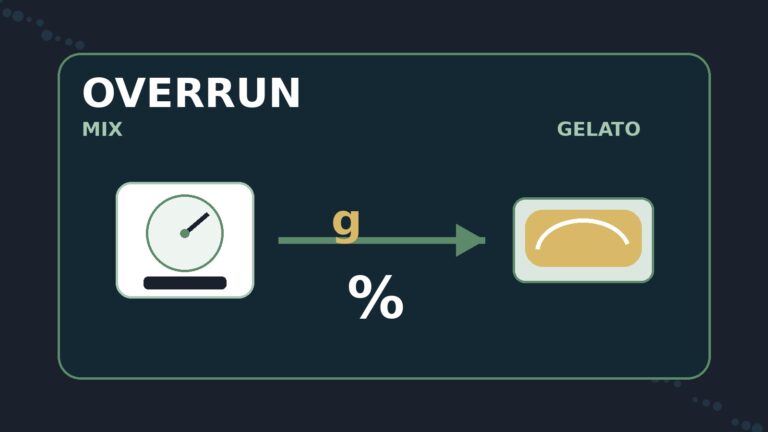
Don’t use a single freezing time as the standard for every model. Assess results against the manual, the type of base, and a technician’s evaluation where needed. To compare the amount of air incorporated into the product, use this method for measuring overrun with a container and scale.
Also compare the results after the same downstream handling, such as hardening and storage, to keep batch comparisons fair. Photos, videos, and batch notes are useful records, but they do not replace direct observation or component inspection.
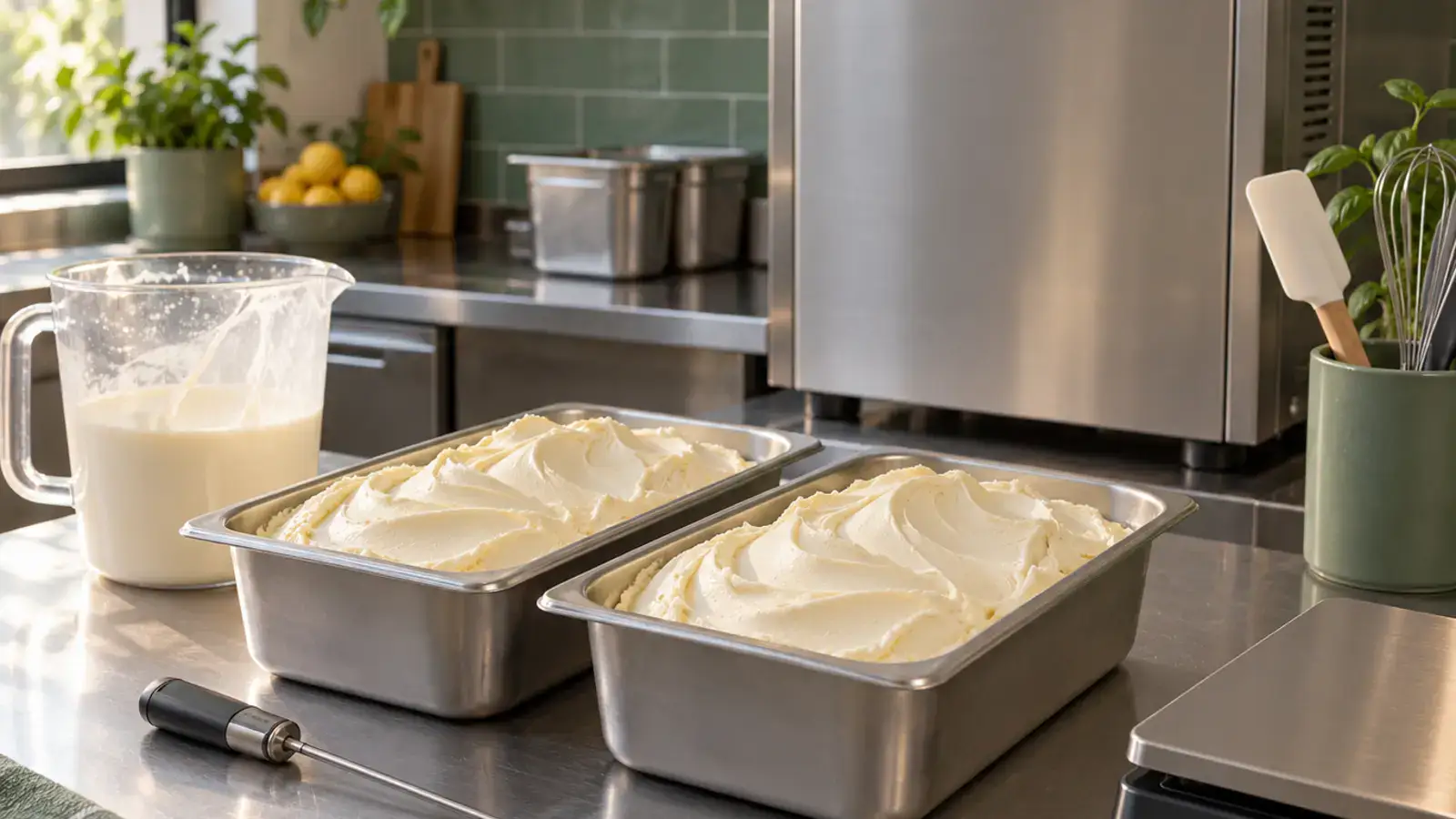
Not cooling or producing inconsistent results: when to call a technician or walk away
Inconsistent results alone don’t establish the cause. The base formula, starting temperature, batch load, settings, room conditions, and machine systems can all affect the process. Review the testing conditions before concluding that the compressor has failed or that the machine simply needs cleaning.
If the gelato feels coarse, distinguish freezing problems from possible ingredient crystallization. This guide to coarse and sandy gelato texture helps you work through the checks. Don’t treat one poor result as a technical diagnosis without further evidence.
- Call a technician: the machine doesn’t cool or reach its intended operating conditions, alarms recur, there are leaks, or unusual sounds or vibration occur.
- Stop the test: you find damaged wiring, notice a burning smell, or see other warning signs. Don’t continue just to finish the demonstration.
- Delay the decision: the cause is unclear, required parts have not been identified, or repairs have not been followed by a repeat test.
Don’t open electrical panels, bypass safety devices, or work on the refrigeration system yourself. Request an inspection by a qualified technician, with written findings and an estimate for the work.
Walking away makes sense if the seller refuses inspection, the unit’s identity cannot be verified, or symptoms persist after repairs the seller claims are complete. A discount does not replace evidence that the machine works properly. Proceed only when the problem, repairs, costs, and repeat test results can be clearly explained.
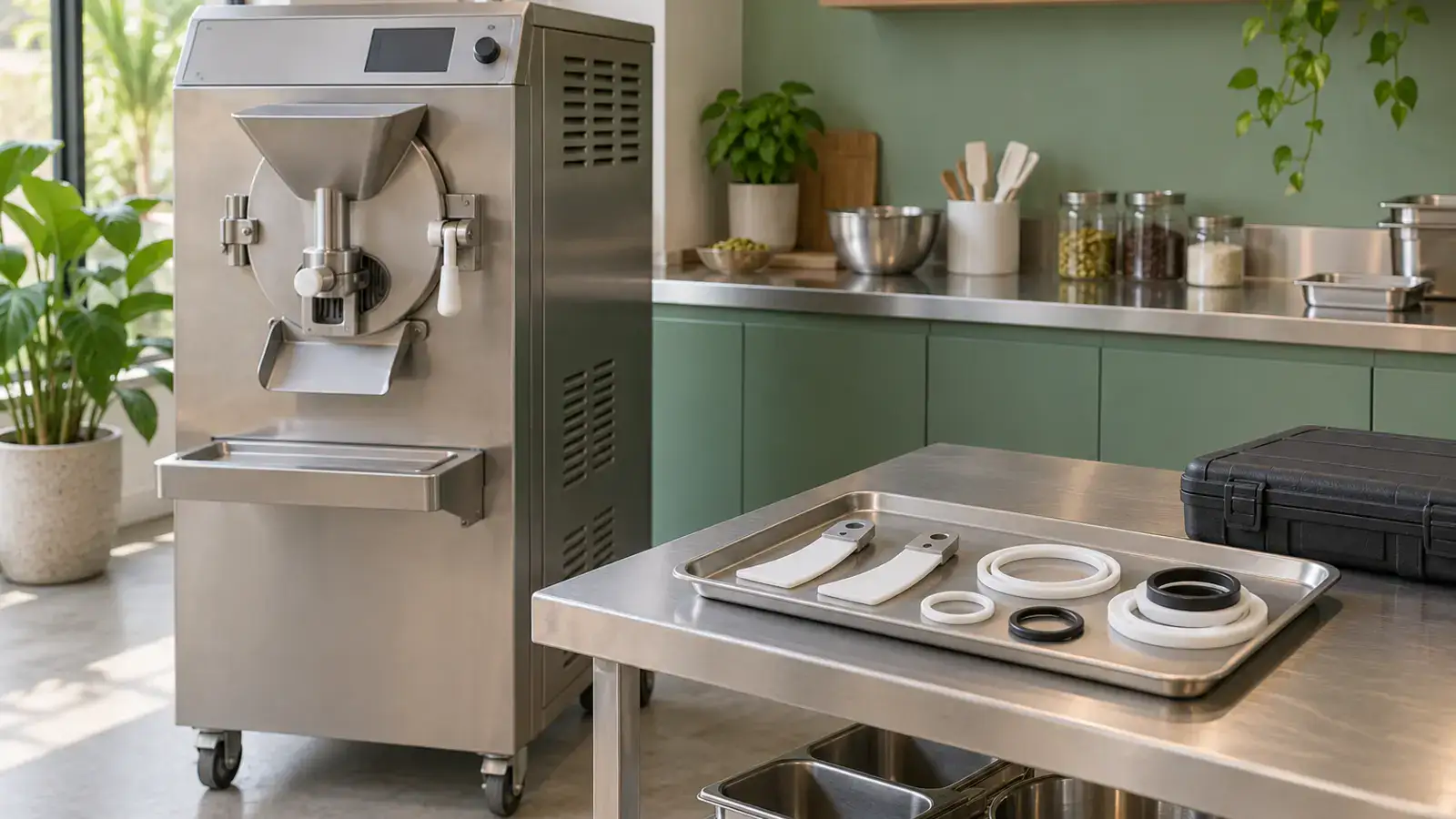
How much does a Tomori ice machine or ice cream machine cost? Get a quote for the specific unit
No single price represents every Tomori ice machine or ice cream machine. A pricing inquiry needs to start with the equipment’s function, model, capacity, and condition. Without those details, you risk comparing machines designed for different purposes. Whether the unit on offer is a Tomori or another brand, first confirm its type as described earlier, then request a quote for that model and serial number.
For a used machine, ask for an itemized written quote that identifies the specific unit. Don’t use another listing’s price as proof of the value of a machine you haven’t inspected.
- The unit’s identity and the components included in the sale.
- Inspection findings and any work needed to get it ready for use.
- Shipping, positioning, installation, and on-site testing costs.
- Terms of support after purchase, if offered.
- Items excluded from the price that must be purchased separately.
Used gelato machine repair costs should be based on a diagnosis, not estimated from age alone. Ask for inspection, parts, labor, and any relevant additional callout charges to be listed separately. Also ask about parts availability before approving repairs.
Compare quotes with the same scope. The price of a machine without shipping or repairs is not equivalent to the price of an inspected unit ready for installation. Because each unit’s condition differs, base your decision on an actual written quote and evidence about that specific machine.
What does it cost to start an ice cream business, and how should you set prices? Look beyond the machine
Starting an ice cream business involves more than buying a machine. To decide whether a used unit helps your business, list everything needed to begin production and sales. Separate startup expenses from operating costs so savings on the machine don’t hide gaps elsewhere.
- Startup costs: the machine, inspection, repairs, shipping, installation, and work equipment.
- Cold chain: hardening, storage, and showcase requirements for your product workflow.
- Production preparation: ingredients for recipe trials, measuring tools, containers, and operator training.
- Operating costs: ingredients, energy, labor, packaging, cleaning, and maintenance.
If you plan to display the product, learn about the role of a gelato showcase and how to choose one. Gelato from a batch freezer needs appropriate handling afterward; the freezing machine is not the entire production system.
To set a selling price for ice cream or gelato, calculate the cost per serving using the portion size you actually serve. Include ingredients, packaging, allocated operating costs, and recorded product losses. Then assess the margin and fit with your business concept rather than simply copying another shop’s prices.
Also leave room in the budget for uncertainty about repairs and periods when the machine cannot be used. The amount should reflect your business circumstances and inspection findings, not a percentage assumed to work for every buyer.
Final purchase checklist: test evidence, total cost, and production readiness
Before agreeing to buy, gather the evidence in a single record. The goal isn’t to make the inspection complicated. It’s to ensure your decision doesn’t depend on memory or verbal promises.
- Suitability: the machine type, capacity, and installation requirements fit your production plan.
- Identity: the model, serial number, included components, and tested unit match the quote.
- Production evidence: test conditions are documented, and results are repeatable under comparable conditions.
- Repairs and preparation: the technician’s findings, required parts, costs, and lead times are clear.
- Total cost: shipping, installation, repairs, and supporting equipment are included in your calculations.
- Purchase terms: payment, handover, and any agreed support or repeat testing are documented in writing.
Proceed if the machine’s function and results have been demonstrated and you can afford the total cost. Put the decision on hold if any findings need further assessment. Walk away if important evidence is unavailable or the risk remains unacceptable.
Don’t overlook operator readiness. Understanding base, assessing texture, and recording the process help you separate recipe issues from machine problems. Production training can support that evaluation, but it doesn’t replace a technician’s inspection. The La Gelato Academy course can be a next step in deepening your understanding of gelato production, helping you interpret test results before deciding to buy.
Learn about base, the freezing process, and texture evaluation so you can better interpret production test results. Explore the La Gelato Academy course to build your understanding of gelato production; a qualified technician still needs to assess the unit's technical condition.
Explore the La Gelato Academy courseFrequently asked questions
Is a used gelato machine a good option for a new business?
It is worth considering if it suits your products and required capacity, can be tested, and has service support you can confirm. Don’t choose it just because the purchase price is lower. Compare the total cost of getting it ready for production and assess whether you are ready to operate it.
Is it enough that the machine turns on and gets cold?
No. That doesn’t demonstrate that it can consistently turn base into gelato. Request a production test with a load and settings that follow the manual, then repeat it under comparable conditions. A technician’s inspection is still needed if symptoms appear or the machine’s condition remains uncertain.
How much does a used Tomori ice cream machine cost?
Request a price for the specific model and unit, with its condition and included components clearly described. Ask for a written quote that separates the unit price, repairs, shipping, and installation. Without those details, a quoted price isn’t enough to judge whether the purchase makes sense.
How much startup capital do you need for an ice cream business using a used machine?
Include the machine, inspection, repairs, installation, cold chain, work equipment, and production preparation. Separate startup requirements from operating costs and funds for periods when the machine cannot be used. The amount depends on your business scale and actual quotes, not a single figure that applies to every business.
When should you walk away from buying a used gelato machine?
Walk away if the machine is the wrong type, the seller refuses testing or inspection, or safety issues remain unresolved. Also consider rejecting the unit if essential parts are unavailable or repair costs remain unclear. Don’t accept a discount in place of evidence that the machine is ready to work.