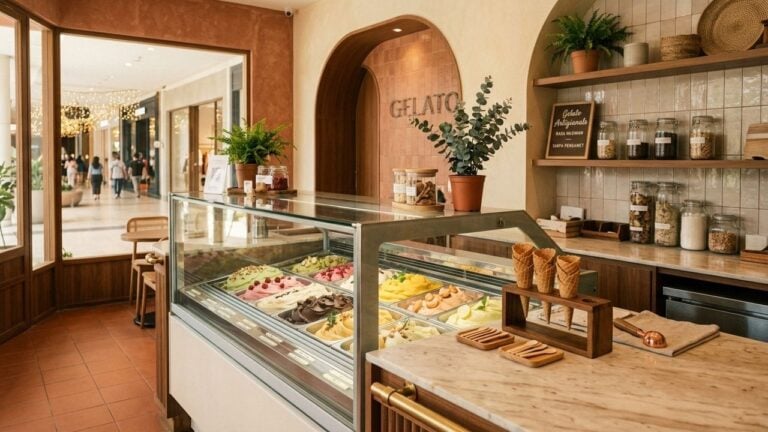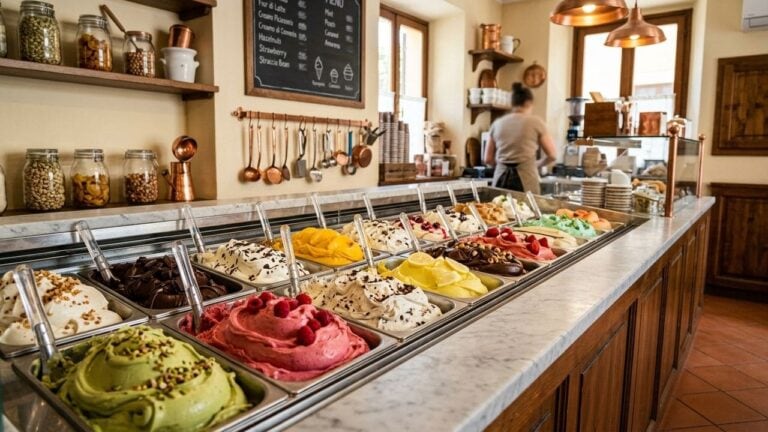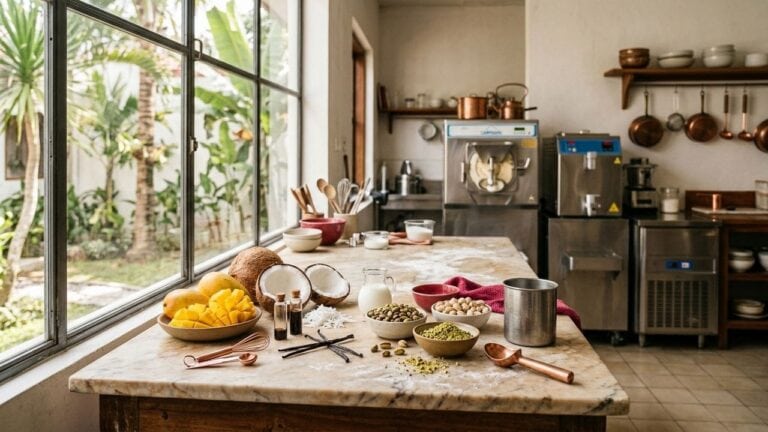
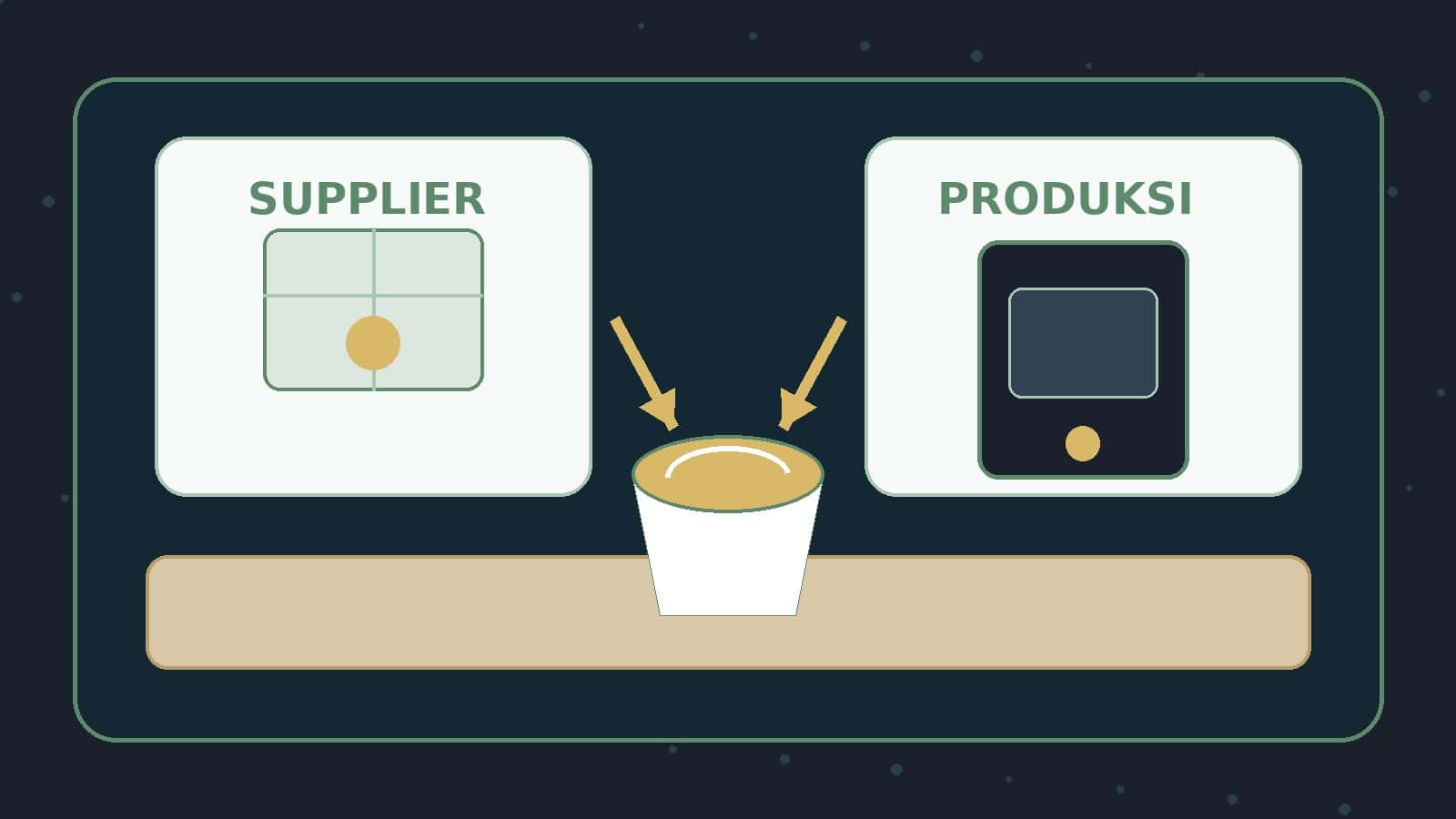
Gelato for cafés can follow two sound operating models: buying a ready-to-serve product from a supplier or building an in-house production process. A supplier can help a café add a dessert category more quickly. In-house production gives more control over recipes, workflow, flavours and the experience you want to create. The right choice depends on the menu concept, expected volume, team capability, available space and the role gelato will play in the business.
In day-to-day operations, problems begin when the decision is reduced to the price of one pan or the purchase price of a machine. The operating model also shapes staff schedules, cold-chain responsibilities, batch consistency, service speed and the ability to correct a product when conditions change.
- Choose a supplier when your priority is to launch the menu quickly and keep production simple.
- Consider in-house production when signature flavours and process control are central to the café concept.
- Compare the full daily workload, not only the product or equipment price.
Gelato for cafés: two different operating models
A supplier keeps formulation, production and part of quality control outside the café. Your team receives the frozen product, stores it according to the agreed procedure, arranges the display and serves customers. The café still owns important responsibilities: checking deliveries, maintaining storage temperature, rotating stock, protecting hygiene and monitoring quality at service.
In-house production brings those responsibilities into the business. The café manages ingredients, weighing, mixing, freezing, hardening, storage, flavour rotation and batch records. In return, the team has more room to develop recipes, adjust the menu and connect the product with the service experience.
| Criterion | Ready-to-serve supplier | In-house production |
|---|---|---|
| Speed to launch | Usually faster once the product, logistics, freezer and storage procedure fit the café. | Requires a method, equipment, ingredients, batch tests and team training. |
| Recipe control | Depends on the supplier’s range and capabilities. | Broader, but every change still needs testing and records. |
| Team | Focuses on receiving, storage, display and service. | Needs an operator who understands production and troubleshooting. |
| Consistency | Must be assessed across product, delivery and supply stability. | Must be built through formulation, process, records and batch discipline. |
| Menu identity | Works well when gelato is a curated addition to the menu. | Works well when gelato is a core product or carries signature flavours. |
When does a supplier make sense?
For gelato for cafés, a supplier can be a practical choice when the product complements coffee, pastries, waffles or plated desserts. The café can test demand without immediately building a complete production area. This route also suits a small back-of-house space or a team that is not ready to manage frozen production every day.
Simplicity still requires discipline. Check delivery coverage, supply schedules, pan sizes, minimum orders, flavour options, receiving procedures and responsibility when the cold chain is interrupted. Ask for written storage and service guidance. A ready-to-serve product does not remove the need for a controlled system.
Test menu fit as well. A flavour that tastes good on its own may not work with the café’s coffee, pastries, portions or service rhythm. One small, documented test is more useful than opening with a long list of flavours.
When is in-house production worth considering?
In-house production becomes more relevant when gelato for cafés is more than an extra dessert. You may want signature flavours, a specific sweetness level for pairings, local ingredients or seasonal menu changes. That control has value only when the team can repeat the result.
Start with the working method rather than a machine list. The guide to a gelato machine for beginners explains how to read capacity and equipment needs. Then learn to treat the recipe as a system. The article on gelato recipe balancing shows why sugars, fats, water, solids, air and cold cannot be adjusted independently without considering the full mix.
In-house production also adds work that customers do not see: ingredient preparation, sanitation, records, hardening, storage and handling a batch that misses the target. Include that work in the decision from the beginning.
Five decisions to make before choosing
- Define gelato’s role in the menu. Is it one supporting dessert, a growing category or a core product?
- Estimate realistic volume. Use traffic, busy periods, freezer capacity and menu rotation as starting points.
- Assess the team. Service skills and production skills are different.
- Map the cold chain. Check receiving, storage, transfer to the display and service time.
- Design a small test. Start with a few flavours, record sales and product condition, then change one variable at a time.
Do not let a long flavour list replace a clear concept
Whether you use a supplier or produce in-house, a gelato for cafés menu needs direction. The guide to a gelato menu for business explains how to organise core, supporting and rotating flavours without filling the display simply to make it look complete.
Start with choices the team can explain. Give each flavour a clear role and make sure it can be served with the same discipline during busy periods. Add capacity after the basic process is stable. When a flavour does not sell, investigate the reason before adding another one.
Training helps you assess production more clearly
When you assess gelato for cafés, you do not need to commit to in-house production on the first day. Understanding ingredients, process, temperature, equipment and workflow makes supplier discussions more precise. The same knowledge helps you judge when the café is ready to bring part or all of production into the team.
La Gelato Academy teaches product and operating foundations for the Indonesian context. The aim is not to impose one model on every business. It is to help you make a decision that fits the project, resources and service standard you want to maintain.
Want to understand production before choosing your café’s gelato model?
Explore the La Gelato Academy courseFrequently asked questions
Is a supplier always cheaper than in-house production?
Not necessarily. Compare the product, delivery, storage, waste, labour, equipment, space and management time. The result will differ for each café.
Can a café start with a supplier and later move to in-house production?
Yes. Use the first phase to understand demand, portions, flavours and service rhythm. Plan the transition only when the team, space, method and cold chain are ready.
How many flavours should a café start with?
Start with a range the team can explain, store and rotate properly. The number depends on the concept, volume, display capacity and staff capability.
What should the team learn before producing gelato in-house?
Learn ingredient functions, weighing, mixing, freezing, hardening, storage, hygiene, batch records and texture troubleshooting before buying equipment for appearance alone.