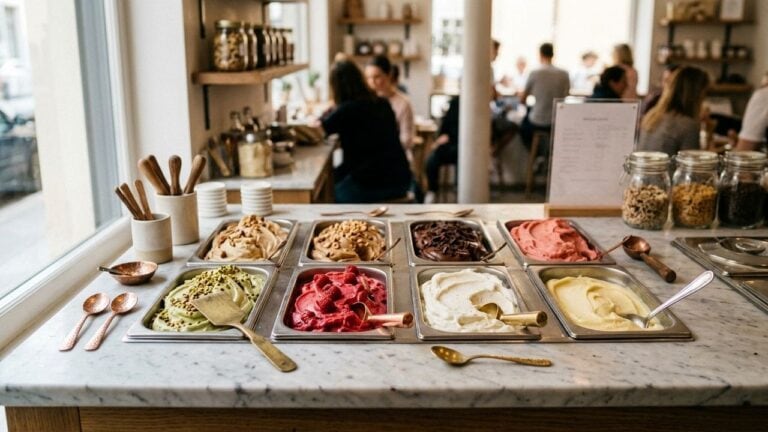
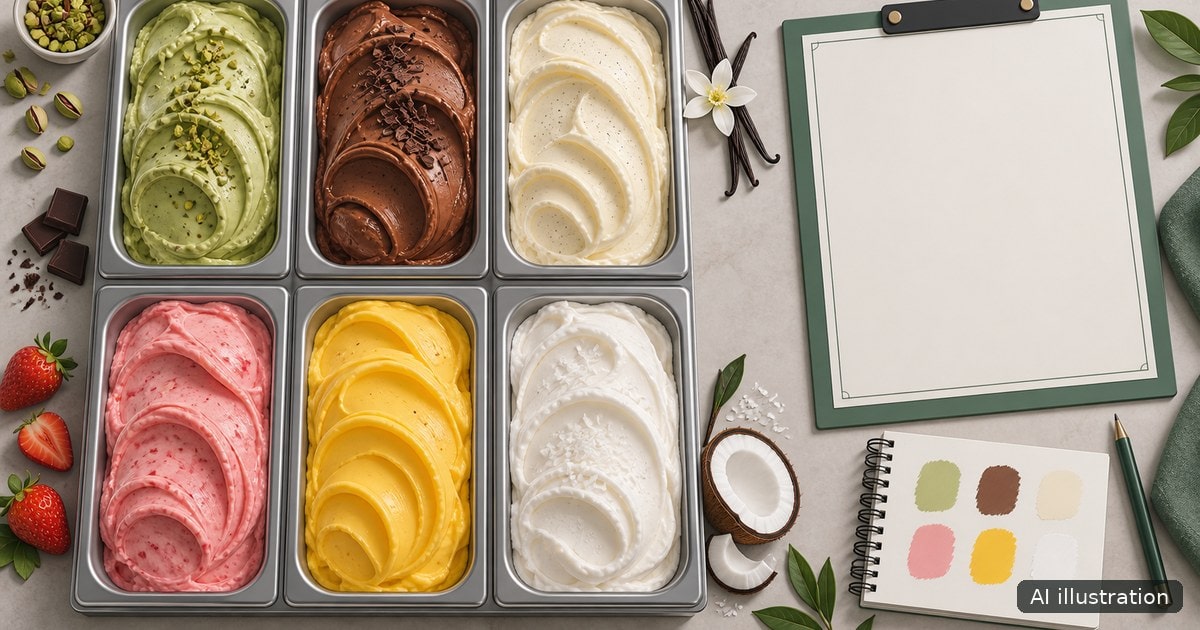
A gelato menu for business should be built as a working system, not simply as a list of attractive flavours. Every flavour needs a clear role: keeping the choice easy for customers to understand, matching production capacity, and leaving room to test demand without disrupting the whole operation.
In day-to-day work, an oversized menu can make ingredient purchasing, batch scheduling, storage and service harder to control. A menu that is too narrow can also limit the customer experience. The right balance depends on your brand identity, your market and your team’s ability to execute consistently.
Key points
- Give core, rotating and signature flavours different roles.
- Start from production capacity and service flow, not from the number of flavour ideas.
- Record sales, leftovers, customer requests and batch stability before changing the menu.
What must be decided before building a gelato menu for business?
Begin with the customers you want to serve. A neighbourhood shop, café, event booth and takeaway operation may need different menu structures. The useful question is not only “Which flavour is popular?” but “Which choices can customers understand and my team produce and serve well?”
Then review your real capacity. Note the number of pans in the showcase, available production time, storage space, team size and sales rhythm. If a flavour requires more complexity than the team can manage reliably, it may not be suitable as a daily item even when the idea looks appealing.
Finally, define the character of the brand. You may build around familiar flavours, local ingredients, chocolate and nuts, tropical fruit, or a balanced mix. Identity does not require dozens of options. It can come from consistent quality, clear names, neat presentation and one or two memorable features.
Build the menu in three layers
1. Core flavours
Core flavours are the most stable part of the operation. Choose options that can be produced repeatedly with available ingredients and a texture standard the team already controls.
2. Rotating flavours
Rotating flavours create space for seasonal ingredients, local ideas or demand tests. Keep each test bounded so that it does not disturb the full production schedule.
3. Signature flavour
A signature flavour helps customers remember the business. Choose an idea that fits the brand and remains realistic to produce, store and explain.
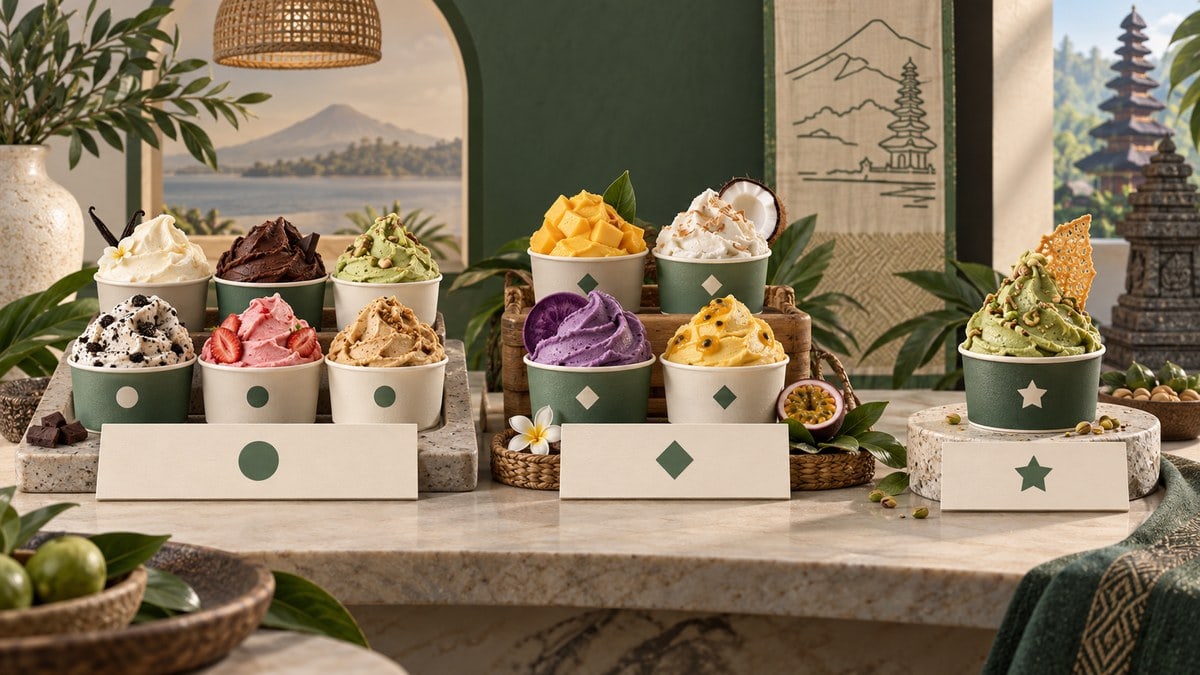
These layers do not have to be the same size. Core flavours create clarity. Rotating flavours create learning space. A signature flavour strengthens identity. This structure lets a gelato menu for business develop through measured decisions rather than reactions to every new trend.
Start with a small selection you can truly control
There is no universal flavour count for every business. A sensible number is one you can produce, store, display and explain to the same standard. A large showcase does not mean every pan must always contain a different flavour.
A clear selection is stronger than a broad but unstable range. Before adding a flavour, make sure the reference recipe, batch weight, mixing sequence, process timing and showcase performance are recorded. Understanding gelato ingredients and their functions helps you see whether several flavours can share ingredient groups without being treated as identical recipes.
Use the principles of gelato recipe balancing whenever an ingredient changes. A new flavour is not just a new name: different fruit, chocolate, nuts, sugars or solids can change the behaviour of the mix. Change one variable at a time and keep a batch record.
Use decision criteria that can be recorded
| Criterion | What to observe | Decision it supports |
|---|---|---|
| Customer interest | Flavours that are bought, requested, or sampled and then left. | Keep a flavour, improve the explanation, or rotate it. |
| Production consistency | Differences in texture, flavour and yield between batches. | Decide whether a flavour is ready to become a core item. |
| Service speed | How easily the team can explain and serve the choices. | Simplify categories or menu names. |
| Ingredient access | Availability, specifications and variation in ingredient quality. | Choose between daily and seasonal roles. |
| Role in the menu | Whether the flavour adds a useful choice or repeats the role of another one. | Avoid a menu full of very similar variations. |
Want to connect the menu with production?
Learn the foundations of ingredients, recipes, process and operations so each flavour choice can be managed as part of a working system.
Learn MoreTest the menu in real operations without changing everything at once
- Set the purpose of the test. Choose one question: do customers understand the categories, is the new flavour easy to produce, or are two choices too similar?
- Record one operating cycle. Track batches, sales, samples, leftovers, comments and service difficulties in the same format.
- Change one element. Adjust the position, explanation or one rotating flavour. Avoid changing the name, recipe, price and presentation at the same time.
- Review it with the team. Compare production and service notes before deciding on the next change.
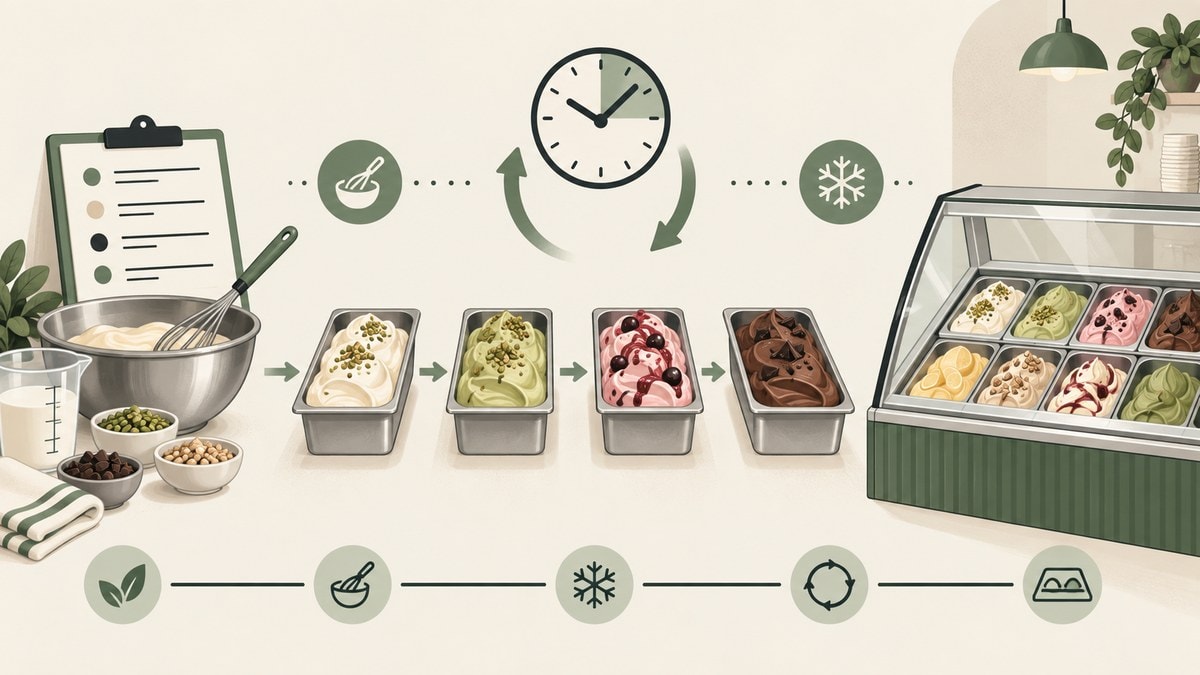
Simple records help separate personal preference from an operating signal. Customers may like the idea of a flavour, but the team must also see whether it is purchased repeatedly, remains stable in the showcase, is easy to explain and fits the workflow.
Connect the menu with production, showcase and service
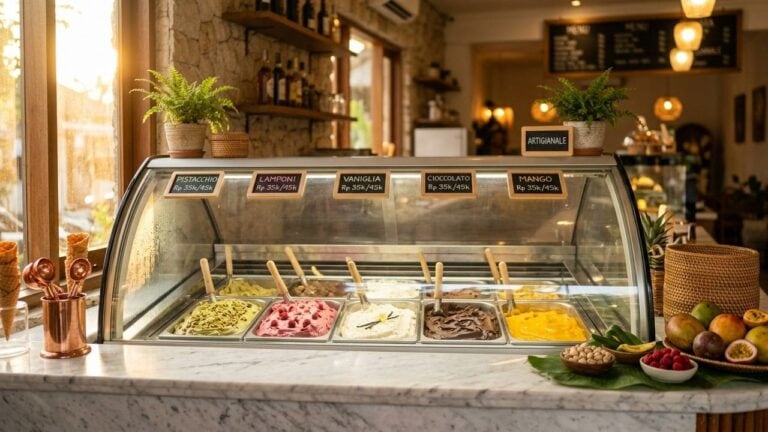
The menu does not end on the menu board. Each choice must translate into ingredients, a batch code, a production sequence, a showcase position, serving tools and a short description the team can use with customers. That is why menu decisions should include operators, not only marketing.
Use the guide to choosing a gelato showcase to align display capacity with your service plan. A practical menu also leaves enough room for cleaning, pan changes and product rotation without making the counter difficult to operate.
One sentence to remember: a good menu is not the one with the most flavours; it is the one the team can explain, produce and serve consistently.
Frequently asked questions about a gelato menu
How many flavours should a new business start with?
There is no universal number. Start with a range that matches production capacity, showcase pans, storage and the team’s ability to maintain the same standard for every flavour.
Should the menu use popular or unusual flavours?
Use both for different roles. Familiar flavours help customers understand the menu, while a rotating or signature flavour can build identity and create a controlled test.
When should a flavour be rotated?
Rotate after reviewing sales, leftovers, requests, batch consistency and service difficulties. Avoid removing a flavour because of one day or one comment.
How can a menu help reduce leftovers?
A structured menu makes batch planning and flavour monitoring easier. Record leftovers and sales rhythm, then adjust batch size or the role of a flavour gradually.
Must the menu be identical every day?
No. Keep core flavours for clarity and use a controlled rotation area. Customers can still recognise the business while the team learns from each change.
Ready to plan a menu that fits your project?
Discuss the learning path and operational needs so the menu, recipes, production and service work as one system.
Contact La Gelato