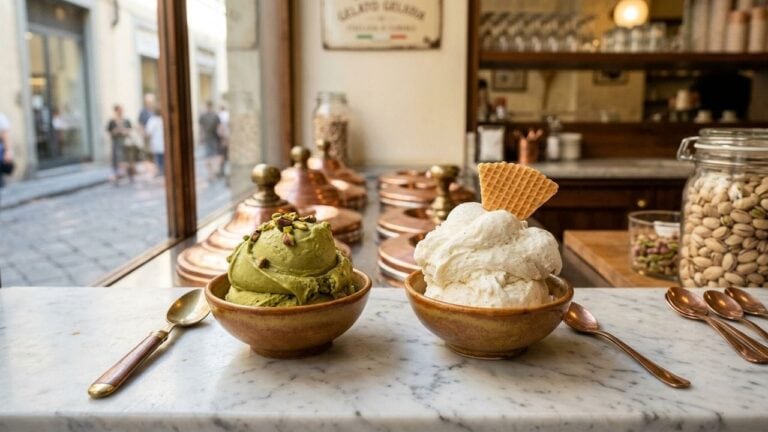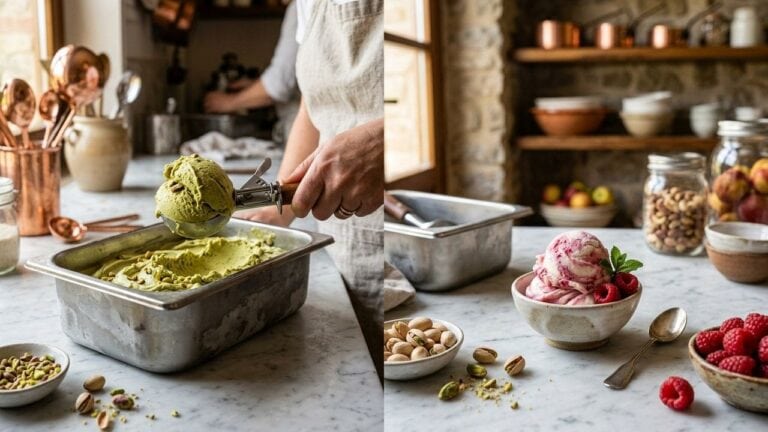
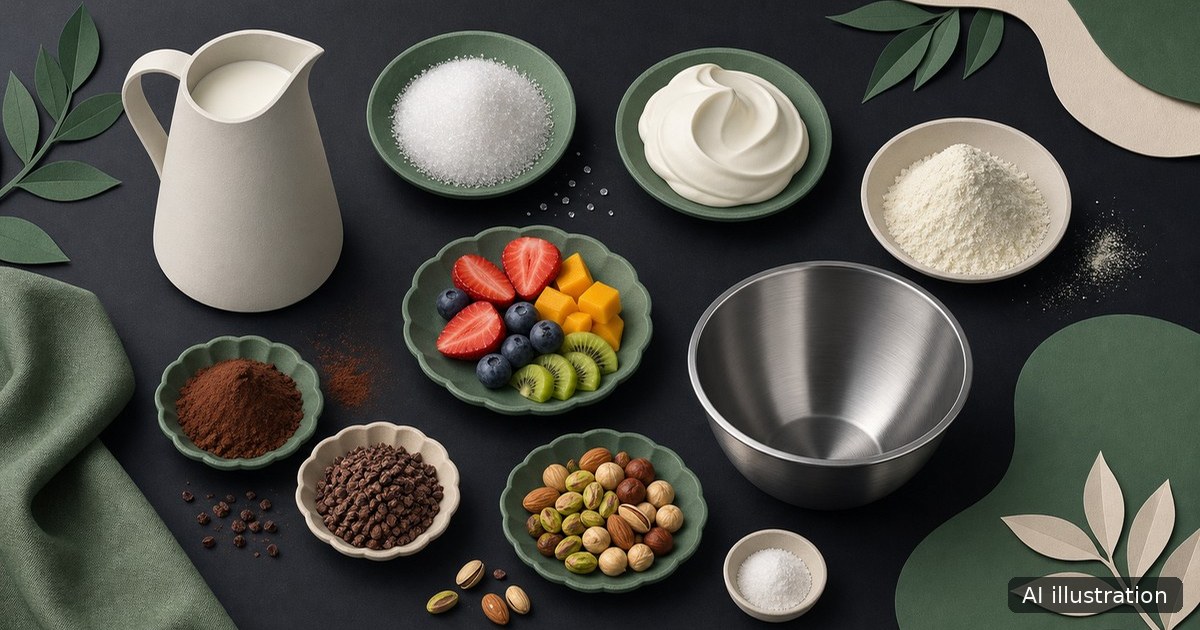
Gelato ingredients and their functions should be understood as one system, not as a shopping list. Milk brings water, protein, lactose and minerals. Sugar adds sweetness while also changing how the mix behaves at frozen temperatures. Fat, milk solids, fruit, cocoa, nuts, bases, air and cold all contribute to texture and the way gelato performs in the display cabinet.
For a beginner, the first goal is not to create a formula from scratch. It is to recognize the role of each group, follow a reference recipe, weigh accurately and know when an ingredient substitution should stop. This matters because one small change can affect flavor, body, softness and the consistency of an entire batch.
Key points
- Each ingredient can perform more than one job in the mix.
- A recipe must be read as a relationship between water, sugars, fats, solids, air and cold.
- A base moves part of the complexity upstream but does not replace operator accuracy.
- When learning, change one variable at a time and record the outcome.
What Are Gelato Ingredients and Their Functions?
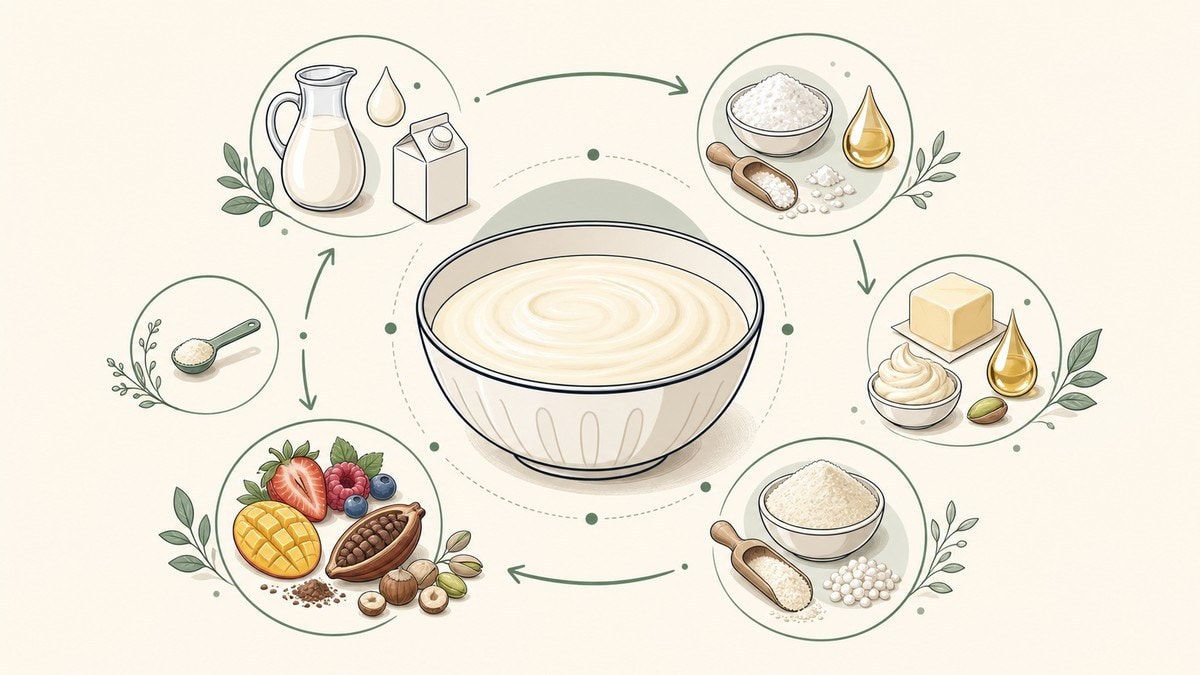
The phrase describes the ingredient groups in a mix and the technical work each group performs. Frozen dessert structure is not created simply by freezing a liquid. The Tetra Pak Dairy Processing Handbook explains how fat, milk solids, sugars, stabilizers, emulsifiers, air and processing work together in a frozen product. These general principles help you read gelato, but they are not a universal formula for every recipe, machine or production environment.
Gelato ingredients and their functions must therefore be read in the context of the complete recipe. Milk does more than add a dairy flavor. Fruit does more than create a flavor profile. Both add water and solids that change the balance. For a deeper explanation of these relationships, continue with the guide to gelato recipe balancing.
Six Ingredient Groups to Recognize
1. Liquids and dairy ingredients
Milk, water and other liquids form the main phase of the mix. Milk also brings proteins, lactose, minerals and part of the fat. Brands and compositions can differ, so replacing one milk with another should not be treated as neutral. Read the label, keep one reference specification and record any change before adjusting the recipe.
2. Sugars and sweeteners
Sugars determine sweetness, but that is not their only job. The type of sugar affects how water behaves when the mix freezes and contributes to whether the result feels too hard or too soft at serving temperature. Two sugars with similar sweetness are not automatically interchangeable in the same quantity. Start with a tested recipe before moving into advanced calculation.
3. Fat
Fat carries aromas, creates a rounder mouthfeel and contributes to structure. It may come from milk, cream, chocolate or nut ingredients. The important lesson is not that more fat always means more creaminess. Too much or too little can change body, flavor release and the way gelato feels on the spoon.
4. Milk solids-not-fat
Milk proteins and other non-fat milk components support body and help manage part of the water. Milk powder is often a formulation tool rather than simply a way to intensify dairy flavor. Products can have different specifications, so weigh them according to the recipe instead of adding them by appearance.
5. Flavor ingredients: fruit, cocoa, chocolate and nuts
Flavor ingredients also carry technical components. Fruit adds water, natural sugars, fiber and varying acidity. Cocoa, chocolate and nut pastes add different amounts of solids and fat. One flavor cannot always be made by replacing the named ingredient in another formula while leaving everything else unchanged.
6. Bases, stabilizers and emulsifiers
These components are used in small quantities to support structure and consistency. Their function must follow a clear recipe and dosage. More is not automatically better. In the La Gelato method, a base helps prepare part of the balance upstream so the operator can work in a more structured way, while weighing, mixing, air and cold still require control.
How to Read a Recipe Without Memorizing a Formula
Start with function, then look at quantity and process order. Mark which ingredients bring water, sugars, fats and solids. Note flavor ingredients that perform several roles. Next, read what happens during mixing, freezing, hardening, storage and service. A sound recipe is not only a list of grams; it also defines a working sequence.
If you are just starting, the guide to the gelato course for beginners places ingredients, recipes, tools and production in a clearer learning order. You do not need to become a formulator on day one. Build a strong foundation before developing signature flavors.
A Practical Checklist Before Replacing an Ingredient
- Identify the ingredient’s jobs. Does it mainly bring water, sugar, fat, solids, flavor, or several functions?
- Compare labels and specifications. Products with the same name can have different compositions.
- Review the effect on the whole mix. Replacing fruit, milk, chocolate or sugar may change more than one group.
- Change one variable. Keep other ingredients and process conditions stable so the result can be compared.
- Record the batch. Note weights, mixing order, machine behavior, extraction texture and performance in the display cabinet.
- Return to the reference recipe when results drift. Correction begins with data, not guesswork.
To see how a simple recipe can develop into more structured production control, use the guide on how to make ice cream from home recipes to Italian gelato.
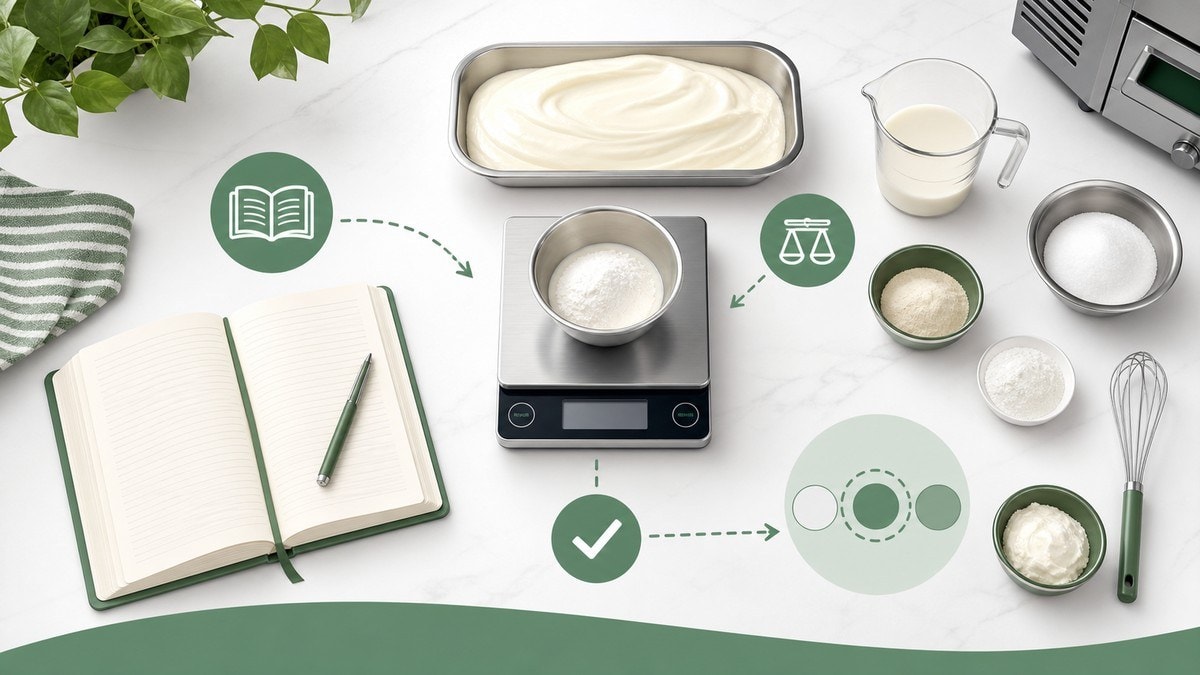
Why Substitution Requires Discipline
In daily production, substitutions may be driven by price, stock, suppliers or a flavor you want to develop. These reasons are understandable, but the method still needs control. Replacing cream changes fat and water. Replacing chocolate can alter fat, sugar and solids. Replacing fruit may change water, natural sugars, fiber and acidity at the same time.
Keep one operational rule: do not try to repair a formula by adding several ingredients at once. Return to the reference batch, choose one hypothesis and make one measurable change. The article about homemade ice cream recipes and texture foundations helps distinguish kitchen improvisation from a production system that must be repeatable.
Ingredients in the La Gelato System
In the La Gelato system, bases and reference recipes move part of formulation complexity upstream. The operator still works with accuracy and remains responsible for dosage, weighing, mixing order, clean tools, air control, cold, storage and batch consistency.
One sentence is worth keeping: a base replaces part of the calculation, not precision. Understanding gelato ingredients and their functions helps you follow a recipe for clear reasons, read production symptoms and keep every change measurable.
Would you like to learn ingredients and process in a structured order?
Explore the La Gelato Academy gelato course for theory and practice adapted to Indonesia.
Frequently Asked Questions About Gelato Ingredients
Does every gelato recipe need cream?
Not necessarily. The formula depends on flavor, method, texture target and the reference recipe. Do not add or remove cream without reviewing water, fat and solids across the entire mix.
What is the difference between a base and milk powder?
Milk powder mainly adds milk solids, while a base may be designed to support several formulation functions. They are not automatic substitutes and should be used according to the recipe.
Can one type of sugar be replaced with another?
Do not treat the exchange as one-to-one. Different sugars can provide different sweetness and freezing behavior. Use a reference recipe or a measured correction.
What should I check first when texture changes after a substitution?
Return to the batch record, compare the old and new ingredient specifications, and restore the reference recipe before testing one further change.
Would you like to understand ingredients before changing a recipe?
Discuss the right learning path, from online theory to hands-on practice in Yogyakarta.
Contact La Gelato