Learning how to make simple ice cream without a mixer turns out to be far easier than you might think — with basic pantry ingredients and a little patience, you can serve smooth, creamy ice cream for your family without expensive equipment. No machine, no mixer, just the right technique.
The problem is that many people try and end up disappointed: the result is rock-hard like a block of ice, grainy, or melts too quickly. Almost always, the culprit is not the ingredients — it is the technique. Without a mixer, you only need to master one key trick, which we will cover thoroughly in this article.
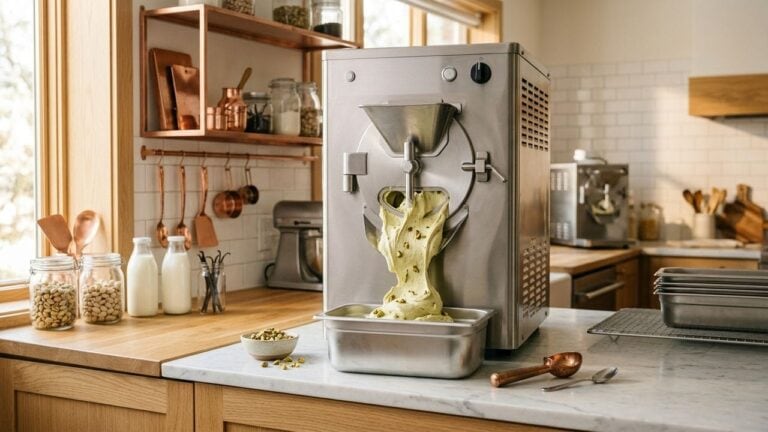
And if from your home kitchen you start to see a business opportunity behind every successful batch, we will also show you a more structured path: the cold process method developed by Mr. Jeff, creator of La Gelato Academy’s recipes and procedures, designed specifically for Indonesia’s tropical climate.
Key Points You Need to Know
- Mixer-free ice cream only needs 4 basic ingredients: full-cream UHT milk, heavy cream, sugar, and a flavor of your choice
- The key to a smooth texture: stir periodically with a fork every 45-60 minutes during freezing
- Ideal fat ratio: at least 30-35% heavy cream for a creamy result that is not too hard
- Homemade ice cream keeps for 1-2 weeks in a -18°C freezer in a tightly sealed container
- Want consistent production for selling? La Gelato Basic Package starting at ≈ $1,400 (Rp 24,9 juta) — already includes machine, showcase, and training
Why Making Ice Cream Without a Mixer Often Fails
Before getting into the recipe, it is important to understand why so many homemade ice cream attempts end up hard and grainy. By understanding the causes, you can avoid them from the very start.
The main cause is large ice crystals. When the ice cream mixture freezes slowly and is left undisturbed, water molecules join together to form large crystals that feel rough on the tongue. A mixer works by incorporating air and continuously breaking up those crystals. Without a mixer, you have to do that job manually.
The three most common causes of failure:
- Fat content too low — too much water without enough fat freezes into a hard block
- Rarely or never stirred during freezing — ice crystals grow uncontrolled
- Too little sugar — sugar acts as a natural antifreeze; reducing it makes the ice cream harder
The good news is that all three problems can be solved without special equipment. The key lies in choosing the right ingredients and one simple manual technique.
Simple Ingredients for Ice Cream Without a Mixer
No imported or expensive ingredients needed. Everything below is available at the nearest supermarket, and these are the proportions proven to produce a soft texture.
Ingredients for 4-6 servings:
- 200 ml full-cream UHT milk — choose full-cream, not skim, for adequate fat content
- 200 ml heavy cream (whipping cream 35% fat) or sweetened condensed milk — the most important component for softness
- 3-4 tbsp fine granulated sugar — fine sugar dissolves faster and more evenly
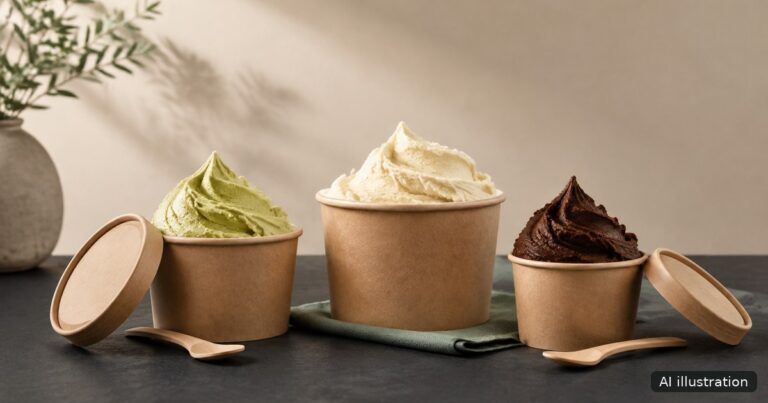
- Flavor of your choice: vanilla extract, premium cocoa powder, pandan paste, or finely blended low-water fruit
- A pinch of fine salt — enhances the perception of sweetness and balances the texture
One important note: the more water content in your flavor ingredient (for example, juicy fresh fruit), the greater the risk of ice crystal formation. For beginners, start with pastes or extracts with low water content for safer results.
How to Make Simple Ice Cream Without a Mixer Step by Step
This is the core method that replaces the function of a mixer with a periodic stirring technique. The result is not as smooth as a professional batch freezer, but far smoother than simply freezing milk in the freezer.
Steps:
- Combine all ingredients in a large bowl and stir until the sugar is completely dissolved (about 3-5 minutes of active stirring)
- Pour into a sealed container — a food-grade plastic box or aluminium loaf pan works best
- Place in the freezer for 45-60 minutes, until the edges start to freeze but the centre is still liquid
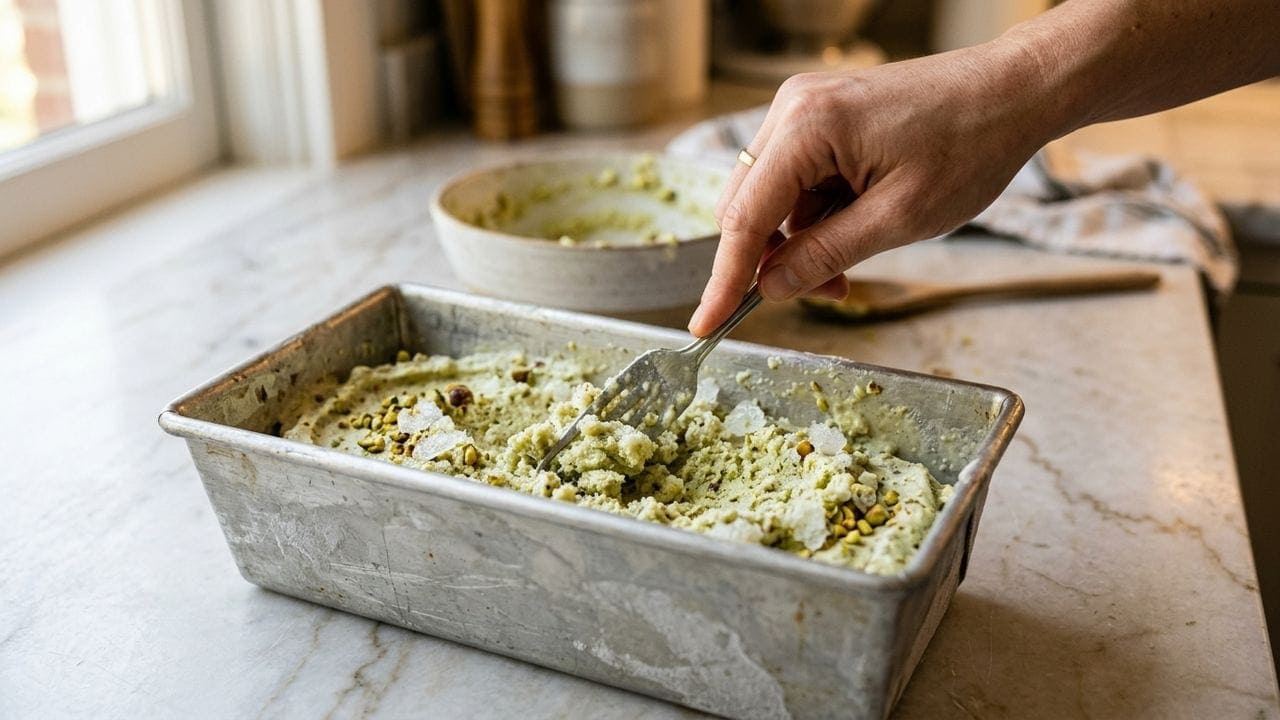
- Remove and stir vigorously with a fork or whisk for 2-3 minutes — break up the ice crystals forming at the edges
- Freeze again for 45 minutes, then repeat the stirring process 3-4 times
- After the final stir, smooth the surface, seal tightly, and leave to freeze completely for at least 3-4 hours
Never skip the periodic stirring step — this is the true replacement for a mixer. The more diligently you repeat it, the finer the ice particles and the smoother the final result.
Note from Mr. Jeff — Creator of Recipes & Methods
« Even without a mixer, smoothness can be achieved — what matters is the correct fat ratio and the patience to break up ice crystals. Sophisticated equipment only speeds things up; a patient technique remains the foundation. That same principle is at the heart of the La Gelato cold process method: intelligent simplicity, not expensive complexity. »
Ready to Turn Your Hobby into an Artisan Gelato Business?
See the full details of our programme — Package 1 starting from Rp1.250.000 (regular price RP3JT), including lifetime access and 3 free base powder sachets delivered anywhere in Indonesia.
Tips to Keep Mixer-Free Ice Cream Soft and Not Too Hard
Once you have mastered the basic technique, a few small adjustments can make a big difference to the final result. The table below summarises the most common problems and their solutions.
| Problem | Common Cause | Practical Solution |
|---|---|---|
| Ice cream too hard | Low fat content or insufficient sugar | Add more heavy cream, replace some granulated sugar with a little honey or invert sugar |
| Grainy / icy texture | Stirred too infrequently or unstable freezer temperature | Ensure periodic stirring 3-4 times, seal container tightly, avoid frequently opening the freezer |
| Bland flavor after freezing | Cold temperature reduces the perception of sweetness | Add 10-15% more sugar than the usual recipe, intensify with quality extracts |
| Melts too quickly when served | Low solids content, no stabilizer | Add 1/2 tsp CMC or guar gum available at baking supply stores |
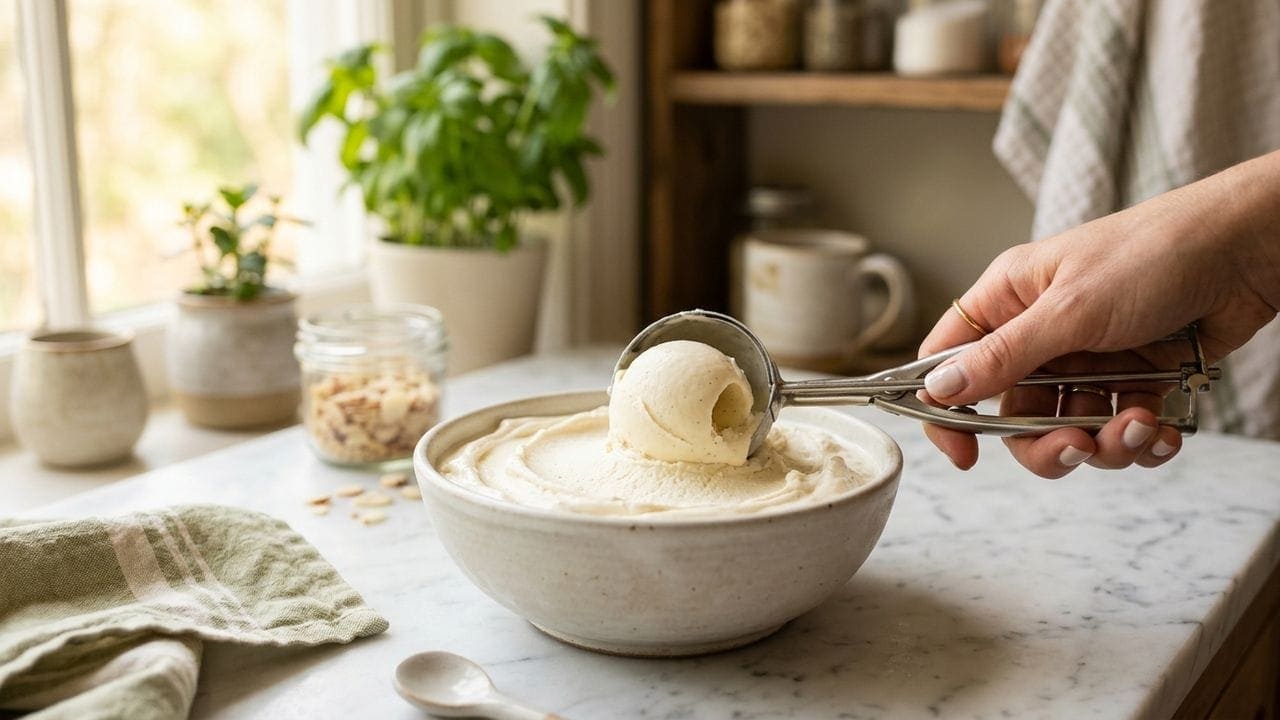
One simple tip that is often forgotten: take the ice cream out of the freezer 3-5 minutes before serving. Letting it soften slightly makes the texture far easier to scoop without losing quality.
Differences Between Mixer-Free Ice Cream and Italian Gelato
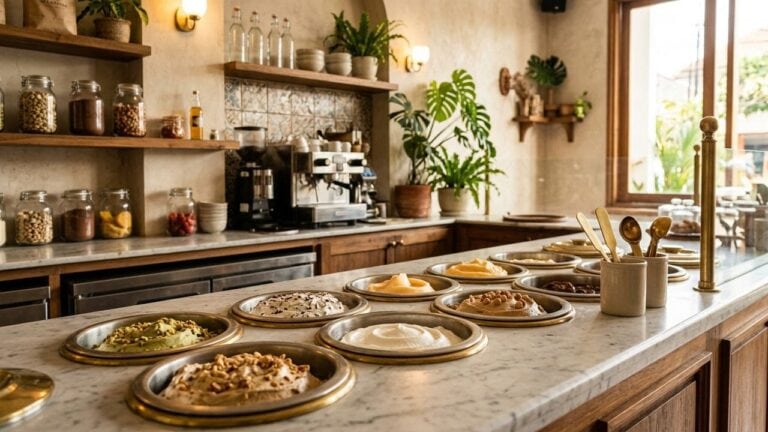
Many people are curious: what is the difference between handmade homemade ice cream and Italian gelato sold at premium outlets? The differences are quite fundamental and have a direct impact on flavor, texture, and business potential.
Homemade ice cream typically contains more air (high overrun), giving it a light, airy texture. Italian gelato instead uses more milk than cream, with a freezing process that results in low overrun — the texture is denser, the flavor more intense, and it melts more slowly in the mouth.
For a deeper understanding of the technical differences between ice cream and gelato — from fat content and air content to serving temperature and their impact on flavor — read our full article: Differences Between Gelato and Ice Cream: From Fat Content to How They Are Made.
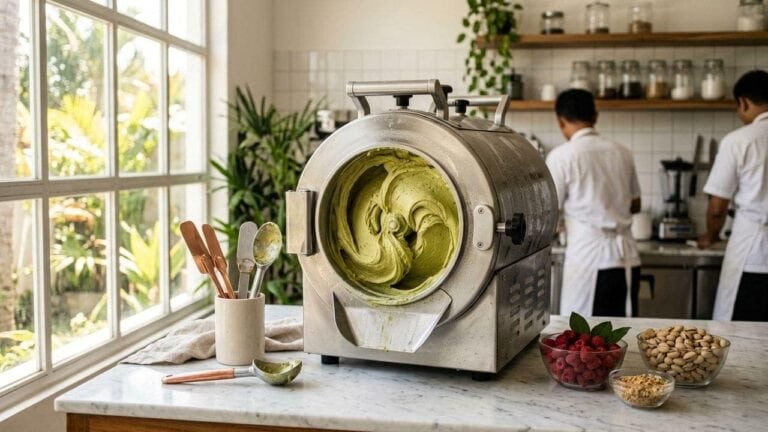
Interestingly, making quality artisan gelato does not have to go through a complex and expensive pasteurization process. La Gelato cold process makes it possible to produce premium gelato directly from cold UHT milk, without a mix-heating stage — faster, less equipment, and better suited to Indonesia’s tropical climate.
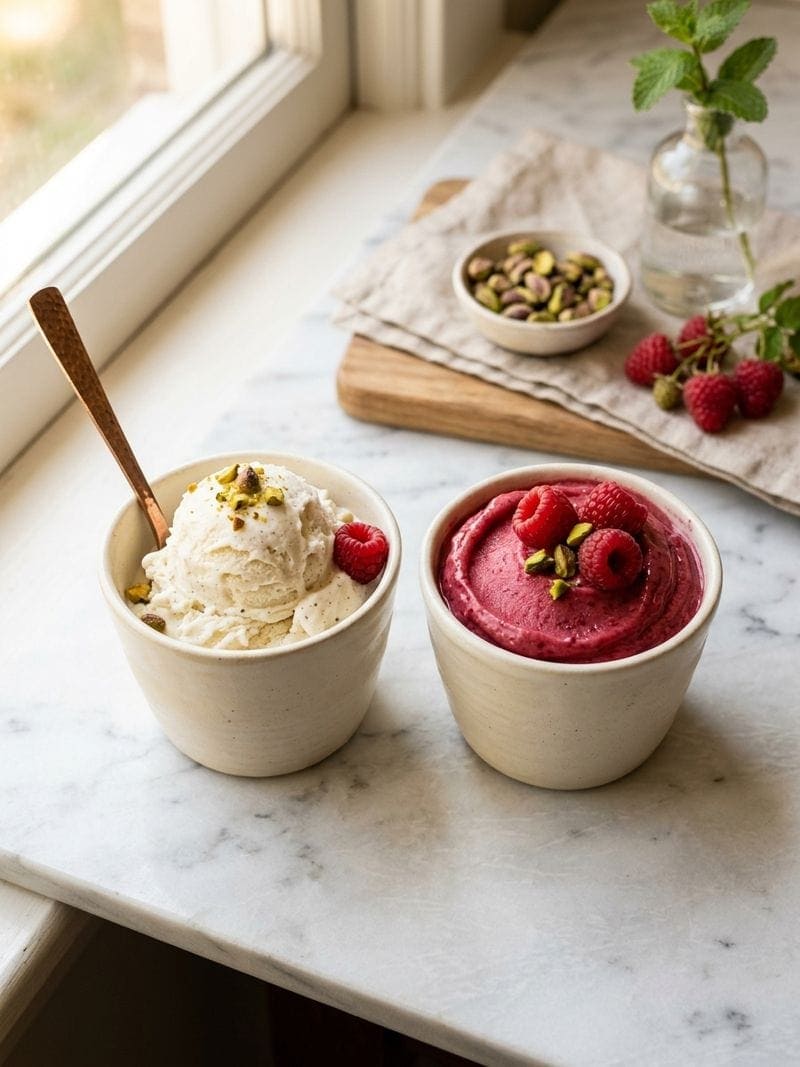
When Homemade Ice Cream Is No Longer Enough: Switching to Cold Process
Making mixer-free ice cream for your family is one thing. But once you start thinking about selling — at a food stall, on a marketplace, or opening your own outlet — there are real challenges to anticipate from the very beginning.
Key challenges when selling homemade ice cream at a small scale:
- Consistency: each manual batch can differ because there is no locked formulation
- Shelf life: without the right stabilizers, ice cream quickly develops ice crystals after being opened
- Production scale: manual stirring techniques are not designed for hundreds of cups per day
- Production standards: commercial sales require certain hygiene standards and documentation
This is where the La Gelato cold process system delivers a real advantage. With pre-formulated, standardized base powder, quality local batch freezer machines, and the method developed by Mr. Jeff, you can produce artisan gelato consistently with:
- Production time of less than 5 minutes mixing + approximately 20 minutes per tub in the machine
- Locked formula every batch — the same flavor from batch one to batch one hundred
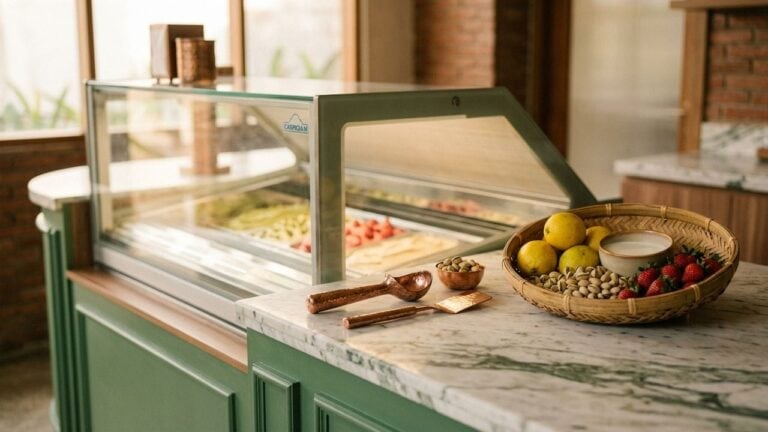
- More accessible start-up capital — La Gelato Basic Package starting at ≈ $1,400 (Rp 24,9 juta) already includes a local 5L machine, showcase, base powder, and training
- Lower power consumption — standard PLN residential 3.2 kW is sufficient, no industrial power installation needed
The philosophy is summed up in a single sentence that serves as La Gelato Academy’s guiding principle: Innovation without pasteurization. No temperature gap — a more hygienic, more efficient product, through a lightning process.
Frequently Asked Questions About How to Make Ice Cream Without a Mixer
Is it really possible to make smooth ice cream without a mixer?
Yes, as long as you replace the function of the mixer with the periodic stirring technique. Every 45-60 minutes during freezing, take out the mixture and stir vigorously with a fork or whisk for 2-3 minutes to break up ice crystals. Repeat 3-4 times. Combined with cream at a minimum fat content of 30-35% and sufficient sugar, the result will be far smoother than simply freezing milk.
How many times should you stir the ice cream during freezing?
Ideally 3-4 times, with a 45-60 minute gap between each stir. The first stir is done when the edges of the container start to freeze but the centre is still liquid. The more consistently and diligently you stir, the smaller the ice crystals that form and the smoother the texture. After the final stir, leave to freeze completely for at least 3-4 hours before serving.
How long can mixer-free ice cream be stored?
Homemade ice cream generally keeps for 1-2 weeks in a -18°C freezer in a tightly sealed container. After that, the texture deteriorates as ice crystals grow. Avoid opening the freezer frequently and make sure the container is truly airtight. As a comparison, La Gelato cold process gelato targets a shelf life of 2-3 weeks if temperature protocols and the showcase are properly maintained.
Is mixer-free ice cream suitable for commercial sale?
Technically yes, but the challenges are real: consistency between batches, hygiene standards, and PIRT or BPOM licensing for commercial sales. Manual technique makes it difficult to maintain uniform quality as scale increases. If your goal is to sell seriously and consistently, consider a standardized system from the outset — pre-formulated base powder, a machine suited to your capacity, and clear production guidelines, as offered in our gelato course programme.
Still Hesitant to Start Your Gelato Business?
Before you sign up, contact the La Gelato Academy team for a free 15-30 minute discussion about your gelato business plan. We will help you choose the package that best fits your situation and budget — no pressure, no commitment.
Free consultation — No commitment — Quick WhatsApp response
Conclusion: From a Mixer-Free Kitchen to an Artisan Gelato Business
Learning how to make simple ice cream without a mixer is actually not as complicated as you might think. With four basic ingredients and a patient periodic stirring technique, you can already produce smooth ice cream that satisfies your family. The key lies in the right fat ratio, sufficient sugar, and the diligence to break up ice crystals during freezing.
But if you start to see greater opportunities behind every successful batch — if you can picture yourself selling premium artisan gelato consistently — a more structured path is waiting. From homemade recipes to an artisan gelato business, the distance is closer than you think.
About the Creator
Mr. Jeff
A graduate of Italian artisan gelato technique with years of experience in tropical ice cream formulation and recipe development. Creator of all La Gelato recipes, methods, and production procedures — including the proprietary cold process method developed specifically for Indonesia’s tropical climate. Every formula has undergone intensive testing at La Gelato’s laboratory in Yogyakarta before being incorporated into the training curriculum.
The philosophy embedded in the curriculum: knowledge shared honestly is the path to a blessed business. Every recipe taught at La Gelato Academy has passed dogfooding — genuinely tested for months in the laboratory before reaching course participants.
Mr. Jeff applies the same approach to the entire La Gelato ecosystem: the training academy (lagelatoacademy.com), the B2B raw materials factory, and the partnership programme (la-gelato.com). Every component of the system on offer has been proven in practice before being shared with partners and participants.