You can start to learn to make gelato today, with free recipes from the internet and an ordinary home freezer. The more important question is not « can I? » but rather « how far is self-teaching enough, and when do you need a more structured path? »
Many beginners in Indonesia spend months experimenting on their own, then give up because the texture never turns out as smooth as the Italian gelato they imagined. Not because they lack talent — but because there is a gap between « freezing a sweet mixture » and « producing gelato that is ready to sell. »
This article honestly maps what you can master at home on your own, where self-teaching hits its limits, and how the cold process method developed by Mr. Jeff drastically shortens your learning curve.
Key Points to Know
- Learning to make gelato self-taught can build a flavor foundation, but producing a consistent texture is hard without a method framework
- The La Gelato cold process method enables production in under 5 minutes of mixing, without pasteurization for routine recipes
- The structured path combines lifetime online theory and a 1-on-1 hands-on workshop in Yogyakarta
- Basic package starts at Rp1.250.000 (regular price RP3JT), including 3 free sachets of raw materials shipped anywhere in Indonesia
- Suitable for beginners with no culinary background — curriculum is built step by step from zero
Can You Learn to Make Gelato Self-Taught?
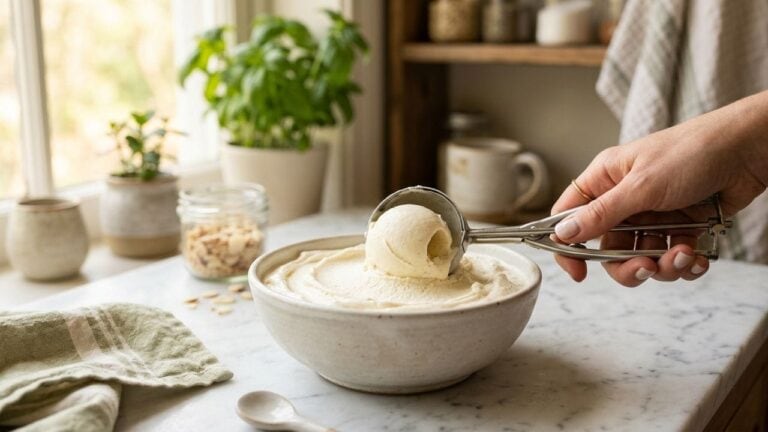
The honest answer: partly yes, partly no. Learning to make gelato self-taught is very possible for the early exploration stage — mixing ingredients, tasting, and understanding that gelato is different from industrial ice cream. The internet is full of recipes, and a home freezer is enough for your first attempt.
The problem arises when you want to level up. Good artisanal gelato requires a balance of fat, solids, sugar, and the air incorporated during churning. Without understanding the logic behind these ratios, every attempt feels like guessing. Today too hard, tomorrow melting too fast, the next day grainy.
Self-teaching also often overlooks one important thing: food safety. Many home recipes rely on heating the mixture in ways that, if cooling is slow in a tropical climate, can actually open the door to bacterial risk. This is the point where learning without the right framework can be dangerous for a business — not just for flavor.
What You Can Learn on Your Own at Home
Do not misunderstand — the self-taught phase has real value. Before you invest in a structured path, there are a few basic skills you should build on your own so that formal learning later feels much faster.
Developing your palate. By tasting a lot of gelato — at cafés, while traveling, or homemade — your palate learns to distinguish smooth texture from grainy. This sensitivity cannot be taught in a single day; it grows from experience.
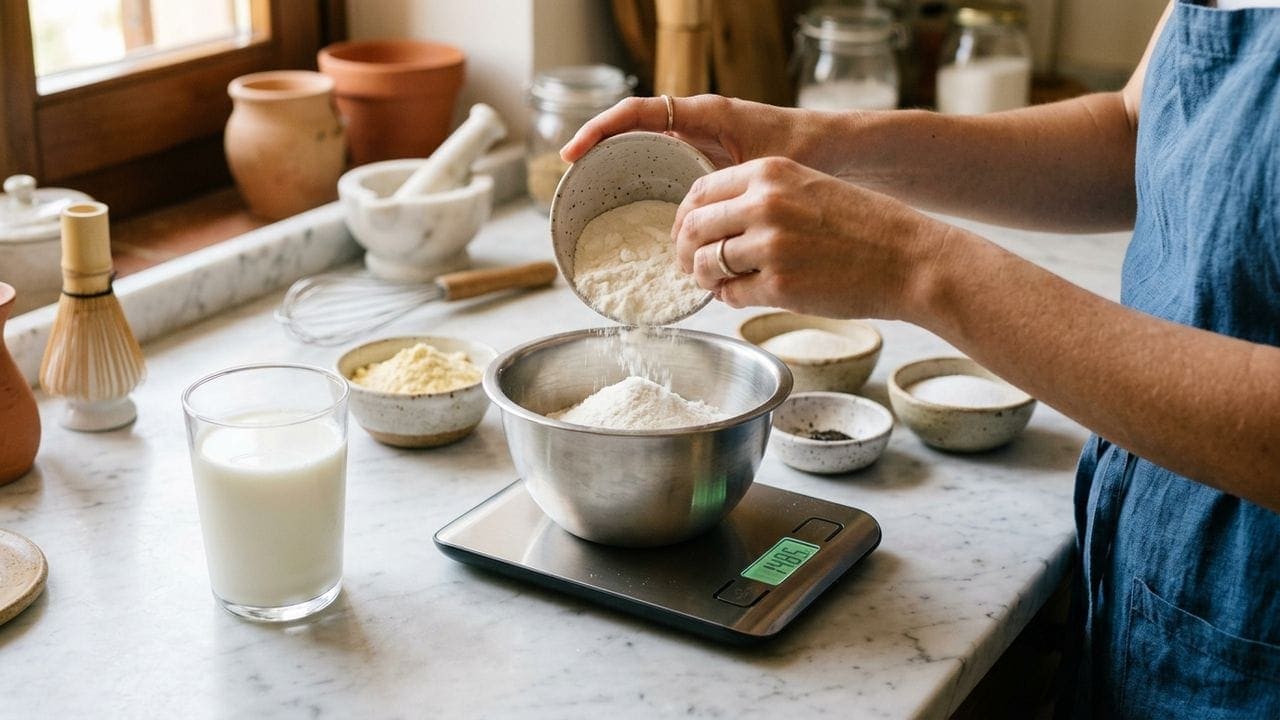
Discipline in weighing. Gelato is about precision. Getting into the habit of using a digital kitchen scale accurate to the gram, recording every attempt, and repeating with one variable changed — these are habits you can practice on your own starting now.
Understanding basic ingredients. Reading about the role of milk, sugar, and stabilizers helps you not feel lost when you get into deeper material. You do not have to become an expert — just be familiar with the terminology.
Where Self-Teaching Hits Its Limits
Sooner or later, self-taught learners hit the same wall. Here are the three limits that most often stall progress, and why free videos rarely provide enough to break through them.
First limit — texture consistency. Making one tasty batch may happen by luck. Producing the same result repeatedly, every day, for customers — that requires an understanding of method, not just a recipe. You need to know why a step is designed a certain way, not just follow it.
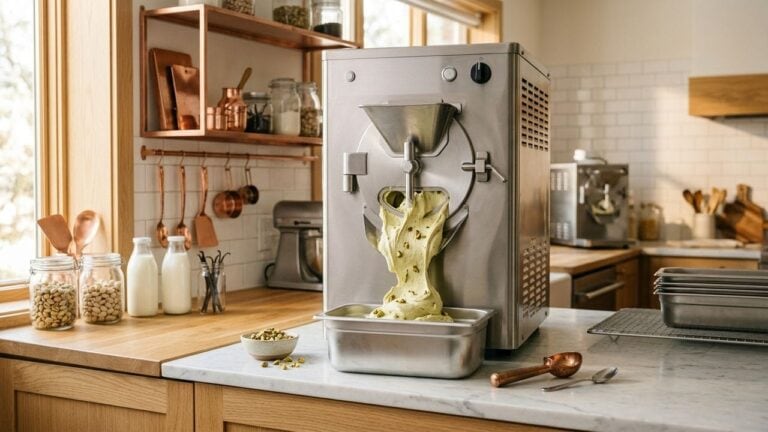
Second limit — machine operation. The churning rhythm, the temperature at which gelato is pulled, when the mixture is ready — these are physical skills that cannot be fully replicated from a screen. Without direct guidance, many beginners damage the texture at the very last and most critical stage.
Third limit — business readiness. Learning to make gelato for the family is very different from producing it to sell. You need storage protocols, conservation targets, basic hygiene documentation, and a cost structure that makes sense. This information is scattered and hard to validate on your own.
A Note from Mr. Jeff — Recipe & Method Creator
« Self-teaching grows your love for gelato. Method lets you repeat it without failure. I wrote the La Gelato Academy curriculum precisely so that learners do not spend months guessing at things I have already tested hundreds of times in the laboratory. »
The Structured Learning Path with the Cold Process Method
The structured path is not the opposite of self-teaching — it is a shortcut to get past those three walls without losing creative freedom. At La Gelato Academy, the framework is built on the cold process method developed by Mr. Jeff: a proprietary adaptation of the Italian cold process paradigm for Indonesia’s tropical climate.
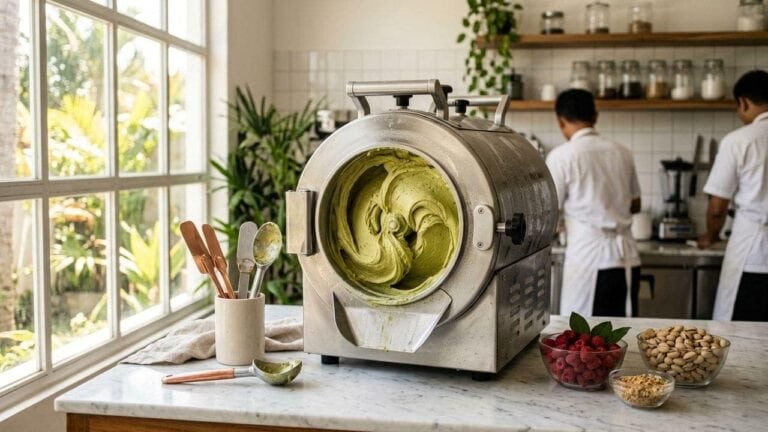
In the traditional hot process method, the mixture is heated to 80–85°C for pasteurization, then slowly cooled again — a cycle that takes 4–12 hours and requires a pasteurizer plus shock freezer that can cost Rp 240 million to Rp 480 million per unit. Cold process takes a different route: cold UHT milk, ready-to-use pre-formulated base powder, then straight to the batch freezer.
Innovation without pasteurization. No temperature gap — a more hygienic, more efficient product, through a lightning process.
The table below summarizes why the structured path often saves more time and money than experimenting on your own in the long run.
| Aspect | Self-Taught Learning | Structured Cold Process Path |
|---|---|---|
| Time to consistent results | Months, no guarantee | A matter of weeks, step by step |
| Food safety understanding | Scattered, hard to validate | Clear protocols + basic HACCP |
| Batch freezer operation | Learning from videos, prone to mistakes | In-person 1-on-1 hands-on workshop |
| Readiness to sell | Unstructured | Designed from the ground up for business |
Ready to Move from Self-Taught to Consistent Results?
See the full details of our program — Basic package starting from Rp1.250.000 (regular price RP3JT), including lifetime access and 3 free sachets of raw materials shipped anywhere in Indonesia.
How Much Does It Cost and How Long Does It Take to Learn to Make Gelato?
Many people think self-taught learning is free. In reality, it has a cost — it is just hidden in wasted ingredients, lost time, and delayed business opportunities. Calculating the true cost makes the comparison more honest.
The structured path at La Gelato Academy is designed with full transparency. Package 1 — Online + 3 Sachets is available at Rp1.250.000 (regular price RP3JT), and includes lifetime video access, PDF modules, a participation certificate, alumni WhatsApp group, and delivery of three free sachets of raw materials anywhere in Indonesia. This package is ideal if you want comprehensive theory plus independent practice at home.
Package 2 — Online + 1-on-1 Workshop in Yogyakarta is available at Rp4.890.000 (regular price RP7JT). This package adds a full day of intensive hands-on workshop with our instructor team, focused 100% on practice — machine operation, cleaning, and real production rhythm — because you will already have mastered the theory from the online modules.
For your future routine production phase, installation of a quality local batch freezer can start in the range of Rp 20–35 million, well below a premium Italian machine that can cost up to Rp 600 million per unit. The electricity required is standard residential PLN at 3.2 kW. For a more complete overview of startup costs, read the complete guide to gelato courses in Indonesia 2026.
All packages are protected by a 7-day money-back warranty as long as you have not yet attended the hands-on workshop in Yogyakarta and have not completed more than 30% of the online content.
Tips to Accelerate Your Gelato Learning Process
Whatever path you choose, these habits will speed up your progress and make every rupiah and hour you invest feel more worthwhile.
Record every attempt. Write down quantities, temperatures, and flavor-texture results. A simple notebook transforms « guessing » into « data » you can review and improve upon.
Change one variable at a time. If you change three things at once and the result improves, you will not know which one made the difference. Patience here saves weeks of confusion.
Master the basics before chasing exotic flavors. Many beginners are tempted to jump straight into complex flavors. Yet mastering one perfect base is worth more than ten half-finished flavors. Premium and ultra-premium recipes will feel easy once your foundation is solid.
Use the community. Learning alone is slow. Asking fellow learners and our instructor team in the alumni group dramatically cuts problem-solving time — something you simply do not get from watching videos alone.
Frequently Asked Questions about Learning to Make Gelato
Can I learn to make gelato entirely self-taught?
For the exploration stage and making simple gelato at home, yes. However, to achieve consistent, safe, and sellable texture, self-teaching typically hits its limits on consistency and machine operation. A structured path compresses learning time from months to weeks, because you study a tested method rather than guessing on your own.
How long does it take to learn to make gelato from scratch?
With the Package 1 online modules, most participants complete the theory in 2–4 weeks at a relaxed pace, and can revisit anytime thanks to lifetime access. To master machine operation, a single day of intensive hands-on workshop in Yogyakarta is generally enough once the theory is solid. Pure self-teaching can take far longer with no guarantee of results.
What equipment do I need to start learning at home?
For the early phase, a digital kitchen scale accurate to the gram, cold UHT milk, a home freezer, and basic raw materials to experiment with are enough. The three sachets of raw materials you receive with the basic package are sufficient for several attempts. For routine production ready to sell, a local entry-level batch freezer starting from Rp 20–35 million is adequate.
Do I need a culinary background to learn to make gelato?
No. The curriculum is designed for beginners with no professional kitchen experience. You only need to understand basic kitchen scales, a willingness to follow steps in order, and good hygiene practices. Many of our alumni come from non-culinary backgrounds — teachers, homemakers, or former office workers who want to start a new business.
Still Unsure Which Learning Path to Choose?
Before you sign up, contact the La Gelato Academy team for a free 15–30 minute discussion about your gelato learning plan. We will help you choose the package that best fits your situation and budget — no pressure, no commitment.
Free consultation — No commitment — Fast WhatsApp response
Conclusion: Self-Teaching as the Starting Point, Method as the Accelerator
Learning to make gelato self-taught is a good start — it grows your love for gelato, sharpens your flavor sensitivity, and builds weighing discipline. But self-teaching has real limits: texture consistency, machine operation, and business readiness. That is exactly where the structured path becomes an accelerator, not a replacement.
The La Gelato Academy cold process method lets you start with a reasonable investment, without an expensive pasteurizer or industrial electrical installation. What you gain is not just a recipe, but the logic behind every step — so you can innovate on your own with confidence.
Innovation without pasteurization. No temperature gap — a more hygienic, more efficient product, through a lightning process. That is the summary of the method that will accelerate your learning journey, from kitchen experiments to being ready to launch your own gelato business.
About the Creator
Mr. Jeff
A graduate of an Italian gelato school with years of experience developing and testing recipes in the Yogyakarta laboratory. Creator of all La Gelato recipes, methods, and production procedures — including the proprietary cold process method adapted for Indonesia’s tropical climate. Every ingredient ratio, every step sequence, has been refined through hundreds of hours of testing before being integrated into the curriculum.
The philosophy embedded throughout the curriculum is simple: knowledge shared honestly is the path to a blessed business. Every recipe taught at La Gelato Academy has passed dogfooding — tested for months in our own laboratory before reaching course participants.
The same approach is applied across the entire La Gelato ecosystem: the training academy (lagelatoacademy.com), the B2B raw materials factory, and the franchise program (la-gelato.com). Every component of the system on offer has been proven in the real world before being shared with participants and partners.