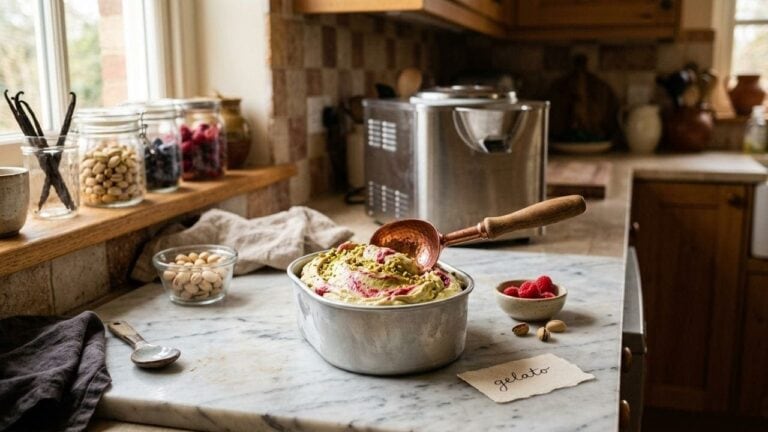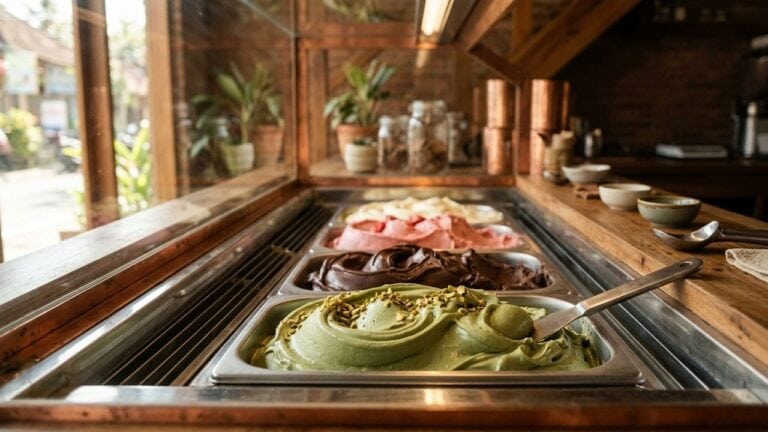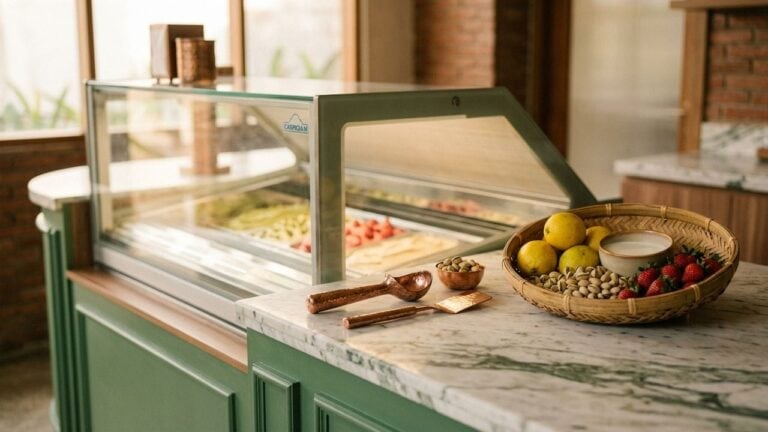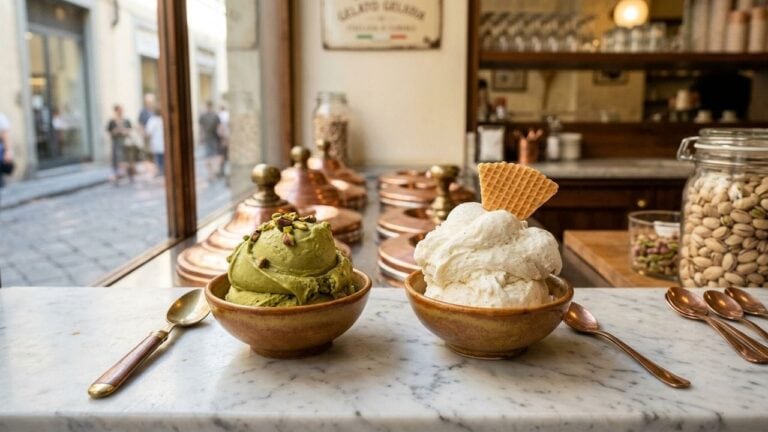
You have probably ordered gelato ice cream at a café or mall kiosk and noticed something different: the texture is denser, the flavor is more pronounced, and the cold does not immediately numb your tongue. That is not just a fancy-sounding name — there are real technical differences behind it.
The question is: what actually makes Italian gelato ice cream so special, and how can you enjoy it — or even produce it yourself — in Indonesia? This short guide explains the secrets of its texture and flavor in straightforward terms.
All the technical explanations below are based on recipes and methods developed by Mr. Jeff for La Gelato, adapted to Indonesian raw materials and tropical climate.
Key Points You Need to Know
- Gelato ice cream is Italy’s signature ice cream, with technical characteristics that differ from ordinary industrial ice cream.
- Low overrun (20–40% air vs. 80–100% in regular ice cream) gives it a denser, smoother texture.
- More moderate fat content (4–8% vs. 10–16%) lets the flavor of each ingredient come through more purely and intensely.
- A warmer serving temperature (around -12°C to -14°C) allows your palate to pick up the flavors more clearly.
- Producing authentic gelato is now possible with an accessible starting investment through the cold process method and business packages starting from ≈ $1,400 (Rp 24.9 million).
What Is Gelato Ice Cream? Getting to Know Authentic Italian Ice Cream
Simply put, gelato ice cream is the Italian version of ice cream. The word « gelato » means « frozen » or « ice cream » in Italian. So when you see that word, it refers to Italian-style ice cream — not a completely separate food category, but a making tradition with its own distinct standards and techniques.
Many consumers use both terms interchangeably because both are frozen milk-based products. Technically, however, gelato comes from Italy with three key distinguishing features: lower air content, more moderate fat content, and a warmer serving temperature. These three work together to produce a flavor sensation you simply do not get from standard industrial ice cream.
In Indonesia, the term « gelato » is not yet strictly regulated. This means a shop can sell ordinary industrial ice cream simply by adding the word gelato to its sign. To understand the technical differences in greater depth, you can read the full guide on the differences between gelato and ice cream.
Why Gelato Ice Cream Has a Smoother, Denser Texture
The first secret lies in the amount of air churned into the mix — what the industry calls overrun. Standard industrial ice cream can contain 80–100% air, meaning almost half the volume you buy is actually air. Gelato is made with a much lower overrun, around 20–40%, so every spoonful feels denser and more substantial.
This is why a cup of gelato feels heavier than a cup of regular ice cream of the same volume. That density is not a flaw — it is precisely what gives the smooth, creamy sensation that lingers in the mouth, rather than the light, airy feeling of industrial ice cream.
The second factor is serving temperature. Regular ice cream is served very cold (around -18°C), while gelato is served warmer, around -12°C to -14°C. This difference of a few degrees makes gelato’s texture more supple and easy to scoop, and it does not immediately numb your tongue.
More Intense Flavor: The Secret Behind Its Composition
Many people are surprised that gelato ice cream’s flavor tastes stronger even though its fat content is actually lower. The explanation is logical: gelato typically contains 4–8% fat, while industrial ice cream contains 10–16%. Excess fat coats the tongue and actually mutes the flavor of the main ingredient.
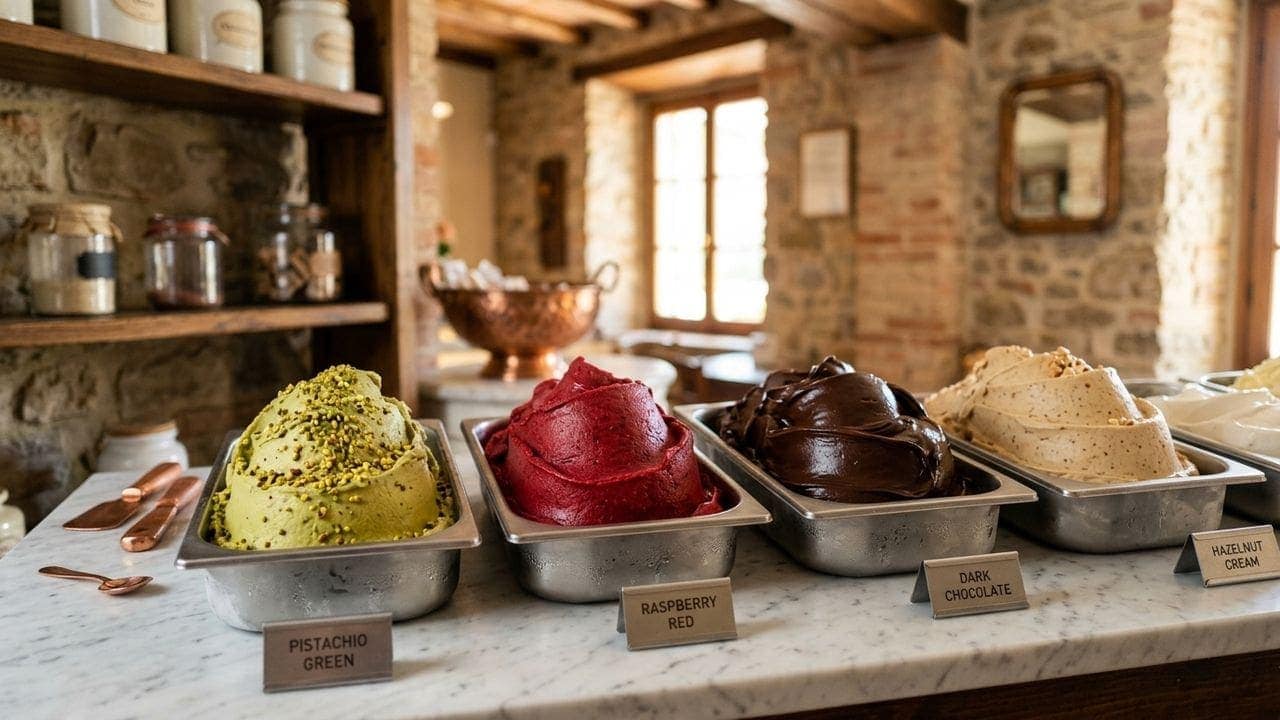
With more moderate fat, the taste of chocolate, pistachio, coffee, or fruit in gelato comes through more honestly and purely. The balanced composition of gelato ice cream — milk, sugar, and flavoring ingredients, without excess air and fat — is what makes every spoonful feel « full ».
The warmer serving temperature reinforces this effect. When your tongue is not numbed by extreme cold, your taste receptors work better and every nuance of flavor registers more clearly. This combination is why authentic Italian gelato is so highly prized worldwide.
A Note from Mr. Jeff — Creator of Recipes & Methods
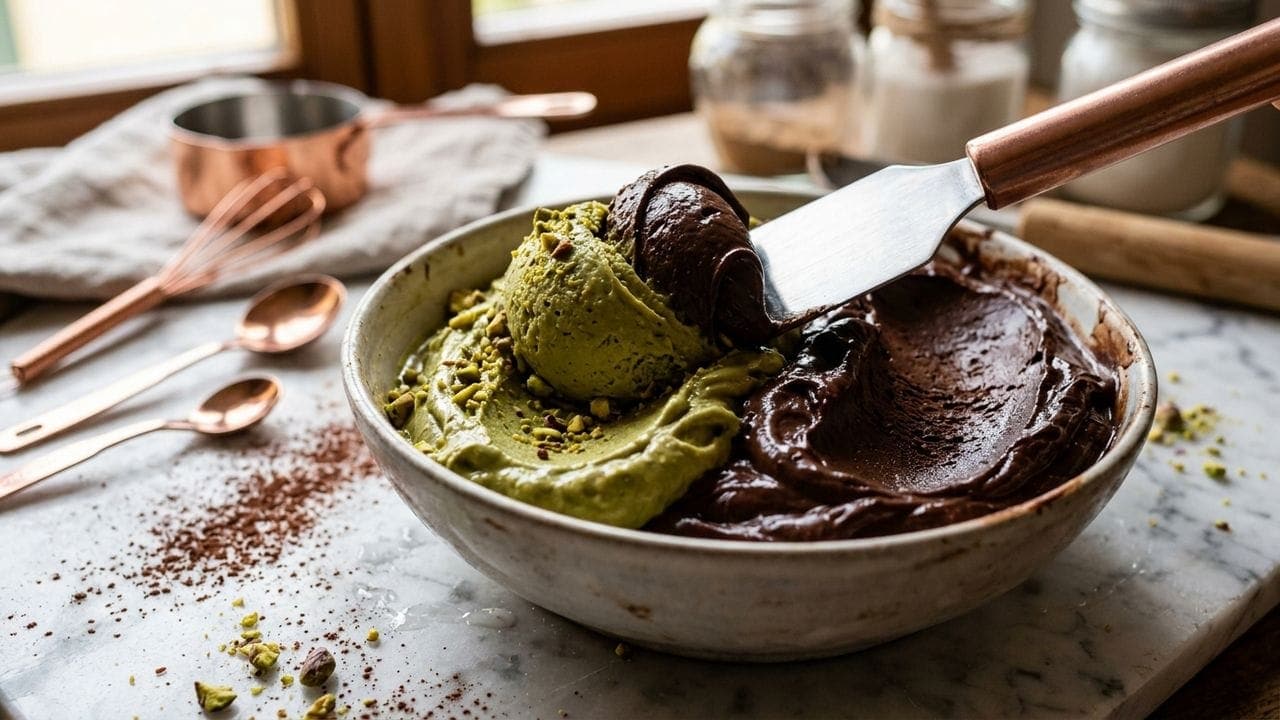
« The smooth texture of gelato is no accident — it is the result of precise control over air, fat, and temperature. That is the core of the cold process method I developed for La Gelato: premium results without the complexity of pasteurization. »
Want to Make Authentic Gelato Ice Cream Yourself?
Learn the La Gelato cold process method from scratch — Package 1 starting from Rp1.250.000 (regular price RP3JT), including lifetime access and 3 free base powder sachets delivered anywhere in Indonesia.
How to Enjoy Authentic Gelato Ice Cream in Indonesia
When choosing gelato ice cream at a shop, there are a few quick signs to look for. Authentic gelato is usually served in a limited range of flavors with frequent rotation — not a vitrine packed with 30 flavors piled high for months. The colors tend to be natural, not overly vivid, because it is made from real ingredients.
Pay attention to the texture as well: authentic gelato looks dense and glossy, not rigid or icy. When scooped, it is supple and easy to shape. If you want a full checklist of quality indicators before you buy, read 7 authentic features of Italian gelato ice cream that you can check on the spot at any shop.
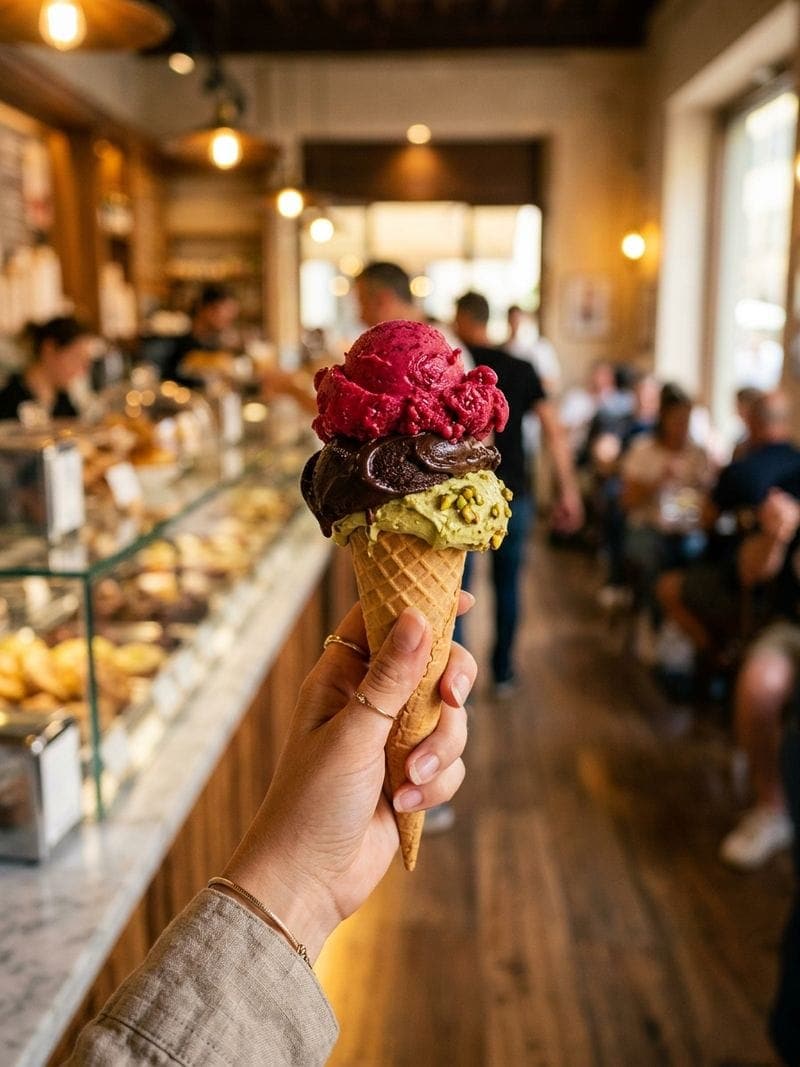
Enjoy your gelato without rushing. Because it is served warmer, the flavors keep developing in your mouth. Give it a few seconds to let your palate pick up the layers of taste — that is where the gelato experience differs from regular ice cream, which hits cold immediately and fades quickly.
From Enjoying to Producing: Gelato Ice Cream with the Cold Process Method
Many gelato enthusiasts eventually want to go one step further: producing it themselves for a business. The good news is that you no longer need an expensive Italian-factory-style setup. La Gelato’s cold process method lets you produce quality gelato without complex pasteurization.
The process is streamlined: start with cold UHT milk at around 4–5°C, mix it with a pre-formulated base powder (ready to use), then feed it directly into the batch freezer. Total mixing time is under 5 minutes, plus around 20 minutes per tray in the machine. No heating step, no slow cooling that carries risk in a tropical climate.
This approach is also far more cost-efficient. Without a pasteurizer and shock freezer, electricity needs are met by a residential PLN connection of 3.2 kW, and the space required is only around 20 m². To get started, La Gelato offers business packages that already include the machine, showcase, base powder, and training — starting from ≈ $1,400 (Rp 24.9 million). You can compare cost estimates in the article on gelato ice cream prices.
Frequently Asked Questions about Gelato Ice Cream
Is gelato ice cream healthier than regular ice cream?
Gelato generally contains lower fat (4–8%) compared to industrial ice cream (10–16%), so it feels lighter. However, gelato still contains sugar, so « healthier » is more accurately understood as lower in fat and more honest in its ingredients — not a calorie-free food. The key is quality ingredients and sensible portions.
What country does gelato ice cream come from?
Gelato comes from Italy, with a centuries-old making tradition. The word « gelato » is Italian for ice cream. What sets it apart from modern industrial ice cream is its production technique: less air, less fat, and a warmer serving temperature — a culinary heritage now adapted for the Indonesian market.
Is gelato ice cream halal?
Whether it is halal depends on the ingredients used. Gelato made from milk, sugar, and halal-certified flavorings is fully halal. The base powder developed for the La Gelato method is produced with a HALAL commitment, so you can make and sell gelato with confidence for Indonesia’s majority-Muslim market.
How much does it cost to start a gelato ice cream business?
With La Gelato’s cold process method, you can start at a much lower cost than an industrial hot process setup. Business packages start from ≈ $1,400 (Rp 24.9 million) (including machine, showcase, base powder, and training). To learn the method first, Package 1 online starts from Rp1.250.000 (regular price RP3JT) with lifetime access and 3 free base powder sachets delivered anywhere in Indonesia.
Still Hesitant to Start Your Gelato Business?
Before signing up, contact the La Gelato Academy team for a free 15–30 minute discussion about your gelato business plan. We help you choose the package that best fits your situation and budget — no pressure, no commitment.
Free consultation — No commitment — WhatsApp fast response
Conclusion
Gelato ice cream is not simply ice cream with a fancier name. Its three technical features — low overrun, moderate fat, and a warmer serving temperature — work together to produce a texture that is denser and smoother, and a flavor that is more intense. That is why one spoonful of authentic gelato feels different in your mouth.
And the best news is that this premium experience can now be produced by you, right here in Indonesia, without a massive investment. Through La Gelato’s cold process method, the principle is simple: Innovation without pasteurization. No temperature gap — a more hygienic, more efficient product, through a lightning process. From enjoying to producing, the step is closer than you think.
About the Creator
Mr. Jeff
An artisan gelato maker with a gelato diploma from Italy, Mr. Jeff is the creator of all recipes, methods, and production procedures at La Gelato — including the proprietary cold process method adapted for Indonesia’s tropical climate. Every formula is tested for months in the Yogyakarta laboratory before entering the curriculum.
The philosophy he built into the curriculum is simple: knowledge shared honestly is the path to a worthwhile business. Every recipe taught at La Gelato Academy has passed dogfooding — tested in our own laboratory before it reaches course participants.
The same approach applies to the entire La Gelato ecosystem: the training academy (lagelatoacademy.com), the B2B raw materials factory, and the franchise program (la-gelato.com). Every element of the system has been proven in practice before being shared.