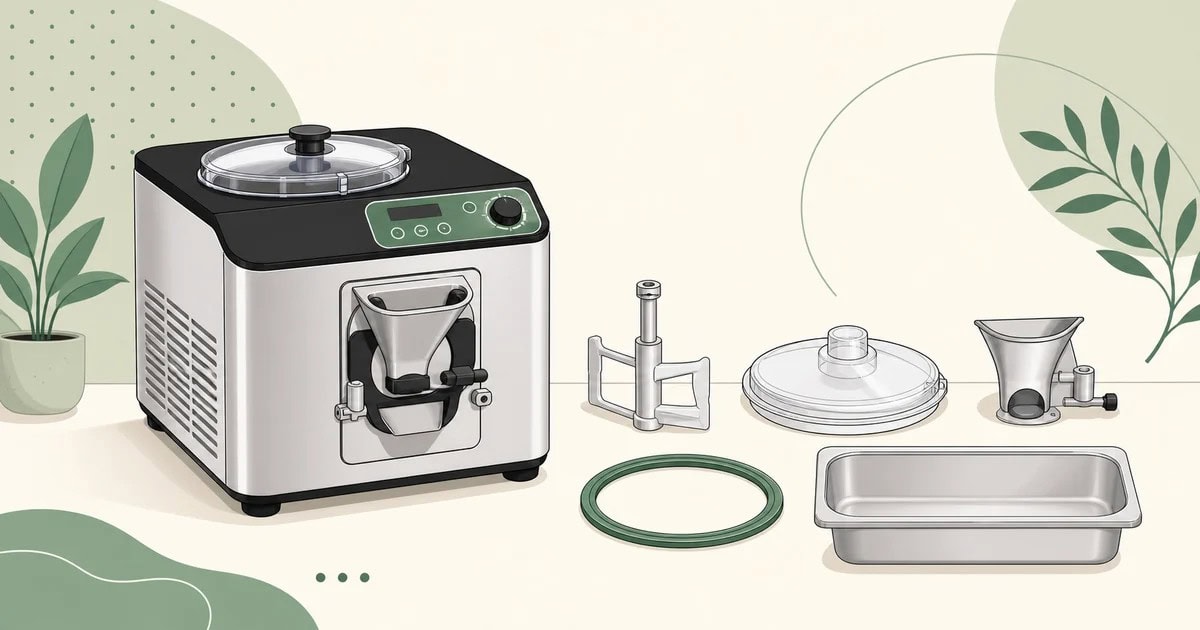
How to clean an ice cream machine is not simply a matter of rinsing the cylinder after production. For a gelato operator, an orderly routine protects the next product, keeps machine parts easier to inspect, and makes batch changeovers more controlled.
Every machine is different. Gaskets, shafts, extraction doors, hoppers, drains, and automated cleaning programmes are not arranged in the same way on every model. This guide therefore provides a general operating sequence. Chemical doses, contact time, water temperature, frequency, and disassembly must still follow the manual for your exact machine and the local requirements that apply to your operation.
Key points
- Start with the machine manual, not another machine’s routine.
- Separate product removal, washing, sanitising, drying, and inspection.
- Remove only components identified as routine removable parts.
- Keep cleaning tools, drying racks, and operator hands clean.
- Record anything unusual before the next batch is produced.
Identify the machine and prepare the work area
Before opening any part, identify the machine type and locate its official procedure. A batch freezer, soft-serve machine, countertop unit, and model with an automated wash cycle can require different steps. A procedure written for one model should not be copied directly to another.
Prepare containers for removable parts, dedicated food-contact brushes, a separate cloth for external surfaces, a clean drying rack, any protective equipment required by the manual, and compatible washing and sanitising products. Tools used on the machine should remain separate from tools used on floors or drains.
Confirm that production is finished, leftover mix has been handled under your internal procedure, and energy sources are secured as the manufacturer instructs. Do not open any component until the machine has fully stopped and its energy sources are secured as the manual requires. If you are unsure which parts may be removed, stop and consult the diagram in the manual.
A practical sequence for cleaning the machine
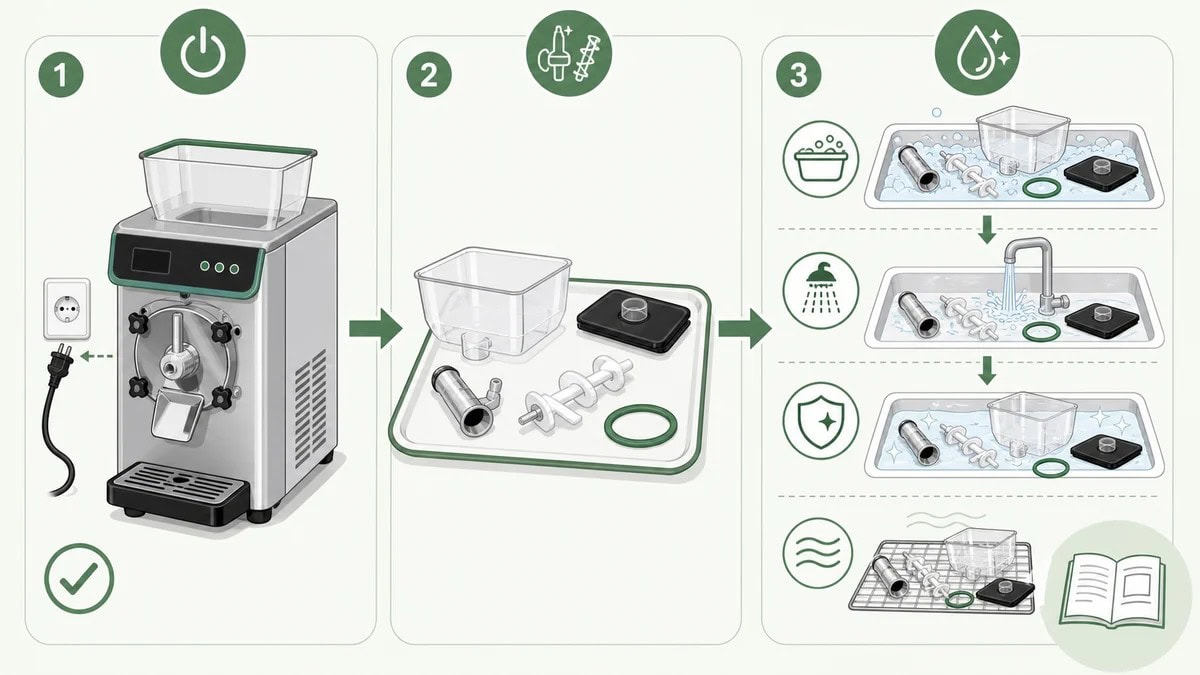
- Empty it under the approved procedure. Remove product or mix through the intended route. Do not push residue with objects that can scratch food-contact surfaces.
- Run the required initial stage. Some machines specify a rinse or dedicated programme. Use only the sequence and volume stated for your model.
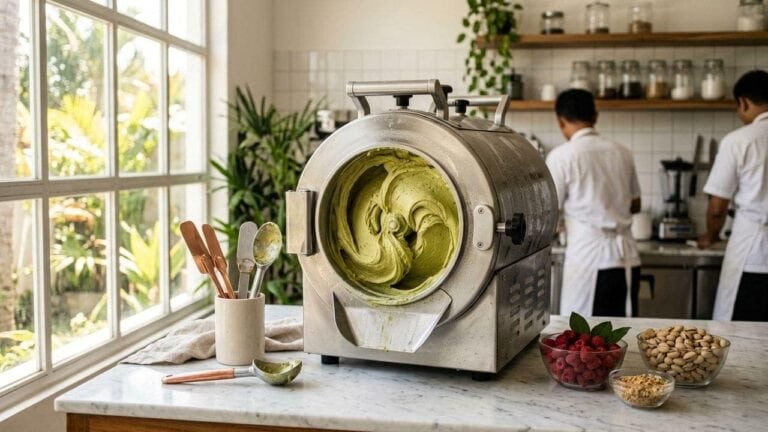
- Remove permitted components. Arrange the door, beater, gaskets, nozzles, and other removable parts in order so reassembly is controlled.
- Wash thoroughly. Remove residue from food-contact surfaces, grooves, corners, and small parts with suitable tools. A water rinse is not an automatic substitute for the process specified by the manufacturer.
- Sanitise. Use products, concentration, contact time, and rinsing instructions only as required by the product label, machine manual, and local rules.
- Dry and protect. Place parts on a clean rack so water can drain and clean surfaces do not touch contaminated areas.
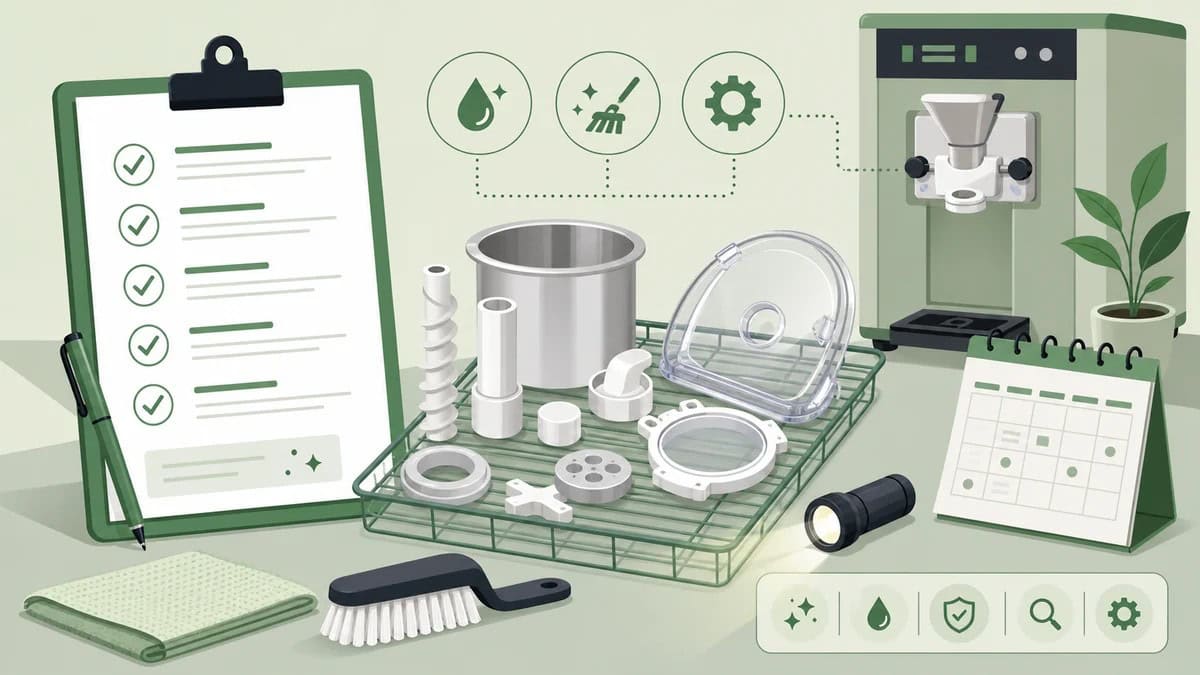
- Inspect before reassembly. Look for cracks, distorted gaskets, scratches, residue, unusual odours, leaks, or parts that do not move normally. Record findings before the next production cycle.
The FDA Food Code 2022 is a model food-safety reference, not Indonesian law. It explains a framework for protecting food at retail and food service, while adoption and enforcement depend on the relevant jurisdiction. Carpigiani’s Freeze&Go cleaning example also illustrates why manufacturers provide dedicated cleaning and sanitising instructions. Together, these sources support one practical rule: use the correct machine procedure rather than a universal recipe from the internet.
If you are still selecting equipment, read the guide to a gelato machine for beginners. Ease of disassembly, access to gaskets, cleanability, and service support should be checked before purchase.
Small parts that are easy to overlook
The main cylinder is not the only inspection point. Residue may remain around gaskets, joints, nozzles, shafts, door grooves, covers, or drip trays. Inspect these areas with adequate light and a consistent sequence, not only when an odour or product change appears.
Check the drying rack and storage containers as well. A cleaned component can become contaminated again when placed on a damp cloth, stacked before it is dry, or handled after the operator has touched the outside of the machine. The whole workflow matters, not one isolated step.
The display cabinet and serving equipment require their own routines. The guide to choosing a gelato showcase explains why cleanability belongs in the equipment decision from the beginning.
Separate cleaning, sanitising, and technical maintenance
Cleaning removes product residue and soil from a surface. Sanitising is a separate stage using an appropriate method or product after the surface is clean. Technical maintenance covers wear checks, permitted lubrication, gasket replacement, calibration, and work for a qualified technician. These activities support each other but are not interchangeable.
Do not choose a harsher chemical simply because the machine looks dirty. An incompatible product can damage gaskets, surfaces, or coatings. Never mix chemicals. Treat the product label, machine manual, and production-area procedure as one decision set.
For a new team, keep a simple log: who completed the routine, when it was finished, which parts were removed, whether they were dry, whether any damage was found, and who verified the machine before reassembly. A checklist does not replace operator skill, but it helps the same standard hold as the team grows.
Checklist before the machine returns to service
- Every required part has been cleaned and sanitised under the approved procedure.
- No residue, foreign odour, trapped moisture, or cleaning tool remains.
- Gaskets and components are in the correct position without being forced.
- The surrounding area, handles, panel, and touch points have been handled with suitable separate tools.
- The cleaning record is complete and any anomaly has been reported.
- The initial test is performed only as the manufacturer instructs.
Call a technician when you find a leak, damaged wiring or safeguards, a cracked part, abnormal noise, a component that cannot be fitted without pressure, or instructions that do not match the condition of the machine. Operators should not open technical areas that fall outside routine cleaning.
In the La Gelato Academy gelato course, machine cleaning is taught as part of the production system: workflow, temperature, storage, tools, and team discipline are considered together. A simple process still requires disciplined work.
Frequently asked questions
Is rinsing the machine with water enough?
There is no universal answer. Follow the full washing and sanitising procedure for your model; rinsing alone does not automatically replace the other stages.
How often should the machine be cleaned?
Frequency depends on the model, machine features, production pattern, product, manufacturer instructions, and local requirements. Use a written schedule that reflects all of them.
Can every removable part be soaked?
No. Soak only parts the manufacturer identifies as safe for that treatment. Electrical parts, bearings, and some materials can require a different method.
When should an operator call a technician?
Call a technician for leaks, damaged safeguards, cracks, abnormal noise, electrical concerns, or work beyond the routine disassembly described in the manual.
Ready to build a more consistent production routine?
Discuss gelato training and the operating needs of your project.
Contact La Gelato