Finding a culinary business opportunity that still has room to grow in 2026 is no easy task. The coffee shop market is already saturated, frozen food is increasingly competitive, and margins on full meals are being eroded by raw material costs that rise every quarter. You need a niche that is still premium, durable, and does not require billions in capital to get started.
On the other hand, there is one segment that has been growing steadily at 12–15% per year in Indonesia since 2022: premium desserts — especially artisan gelato and ice cream. Demand comes from the urban middle class that is already accustomed to specialty coffee cafés and is willing to pay more for a different experience. But traditional Italian gelato production methods require capital of Rp 400 million to Rp 1.5 billion — and this is what causes many aspiring entrepreneurs to step back before they even start.
This article maps the culinary business opportunities of 2026 realistically, with verified capital and margin figures. You will see why La Gelato’s cold process approach — a method developed by Mr. Jeff specifically for Indonesia’s tropical climate — can open the door to a premium segment that was once thought to be only for major players.
Key Points You Need to Know
- The culinary sector still accounts for ~40% of active MSMEs in Indonesia, but the first-year closure rate is high due to capital and margin issues.
- Initial capital for 5 popular culinary niches ranges from Rp 5 million (mobile cart) to Rp 1.5 billion (industrial hot-process gelato).
- La Gelato Italian cold process gelato can be started from ≈ $1,400 (Rp 24.9 million) with a complete package — roughly 25–30 times cheaper than an industrial hot process setup.
- Premium niches with moderate barriers such as artisan gelato have gross margins of 60–75% per cup vs 20–35% in mass-market food.
- A realistic roadmap from zero to your first outlet: 90 days if you choose a ready-to-use model with structured training.
Why the Culinary Sector Remains the #1 Choice for Indonesian Entrepreneurs in 2026
Culinary business opportunities in Indonesia never truly fade. Data from the Ministry of Cooperatives and SMEs places the food and beverage sector as the largest contributor to MSME employment, with a consumer base that continues to grow alongside the urbanization of Greater Jakarta, Bandung, Surabaya, Yogyakarta, Denpasar, and Medan. Basic demand — breakfast, lunch, afternoon coffee, snacks on the way home from work — is daily, not seasonal like fashion or gadgets.
What has changed is the competitive landscape. Five years ago, opening a home-style eatery was still a safe entry point. Now you are competing with hundreds of ghost kitchens on GoFood and GrabFood, thousands of Instagrammable cafés, and the rapid expansion of national franchises that already have their own supply chains. Margins in the mass culinary segment — meatball soup, fried chicken, Padang rice, trendy milk coffee — have been eroded by 30–40% compared to 2020 due to delivery price wars and platform discounts.
As a result, smart aspiring entrepreneurs today are no longer chasing cheap volume with thin margins. They are looking for premium niches with moderate technical barriers — categories where one cup or one serving can sell for Rp 25,000–65,000 with a raw material cost of 25–30%, not 60–70% like heavy meals. Artisan gelato, sourdough bakery, fresh pasta, and craft chocolate fall into this category. But not all premium niches have the same access to capital.
The Culinary Business Opportunity Map in Indonesia: From Street Food to Premium
Before deciding on a niche, you need an honest map. The five dominant categories in the Indonesian market in 2026 show extreme differences in capital, margin, and competition. The table below summarizes realistic initial capital estimates and average gross margins based on observations of Indonesia’s MSME market.
| Culinary Niche | Realistic Initial Capital | Gross Margin | Competition Level |
|---|---|---|---|
| Mobile cart / street food (meatball, chicken noodle, shaved ice) | Rp 5–15 million | 25–35% | Very high |
| Trendy coffee café / cloud kitchen | Rp 80–250 million | 35–50% | Very high |
| Home-based frozen food | Rp 10–30 million | 30–45% | High |
| Mid-range casual restaurant | Rp 250–800 million | 30–45% | High |
| La Gelato Italian cold process gelato | ≈ $1,400 – $4,200 (Rp 24.9–74.7 million) | 60–75% | Low-moderate |
What is striking about this table: Italian cold process gelato has the most efficient capital-vs-margin ratio among all premium culinary niches in Indonesia. You get twice the gross margin of a coffee café, with initial capital not far from home-based frozen food. This is what draws many culinary entrepreneurs looking to level up without having to invest billions in industrial equipment.
But it is worth noting — traditional hot process gelato still requires capital of Rp 400 million to Rp 1.5 billion for a pasteurizer, premium Italian batch freezer, shock freezer, and multi-flavor showcase. What is new, and what makes this segment open to MSMEs, is the cold process approach — which we will discuss in detail in the next section.
Why Italian Gelato Is the Most Promising Culinary Niche Opportunity
Three structural reasons make Italian gelato the most promising culinary opportunity in Indonesia’s Tier 1 and Tier 2 cities today.
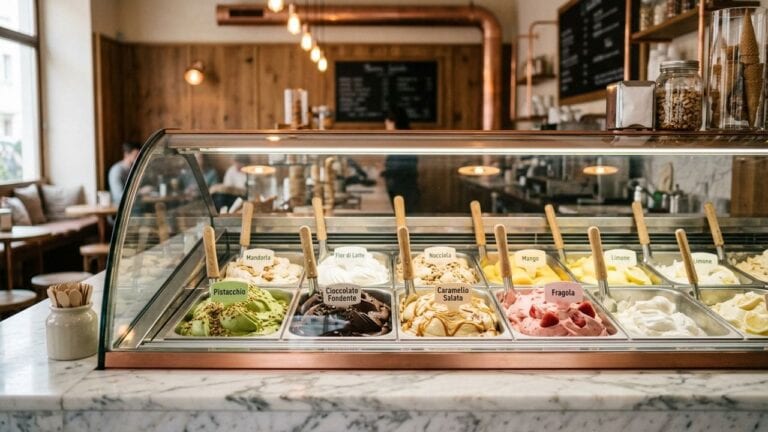
First, demand is growing but supply is still limited. Every time a new premium gelato shop opens in Yogyakarta, Bandung, Surabaya, or Bali, queues form within the first few weeks. Urban middle-class consumers — especially those aged 22–40 — have been exposed to gelato while traveling to Europe or Singapore and are looking for a similar experience in their own city. The number of genuinely artisan gelato outlets in Indonesia can still be counted on the fingers of one hand in each city.
Second, a gross margin of 60–75% per cup provides tremendous flexibility. A 100 ml cup of gelato sold for Rp 35,000–45,000 at a mall or café district contains Rp 8,000–12,000 in raw materials. The rest covers rent, electricity, wages, and profit. Compare that with a coffee café that needs to sell a minimum of 80–120 cups per day just to break even — a well-run gelato shop can break even at 30–40 cups per day.
Third, competition in Indonesia is still very low. Most of what is labeled “gelato” in malls is actually soft-serve or rebranded industrial ice cream. Genuinely artisan gelato — made with Italian recipes and premium raw materials — is still very rare. This is unlike the coffee market, which is already saturated with hundreds of specialty brands. You still have the chance to become the first serious player in your city.
A Note from Mr. Jeff — Recipe & Method Creator
« Many people hesitate to enter the gelato business because they assume it is very expensive and complicated. In fact, since I developed the cold process method in Yogyakarta specifically for Indonesia’s tropical climate, the capital barrier has dropped dramatically. Now anyone who is serious can get started with a complete package — it is no longer a monopoly of large operators. »
The True Startup Capital for 5 Popular Culinary Business Types
Many articles out there give capital figures that are overly optimistic. Below is a realistic breakdown based on a minimum setup that can genuinely operate with consistent quality.
Mobile cart / street food (Rp 5–15 million). Custom cart Rp 3–7 million, cooking equipment Rp 1–3 million, initial stock Rp 1–3 million, neighborhood permits and 1-month operating costs Rp 1–2 million. Low capital, but daily income is highly dependent on roaming location and weather. Gross margin 25–35% because heavy-food raw materials (meat, noodles, vegetables) consume 60–65% of the selling price.
Trendy coffee café (Rp 80–250 million). Entry-level espresso machine Rp 25–50 million, grinder Rp 8–15 million, barista equipment Rp 5–10 million, 30 m² interior renovation Rp 30–80 million, 6-month deposit Rp 15–50 million, initial coffee and milk stock Rp 3–8 million. Margin per cup 50–65%, but the break-even point is high because fixed costs (rent, electricity, wages for 2–3 baristas) take a large share.
Home-based frozen food (Rp 10–30 million). 200–400-liter chest freezer Rp 4–10 million, household production equipment Rp 2–5 million, vacuum sealer packaging and labels Rp 2–5 million, initial raw material stock Rp 2–5 million. Can be started from a home kitchen, but scale is limited and margins are eroded by marketplace platform competition.
Mid-range casual restaurant (Rp 250–800 million). Commercial kitchen with industrial stove and exhaust hood Rp 60–150 million, 80–120 m² dining room renovation Rp 80–250 million, service equipment and furniture Rp 20–50 million, prime-location 6–12-month lease deposit Rp 60–200 million, permits and 3-month working capital Rp 30–100 million. High capital with industry-average margins.
La Gelato Italian cold process gelato (≈ $1,400 – $4,200 — Rp 24.9–74.7 million). Three complete business package options that include everything you need to produce: Basic Package ≈ $1,400 (Rp 24.9 million) (Wiratech 5L machine + custom showcase + 10 base packs + accessories + free training), Deluxe Package ≈ $3,350 (Rp 59.8 million) (GEA BTY-5.4 machine + GEA RI-260AUG showcase + 20 bases + accessories + training), or Premium Package ≈ $4,200 (Rp 74.7 million) (GEA BTY 8L machine + GEA RI-360AUG showcase + 30 bases + accessories + training). All packages already include cold process training — no need to buy the machine, showcase, or take a separate course.
For context, a traditional hot process gelato setup with a premium Italian pasteurizer, Italian-brand batch freezer, shock freezer, and 18-flavor showcase requires capital of Rp 400 million to Rp 1.5 billion — roughly 25–30 times the La Gelato Basic Package. This is the structural difference that opens this segment to MSME-scale culinary entrepreneurs.
Realistic Margins: Comparing Profit Per Cup Across Culinary Businesses
Startup capital is only half the story. Gross margin per unit sold determines how quickly you break even and how resilient your business is against rising raw material costs. Let us compare using common selling prices in Indonesia’s Tier 1–2 cities in 2026.
Meatball soup / chicken noodle cart. Average selling price Rp 12,000–18,000 per bowl. Raw material cost Rp 6,000–10,000 (meat, noodles, vegetables, seasoning) — gross margin approximately Rp 5,000–8,000 (30–45%). Volume required for decent profit: 60–90 bowls per day. Sensitive to rising meat and cooking oil prices.
Trendy milk coffee. Selling price Rp 18,000–28,000 per cup. Raw material cost (premium coffee beans, UHT milk, palm sugar, cup, lid, straw) Rp 6,000–9,000 — gross margin Rp 12,000–19,000 (55–65%). Break-even volume: 60–100 cups per day. Sensitive to delivery platform price wars.
Home-based frozen food. Selling price varies Rp 15,000–45,000 per pack. Raw material cost 40–50% — gross margin 50–60% on paper, but eroded by marketplace platform fees (12–25%) and promotional shipping. Net margin is often only 25–35%.
Casual restaurant. Average ticket per person Rp 50,000–90,000. Raw material cost 30–35%. Gross margin 65–70%, but operating costs (prime location rent, wages for 5–10 staff, electricity, marketing) consume most of it. Industry net margin around 8–15%.
La Gelato Italian cold process gelato. Average selling price Rp 30,000–45,000 per 100 ml cup in Tier 1 cities, or Rp 22,000–32,000 in Tier 2. Raw material cost (base powder + UHT milk + toppings/flavoring) Rp 7,000–11,000 per cup — gross margin 65–75%. Break-even volume is very low: 30–50 cups per day already covers operations for a small 20 m² outlet. The rest becomes net profit.
What makes cold process gelato exceptional from a margin perspective: there is no significant energy cost for pasteurizing and cooling the mix, because the process is cold from the start. Electricity is only needed for the batch freezer and showcase — standard PLN residential 3.2 kW is sufficient, no industrial three-phase power required. You save significantly on monthly electricity bills compared to a traditional hot process setup with a much heavier electrical installation.
Ready to Start a Premium Culinary Business Opportunity with Smart Capital?
See the full details of the La Gelato gelato course program — Basic Package from ≈ $1,400 (Rp 24.9 million) including production machine, showcase, base powder, and direct cold process training from our instructor team in Yogyakarta. Lifetime access to materials.
3 Hidden Risks in the Culinary Business That Are Rarely Discussed
Before you choose a niche, these three risks need to be understood because they are rarely covered in general articles about culinary business opportunities.
Risk 1 — Hidden labor costs. Many aspiring entrepreneurs only calculate base employee salaries, but forget about the high rotation cost in Indonesia’s culinary sector (35–50% turnover per year), the cost of retraining each new employee, and extended working hours that often need to be paid outside standard rates. For niches with thin margins like mobile carts or coffee cafés, one employee who quits mid-busy-month can immediately wipe out that month’s profit. Niches with a simple, standardized production process — like cold process gelato that only requires 5 minutes of mixing per batch — reduce dependence on individual employee skills.
Risk 2 — Underrated sanitation risk in a tropical climate. Indonesia’s hot and humid climate dramatically increases the risk of raw material contamination compared to four-season countries. Traditional hot process methods that require heating followed by rapid cooling have a critical window in the temperature zone of 4–60°C — if cooling is slow due to a power outage or inadequate equipment, the risk of Bacillus cereus growth can rise significantly. Spores of this bacterium can survive pasteurization and multiply when cooling is suboptimal. The cold process method reduces this critical point by not heating the mix in standard recipes — you start from commercially sterile UHT milk (as long as the packaging is intact) and go directly into the batch freezer.
Risk 3 — Supplier dependency risk. Culinary niches that depend on a single key supplier (premium Italian machines, direct import ingredients, master franchise) are vulnerable to exchange rate fluctuations, global supply chain disruptions, and unilateral price increases. Choosing a niche with stable local suppliers — such as quality mid-range Indonesian machines and domestically produced base powder — provides better long-term resilience.
How to Choose the Culinary Niche That Fits Your Capital and Location
Choosing the wrong niche is the main reason 40–60% of MSME culinary businesses close within the first 12 months. Use the following four-question framework before deciding.
1. How much working capital do you have beyond startup capital? Not just the equipment purchase capital — you need working capital to cover operating costs for the first 3–6 months before breaking even. A practical rule: minimum working capital equals 30–50% of the initial investment capital. If total capital is limited, choose a niche with low investment capital and high margins for a faster break-even.
2. How competitive is the location you are targeting? Check within a 1 km radius how many similar outlets are already operating. If there are already 5+ coffee cafés within 1 km, entering the coffee niche is very risky unless you have very strong differentiation. Niches with low-to-moderate competition, such as artisan Italian gelato, still have room in most Indonesian cities outside Jakarta and South Bali.
3. Is your product resilient to weather and seasons? Mobile carts are very sensitive to rain. Al fresco restaurants suffer heavily during extended rainy seasons. Products in sealed packaging sold at indoor outlets — like gelato in a showcase — are relatively weather-resistant. Demand for cold desserts in Indonesia has almost no dead season because of the year-round tropical climate.
4. Is there a technical barrier that protects against instant competition? Niches with too low a technical barrier (eateries, coffee cafés) attract many new entrants every month. Niches with a moderate barrier — requiring recipes, specific equipment, or training — provide competitive protection. Italian cold process gelato requires specific training to master the method, base powder with proprietary formulation, and batch freezer equipment — a sufficient barrier to protect serious players for the first 1–2 years.
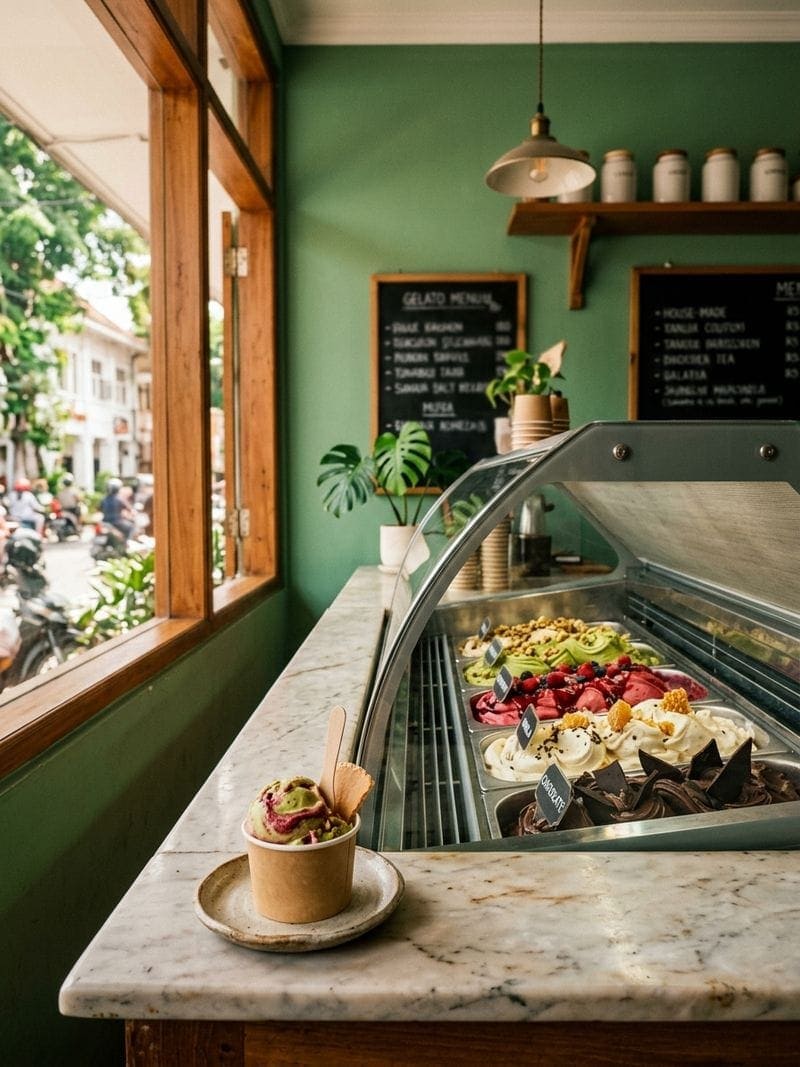
Why La Gelato Cold Process Breaks Classic Premium Culinary Barriers
For decades, entering the premium Italian gelato segment in Indonesia required three things that drove 99% of entrepreneurs away: capital of Rp 400 million to Rp 1.5 billion for equipment, a 60–80 m² production kitchen with three-phase electrical installation, and multi-month training in Italy. The cold process method developed by Mr. Jeff — adapted specifically for Indonesia’s tropical climate with proprietary processes — dismantles all three barriers simultaneously.
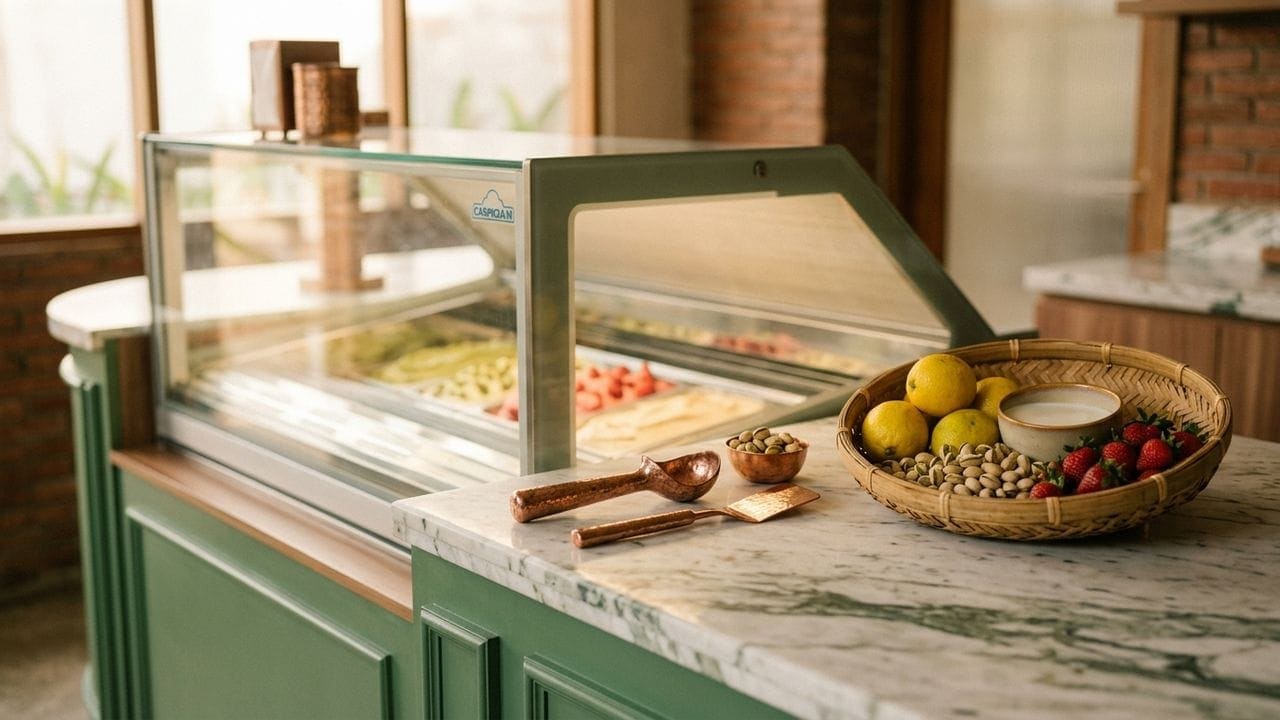
Capital barrier broken: from Rp 1.5 billion down to ≈ $1,400 (Rp 24.9 million). La Gelato cold process does not require a pasteurizer (which alone costs Rp 240–480 million), does not require a shock freezer (Rp 50–135 million), and does not require a premium Italian batch freezer (Rp 60 million to Rp 1 billion). Quality mid-range Indonesian machines — already included in the Business Package — are sufficient for consistent production. The showcase no longer needs to be purchased separately for Rp 100–400 million because it is already included in the package.
Space barrier broken: from 60–80 m² down to 20 m². Without a pasteurizer and shock freezer, you do not need separate zones for heating, cooling, and mix maturation. A cold process setup fits in a 4×5 m mall kiosk, a narrow shophouse, or even a modified home kitchen for the early stage. Significant monthly rent savings, especially in prime locations such as Jakarta malls or central Bandung where rent per m² is high.
Electrical barrier broken: from industrial three-phase down to PLN residential 3.2 kW. A traditional hot process setup requires an indicative installed power of around 18 kW (6 kW batch freezer + 5 kW pasteurizer + 4 kW showcase + 3 kW shock freezer) that requires a three-phase connection. La Gelato cold process only needs the batch freezer and showcase — PLN residential 3.2 kW is sufficient. No industrial installation permit required.
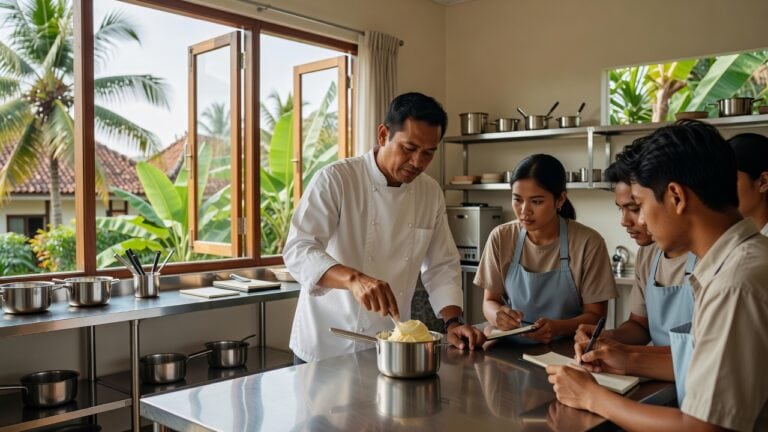
Training barrier broken: from multi-month in Italy to structured training in Indonesia. Every business package already includes cold process training directly with our instructor team in Yogyakarta or in a hybrid online format. You learn the same recipes, methods, and production procedures that have been proven in the La Gelato lab for many years. Materials are available in Indonesian, with support from our instructor team year-round via WhatsApp.
A Note from Mr. Jeff — Recipe & Method Creator
« The cold process method is not actually new — some cold process players already exist in Italy. What makes it different is the adaptation I developed for Indonesia’s tropical climate: the proprietary syrup method, premium no-heat recipes, and the ready-to-use sachet format. All of it is designed so that local entrepreneurs can get started without having to invest billions or depend on Italian suppliers. »
If you want to understand in depth the technical and commercial differences between gelato and ice cream, we recommend reading the gelato and ice cream comparison guide — a hub article that explains why gelato occupies a premium positioning that is difficult for industrial ice cream to replicate.
90-Day Roadmap from Zero to Opening Your First Outlet
Below is a realistic timeline from zero knowledge to opening your first gelato outlet, assuming you choose the La Gelato Business Package that already includes machine, showcase, base, and training.
Days 1–15: Location research and package decision. Survey 3–5 potential locations in your city — prioritize areas with upper-middle-class foot traffic (malls, premium campus areas, café districts, tourism areas). Calculate rent costs, direct competition, and market ticket estimates. Contact the La Gelato Academy team via WhatsApp for a consultation on package selection based on your location plan and target volume. Choose between the Basic Package ≈ $1,400 (Rp 24.9 million), Deluxe ≈ $3,350 (Rp 59.8 million), or Premium ≈ $4,200 (Rp 74.7 million).
Days 16–30: Full payment, lease signing, basic permits. After the package decision, make full payment and schedule equipment delivery (Indonesia-wide delivery available). Sign the location lease for a 1–2 year period. Handle basic MSME permits (NIB, environmental permit, halal certificate if targeting the halal segment — 2–4 week process through OSS).
Days 31–50: Outlet renovation and equipment installation. Renovate the 20 m² outlet with a minimal setup: showcase counter, work area, signage, 4–8 optional chairs. Install PLN residential 3.2 kW electricity if not already available (1–2 week process via PLN). Install the batch freezer, showcase, and prepare the work area. Purchase initial inventory (cups, spoons, napkins, packaging) — total minimal renovation Rp 15–30 million depending on the location’s condition.
Days 51–65: Cold process training and trial production. Attend the La Gelato cold process training (already included in the package) — in a hybrid online format for theory and a workshop in Yogyakarta for hands-on practice. You will master 8–12 basic recipes (vanilla, chocolate, strawberry, pistachio, mango, durian, avocado, etc.). Conduct trial production at the outlet — test texture consistency, flavor, and production workflow.
Days 66–80: Soft opening and refinement. Open a soft opening for your inner circle (family, friends, neighbors) — request honest feedback on taste, presentation, service, and price. Iterate on recipes, packaging, or pricing based on feedback. Start building a social media presence (Instagram + TikTok) with behind-the-scenes production content.
Days 81–90: Grand opening and initial marketing strategy. Grand opening with strategic promotions (buy 2 get 1, or 20% discount the first week). Register on GoFood/GrabFood/ShopeeFood for a delivery channel. Collaborate with 3–5 local culinary micro-influencers for content. Start tracking daily sales data per flavor to optimize the menu in the next 30 days.
Total 90-day investment (Basic Package + minimal renovation + 2 months’ working capital): approximately Rp 50–70 million. Compare that to a traditional hot process setup that requires 6–12 months from scratch to opening with capital of Rp 600 million to Rp 1.5 billion.
7-Day Satisfaction Guarantee — La Gelato Academy’s Commitment
We understand that deciding to start a culinary business is a major decision — financially and emotionally. To provide peace of mind, La Gelato Academy offers a 7-day satisfaction warranty for every Business Package purchase. If within the first 7 days you feel the training, equipment, or raw materials do not meet your expectations, contact our team to discuss a solution or a refund in accordance with our terms and conditions.
This warranty applies to all three packages (Basic, Deluxe, Premium) and is given without complex questions. Our goal is to ensure you start with full confidence, not with worry. Details of the warranty terms and conditions can be discussed directly with our instructor team via WhatsApp before purchase.
Frequently Asked Questions About the Gelato Culinary Business Opportunity
Is the Italian gelato culinary business opportunity suitable for beginners with no prior F&B experience?
Yes — in fact one of the key advantages of La Gelato’s cold process method is its simplicity. The production process only requires less than 5 minutes of mixing and about 20 minutes per batch in the machine — very different from traditional hot process, which requires 4–12 hours with many critical points. The structured training included in every business package teaches you the method from zero to consistent production. Many of our partners started with no F&B background at all and successfully opened their first outlet within 90 days.
What is the estimated break-even time for a La Gelato cold process gelato business?
The estimated break-even time depends heavily on location, sales volume, and your marketing strategy. Assuming a small 20 m² outlet in a Tier 2 city selling an average of 40–60 cups per day at Rp 25,000–35,000, the Basic Package capital of ≈ $1,400 (Rp 24.9 million) plus renovation and working capital can be recovered within 6–12 months under normal conditions. A gross margin of 65–75% per cup provides significant flexibility. We do not give guaranteed specific numbers because every location has different dynamics — discuss realistic expectations with our team before getting started.
What are the main differences between La Gelato cold process gelato and ordinary ice cream sold in the market?
Three main differences: texture, flavor, and commercial positioning. Italian gelato has a denser, creamier texture because overrun (air in the mix) is lower than industrial ice cream — typically 25–35% vs 50–100%. Flavor is more intense because La Gelato cold process base powder is formulated to highlight natural ingredient flavors. Commercial positioning is also different — gelato is sold as a premium product at 2–3 times the price of industrial ice cream, providing a much higher margin per cup. For an in-depth technical understanding, read the gelato and ice cream comparison guide.
Can I start a gelato business from home before opening an outlet?
Absolutely, and many of our partners choose this gradual approach. The Basic Package ≈ $1,400 (Rp 24.9 million) with a 5L machine and custom showcase can be operated from a home kitchen with PLN residential 3.2 kW electricity. You can start serving orders via WhatsApp, GoFood/GrabFood (with a home kitchen label), or small catering events while building your brand and customer loyalty. After 6–12 months of market validation, you can upgrade to a physical outlet with proven sales data — making the risk of signing a lease much lower.
What is the support system after purchasing a La Gelato business package?
Every business package buyer receives lifetime access to training materials, an active partner WhatsApp group, and technical support from our instructor team for recipe questions, equipment, and production troubleshooting. La Gelato base powder is also always available for re-order through our team at partner pricing — you do not need to worry about running out of raw materials during operations. For initial discussion before purchase, contact our team via WhatsApp for a free no-commitment consultation.
Can a cold process gelato business grow into a multi-outlet or franchise operation?
Yes — and the cold process structure actually makes scaling easier than traditional hot process. Because the process is simple (less than 5 minutes mixing + 20 minutes per batch), training new employees for a second outlet can be completed in days, not weeks. Flavor standardization is guaranteed because all outlets use the same proprietary-formulation base powder. For a discussion on the roadmap from a single outlet to multi-outlet, you can read our article on gelato franchise in Indonesia or contact the team for an expansion strategy consultation.
Still Unsure Which Culinary Business Niche Is Right for You?
Before deciding on a business package, contact the La Gelato Academy team for a free 15–30-minute discussion about your gelato business plan. We will help you choose the package that best fits your location, capital, and target market — no pressure, no commitment.
Free consultation — No commitment — Fast WhatsApp response
Conclusion: A Smart Culinary Business Opportunity in 2026
Culinary business opportunities in Indonesia in 2026 are no longer about entering a mass niche with thin margins and a hope for high volume. Mass culinary formats like eateries, coffee cafés, and frozen food are already saturated and margins are eroded by delivery price wars. Smart entrepreneurs today are looking for premium niches with moderate technical barriers — where one product can be sold at a 60–75% margin and direct competition is still rare.
La Gelato Italian cold process gelato occupies the ideal sweet spot: a premium niche with high margins, low-to-moderate competition in Tier 1 and Tier 2 cities, and affordable startup capital thanks to complete business packages starting from ≈ $1,400 (Rp 24.9 million). The cold process method developed by Mr. Jeff specifically for Indonesia’s tropical climate breaks the three classic barriers (capital, space, three-phase electricity) that have historically made this segment accessible only to major players. Our motto is simple: Innovation without pasteurization. No temperature gap — a more hygienic, more efficient product, through a lightning process.
If you are seriously considering entering this segment, the next step is a direct consultation with our instructor team to map your specific situation — location, working capital, target market — and determine the business package that best suits you. The 90-day roadmap from zero to your first outlet has proven to work for dozens of our partners across Indonesia.
About the Creator
Mr. Jeff
A graduate of an Italian gelato training institution, with years of experience developing and testing recipes in the La Gelato laboratory in Yogyakarta. Creator of all La Gelato recipes, methods, and production procedures — including the proprietary cold process method adapted for Indonesia’s tropical climate, the syrup method, and the ready-to-use sachet format. Every formulation has been proven over many years in our lab before being integrated into the course curriculum.
The philosophy he built into the curriculum is simple: knowledge shared honestly is the path to a blessed business. Every recipe taught at La Gelato Academy has passed dogfooding — tested for months in our own laboratory before reaching course participants and business partners.
Mr. Jeff applies the same approach to the entire La Gelato ecosystem: the training academy (lagelatoacademy.com), the B2B raw materials factory, and the business package program (la-gelato.com). Every component of the system on offer has been proven in practice before being shared with partners.